🔑 Key Takeaways
- The Indonesian Employers' Association (Apindo) has formally urged President Prabowo to review the implementation of Government Regulation (PP) No. 28 of 2024 on Health in 2026.
- The tobacco industry claims that increasingly stringent policies, such as advertising bans and excise tax hikes, have led to significant sales declines and a threat of mass layoffs.
- The government faces a critical dilemma: balancing public health objectives with maintaining economic stability and the millions of jobs dependent on the tobacco sector.
JAKARTA, March 22, 2026 – Indonesia's tobacco industry is on the brink of a serious crisis, with the Indonesian Employers' Association (Apindo) vocally calling on President Prabowo Subianto to urgently review policies concerning the sector. Government Regulation (PP) No. 28 of 2024 on Health, which has been in effect for some time, is now considered to have reached a critical point, threatening a wave of mass layoffs and national economic stability.
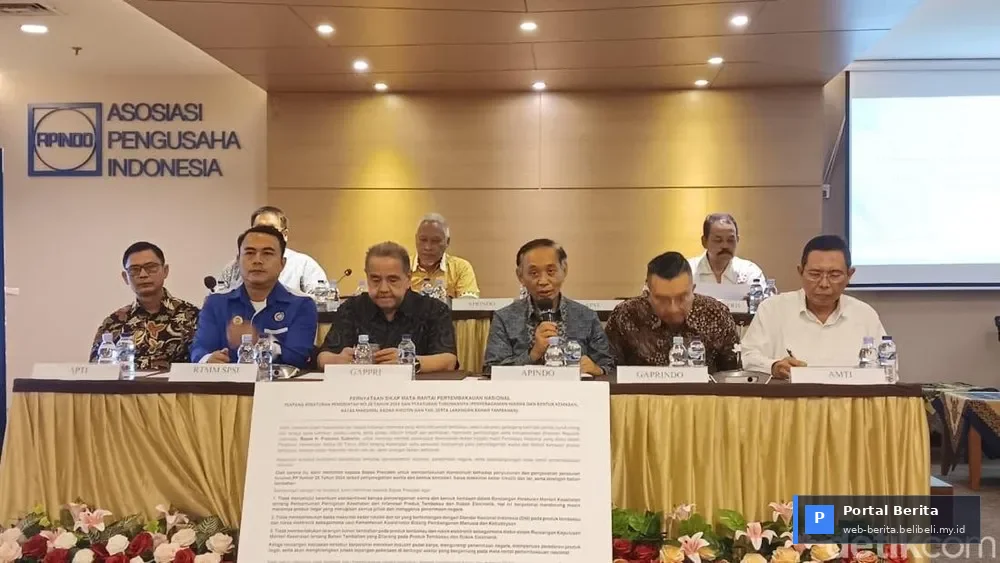
'We understand the government's commitment to public health, but the rigid implementation of PP No. 28 of 2024 has created unsustainable conditions for the industry,' stated Apindo Chairperson, Shinta Kamdani, in a recent press conference. 'Without a comprehensive review, we will witness massive economic losses and thousands of workers losing their livelihoods this year.' This appeal from Apindo reflects deep concerns from business actors, ranging from tobacco farmers to major producers and their distribution networks.
The Crisis's Impact on Employment
Since the enactment of PP No. 28 of 2024, the tobacco industry has faced a series of severe challenges. Stricter regulations include broader bans on tobacco product advertising and promotion, mandatory larger pictorial health warnings, and tighter sales oversight, including age verification enforcement. Furthermore, consistent increases in tobacco excise taxes over recent years have further squeezed consumer purchasing power and producer profit margins.
Apindo's internal data shows a significant decline in tobacco production and sales volume since early 2026, following a downward trend in previous years. 'Many factories have reduced working hours, and some have even been forced to close production lines. This is not just about large corporations, but also thousands of Micro, Small, and Medium Enterprises (MSMEs) and millions of tobacco farmers whose livelihoods depend on this sector,' Shinta added. The tobacco sector is estimated to absorb direct and indirect labor reaching 6 million people and contributes trillions of rupiah in excise taxes to the state annually.
The Industry's Voice and Call for Change
Entrepreneurs are urging the government to consider a more balanced approach, allowing the industry to transition gradually while still supporting public health. They propose constructive dialogue to find 'win-win' solutions that not only protect workers and farmers but also acknowledge the sector's economic contribution. Some options put forward include a review of the excise tax rates and schedule, flexibility in marketing rules that do not compromise health, and incentives for low-risk product innovation.
'We are ready to collaborate with the government to find common ground. However, if policies remain repressive without considering the realities on the ground, the threat of mass layoffs will become a bitter reality,' said a representative of a tobacco workers' union, who requested anonymity due to the sensitivity of the issue.
The Government's Dilemma: Health Versus Economy
President Prabowo's government is now at a crossroads. On one hand, there is a strong commitment to improving public health and reducing smoking prevalence, in line with the national development agenda. On the other hand, pressure from the industry and workers threatened with job losses cannot be ignored.
Coordinating Minister for Economic Affairs, Airlangga Hartarto, had previously stated that the government would carefully study the impact of every policy on the economy and employment. 'We are in the process of thoroughly evaluating data and input from various parties. The balance between public health and economic sustainability is our priority,' Airlangga said on one occasion. The decisions to be made by President Prabowo and his cabinet are expected to provide a clear direction for the future of Indonesia's tobacco industry.
Seeking Long-Term Solutions
Several economic experts suggest that the government should not only focus on regulation but also on economic diversification efforts in tobacco-producing regions and retraining programs for potentially affected workers. 'This is a complex issue requiring a multi-sectoral approach. Reducing tobacco consumption is a noble goal, but it must be done with a strategy that minimizes social and economic upheaval,' explained Dr. Budi Santoso, an economist from the National Development University 'Veteran' Jakarta.
This situation also has the potential to trigger an increase in the circulation of illegal cigarettes if legal cigarette prices continue to skyrocket due to high excise taxes, which would ultimately harm state revenue and complicate product quality control. Therefore, all parties hope that President Prabowo can find the best solution that is fair and sustainable for all segments of society.
FAQ: Frequently Asked Questions
1. What is Government Regulation (PP) No. 28 of 2024 and why is it controversial?
PP No. 28 of 2024 on Health is a regulation governing various aspects of tobacco products, including advertising bans, health warnings, and sales oversight. It has become controversial because the industry claims its rules are too strict and could jeopardize business continuity and threaten millions of jobs.
2. What are the main economic impacts feared by the tobacco industry in 2026?
The main impacts feared are significant declines in production and sales, which could trigger mass layoffs for factory workers and tobacco farmers. This could also reduce excise contributions to state revenue and hinder economic growth in tobacco-producing regions.
3. What actions are expected from President Prabowo's government?
The industry and workers hope President Prabowo will review the implementation of PP No. 28 of 2024, seeking a more balanced approach between public health goals and maintaining economic stability and employment. Constructive dialogue and potential policy adjustments are expected.