🔑 Key Takeaways
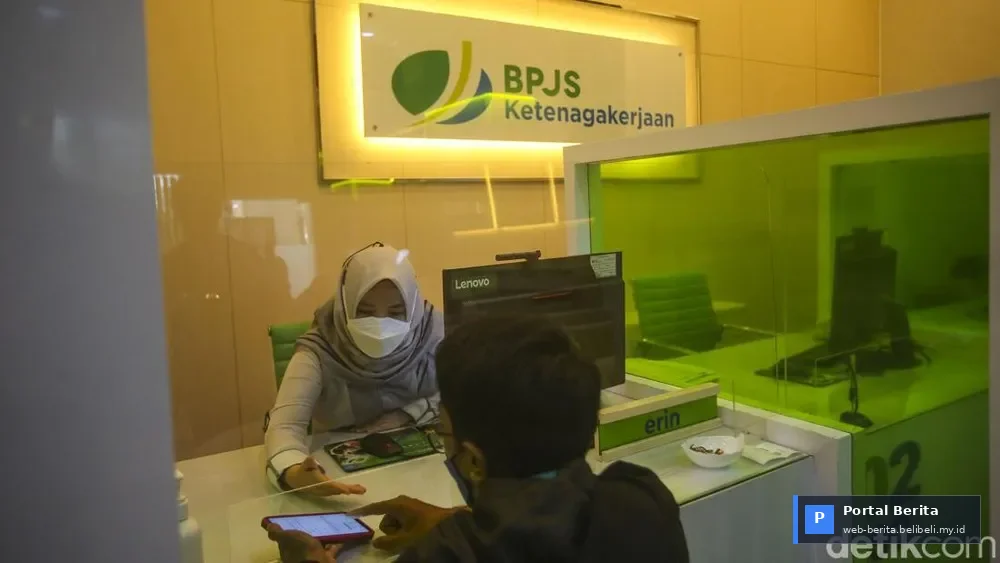
- The Directorate General of Taxation (DGT) confirms that the tax on BPJS Ketenagakerjaan's Old Age Security (JHT) withdrawals, classified as Final Income Tax, remains in effect for 2026, citing fundamental reasons related to state revenue structure and tax equity principles.
- This decision fuels an ongoing debate between the government's fiscal needs and workers' demands for full, untaxed access to their JHT funds during emergencies or retirement.
- The government, through the Ministry of Finance, continues to promote improved financial literacy among the public while exploring more comprehensive social protection schemes to balance fiscal interests and worker welfare.
JAKARTA, February 22, 2026 – The controversy surrounding the abolition of tax on BPJS Ketenagakerjaan's Old Age Security (JHT) withdrawals has once again come into public focus in early 2026. Despite persistent calls from various parties, the Directorate General of Taxation (DGT) of the Ministry of Finance maintains its position that the abolition of this tax cannot yet be realized, citing profound reasons related to the taxation system and national fiscal stability.
Fiscal Stability and the Principle of Final Income Tax
The Director of Counseling, Services, and Public Relations for the DGT, during a virtual press conference in February 2026, explained that JHT funds withdrawn fall under the category of Final Income Tax (PPh Final). “This tax on JHT withdrawals is a Final Income Tax, which is definitive and cannot be credited back. It is a part of the state revenue structure that has been in place and is vital for the sustainability of the State Budget (APBN),” he clarified.
According to the DGT, this tax deduction is carried out based on the prevailing Income Tax Law, where funds received from social security programs like JHT are considered taxable income. Abolishing this tax is deemed to create complex precedents and potentially erode the national tax base, which could ultimately disrupt the financing of development programs and public services.
Expert and Worker Perspectives
Leading Tax Analyst, Dr. Siti Nuraini from the Center for Public Economy and Finance Studies, emphasized the importance of understanding the characteristics of Final Income Tax. “Final Income Tax is imposed on certain types of income to simplify administration and ensure state revenue stability. If JHT were exempted, there would be similar demands from other investment or savings instruments, which could destabilize our tax system,” she stated in a separate interview. She added that this debate often arises because workers view JHT as pure savings, whereas fiscally, the benefits received are categorized as income.
However, from the workers' perspective, this policy is often felt to be burdensome. The Chairman of the Indonesian Workers' Federation (FPI), Mr. Hendra Wijaya, expressed his concerns. “For many workers, especially those affected by termination of employment or entering retirement, JHT funds are the only hope to start a business or meet urgent needs. Any tax deduction, no matter how small, reduces the much-needed benefits,” Hendra stated. He urged the government to reconsider or at least provide tax incentive schemes for JHT withdrawals for specific purposes, such as micro-business capital or children's education costs.
Government's Way Forward: Education and Balance
The Ministry of Finance and BPJS Ketenagakerjaan affirm their commitment to continue enhancing public education regarding the function and regulations of JHT, including its taxation aspects. Additionally, the government continues to assess various social protection and pension schemes that are more adaptive, yet align with sound fiscal principles.
“We understand the aspirations of the public. Therefore, the synergy between fiscal policy and social protection will continue to be optimized. This is not just about tax, but about building a sustainable and fair social security system for all segments of Indonesian society,” said a representative from the Ministry of Finance. The future focus is on developing more massive financial literacy programs so that people can better plan their financial future, including understanding the difference between JHT as savings and as part of a social security system with tax implications.
Frequently Asked Questions (FAQ)
1. Why can't the JHT withdrawal tax be abolished in 2026?
According to the Directorate General of Taxation, the tax on JHT withdrawals is classified as a Final Income Tax (PPh Final), which is an integral part of the state's revenue structure and tax equity principles. Its abolition would disrupt fiscal stability and create complex precedents.
2. What is the tax rate applied to BPJS Ketenagakerjaan JHT withdrawals?
Based on regulations effective in 2026, the Final Income Tax rates for JHT withdrawals are 0% for withdrawals under IDR 50 million, 5% for withdrawals between IDR 50 million and IDR 250 million, and 15% for withdrawals exceeding IDR 250 million.
3. Are there alternative options for workers needing emergency funds without high tax deductions?
Workers are encouraged to undertake careful financial planning. BPJS Ketenagakerjaan also offers other programs like Work Accident Security (JKK) and Death Security (JKM) which are not subject to income tax. For emergency fund needs, individuals can also consider other financial products tailored to their risk profile and financial goals, while understanding the tax provisions of each product.