🔑 Key Takeaways
- Staple food prices, including bird's eye chili, rice, beef, and chicken, have surged dramatically in early 2026, pressuring consumer purchasing power.
- Factors driving the price hikes include global supply chain disruptions, climate change impacts on domestic yields, and high logistics costs.
- The government is implementing various strategies, from market operations to long-term agricultural investments, to stabilize prices and ensure food security.
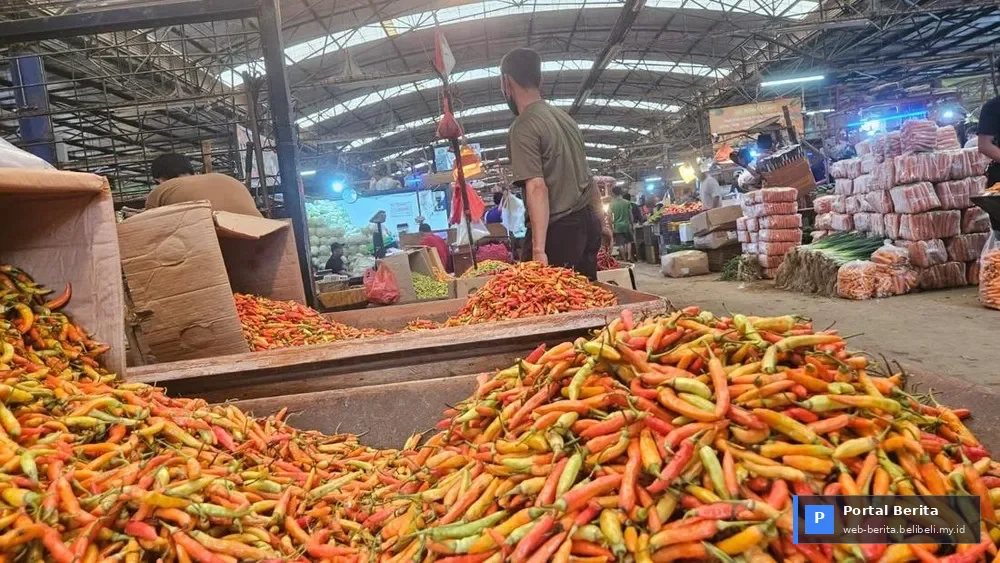
JAKARTA, February 22, 2026 – A new wave of rising staple food prices has once again become a central concern in early 2026, exerting significant pressure on household budgets and businesses across Indonesia. Bird's eye chili, one of the most vital kitchen ingredients, is now observed nearing IDR 60,000 per kilogram in various traditional and modern markets. This 'spicy price' phenomenon is not limited to chili; other essential commodities such as rice, beef, and chicken are also showing alarming upward trends.
Soaring Prices for Bird's Eye Chili and Other Commodities
The increase in bird's eye chili prices serves as an early indicator of broader food price volatility. Data from the National Strategic Food Price Information Center (PIHPS) indicates that the average price of red bird's eye chili has reached IDR 58,500 per kilogram, well above the normal range of IDR 30,000-IDR 40,000. “Prolonged rainy seasons and pest attacks in several key production centers have disrupted supply, leading to drastically reduced harvests,” explained Prof. Dr. Indah Sari, an agribusiness expert from Gadjah Mada University, in a recent interview.
Beyond chili, rice, as the main staple food, has also seen price increases. Medium-grade rice is observed at an average of IDR 14,000 per kilogram, up approximately 10% from late last year. Meanwhile, fresh beef prices are hovering around IDR 135,000 per kilogram, and broiler chicken meat at IDR 38,000 per kilogram. “These increases are a combination of high global livestock feed prices and domestic distribution challenges that have not been fully resolved,” added Ms. Siti Aminah, a meat vendor at Kramat Jati Main Market.
Causes Behind the Price Surge
Several key factors are identified as triggers for the food price surge in 2026. One is the persistent impact of global climate change, causing extreme weather anomalies such as unpredictable heavy rainfall or prolonged droughts, disrupting planting and harvesting cycles. “Climate change has become a real threat to the stability of our food production. We need faster agricultural adaptation and innovation,” stated Dr. Rio Pramudya, a senior economist from the Institute for Development of Economics and Finance (INDEF).
Furthermore, global supply chain disruptions remain a specter, especially for commodities dependent on imports or imported raw materials like animal feed. Suboptimal domestic logistics costs, from road infrastructure to the distribution process from farmers to consumers, further exacerbate the situation. Market speculation and hoarding by unscrupulous individuals also occasionally complicate matters, although the government strives to monitor it.
Impact on Economy and Society
Rising food prices have widespread domino effects. For households, this surge means reduced purchasing power and a larger allocation of budgets to essential needs, thereby decreasing spending on other sectors. “We have to be very careful when shopping. Every rupiah feels incredibly valuable now,” lamented Mrs. Dewi, a housewife in South Jakarta.
Micro, small, and medium-sized enterprises (MSMEs) in the culinary sector also feel the impact. Their profit margins are eroding, forcing some to raise selling prices or reduce portion sizes, risking a decline in consumer interest. “It's very difficult to maintain selling prices when raw materials keep going up. We are faced with tough choices,” said Budi, owner of a food stall in Depok.
Government Measures and Future Outlook
The government, through the Ministry of Trade and the Ministry of Agriculture, stated that it has been and will continue to take strategic steps to stabilize prices. Affordable market operations and direct distribution from production centers to markets are being intensively carried out. “We are committed to ensuring supply availability and curbing food inflation. Cross-sectoral coordination continues to be strengthened,” said the Head of the National Food Agency, Mr. Arief Prasetyo Adi, in a press conference earlier this February.
Beyond short-term interventions, the government is also focusing on long-term strategies, including increasing agricultural productivity through modernization, irrigation development, research into climate-resilient superior seeds, and strengthening logistics and storage systems. It is hoped that with these collective efforts, food price stability can be achieved, and national food security will be further solidified in the remainder of 2026 and beyond.
Frequently Asked Questions About 2026 Food Price Increases
Why are bird's eye chili prices so high in 2026?
The increase is driven by supply disruptions due to extreme weather (prolonged rainy season, pest attacks) in key production centers, as well as high logistics costs.
Which other food commodities are experiencing price increases besides chili?
In addition to chili, rice, beef, and chicken are also showing significant price increase trends in early 2026.
What steps is the government taking to address rising food prices?
The government is conducting market operations, direct distribution, and long-term strategies such as agricultural modernization, irrigation development, and strengthening logistics to stabilize prices and ensure supply.