🔑 Key Takeaways
- In 2026, global and national carbon markets are prioritizing the direct delivery of economic benefits to communities, moving beyond mere transaction valuations.
- National figure, Zulhas, reiterates that community welfare must be the primary benchmark for the success of carbon trading in Indonesia.
- Implementation involves creating green jobs, investing in sustainable local infrastructure, and transparent revenue-sharing schemes with communities.
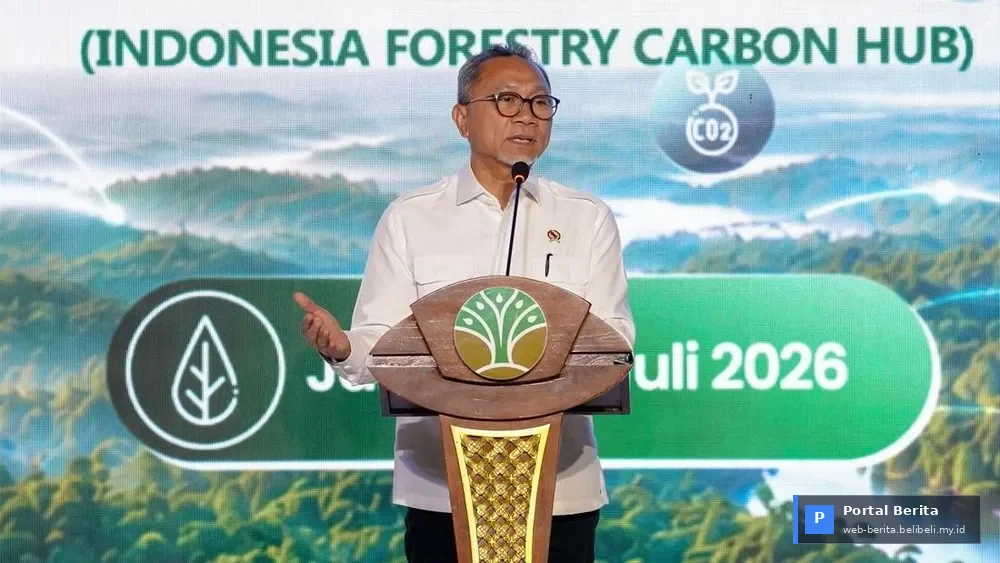
JAKARTA, 2026 – The global carbon market continues to show exponential growth in 2026, establishing itself as a crucial pillar in climate change mitigation efforts. However, amidst the flurry of multi-trillion rupiah transactions, the call to ensure that the economic benefits of carbon trading are directly felt by communities is now stronger than ever. Zulhas, an influential national figure, has reaffirmed that the ultimate goal of the carbon economy ecosystem should not be limited to exchange figures, but rather to improving the quality of life and welfare of communities across the nation.
'Carbon trading is not just a mechanism to achieve emission targets or generate large profits for corporations. It is a fundamental tool for realizing climate and economic justice,' Zulhas stated in a recent discussion forum. 'Its benefits must reach the grassroots, helping local communities build resilience, create jobs, and foster sustainable green economic practices.'
From Transactions to Community Transformation
This vision marks a significant evolution in the understanding of the carbon economy. While early development may have focused on regulatory frameworks and trading volumes, 2026 sees a paradigm shift towards social impact and inclusivity. Dr. Sarah Wijaya, an environmental economist from the University of Indonesia, explains that the sustainability of the carbon market heavily relies on its social legitimacy.
'Without active support and participation from the public, the carbon market risks being perceived merely as a 'license to pollute' for large corporations,' Dr. Sarah said. 'Therefore, ensuring that communities, especially those at the forefront of climate change impacts or playing key roles in forest and ecosystem conservation, receive a fair share is absolutely essential.'
Effective Mechanisms for Benefit Distribution
Several mechanisms have been identified and implemented to ensure the effective distribution of carbon economic benefits:
- Green Job Creation: Investments in mitigation and adaptation projects funded by carbon credit sales can unlock thousands of new jobs, ranging from forest restoration and waste management to renewable energy development at the local level.
- Sustainable Infrastructure Development: Carbon funds can be allocated for the construction of green energy-based clean water facilities, climate-smart agricultural systems, or low-emission transport infrastructure in remote areas.
- Local Community Empowerment: Training and assistance programs for farmers, fishers, and indigenous communities to adopt sustainable practices that can generate carbon credits, while also increasing their income.
- Transparent Revenue-Sharing Schemes: Establishing clear and accountable revenue-sharing models from carbon credit sales with communities that directly maintain and preserve carbon stocks.
The Indonesian government, through various relevant ministries, continues to refine policy frameworks to ensure transparency and accountability in fund disbursement. Collaboration with non-governmental organizations and the private sector is key to achieving maximum reach and impact.
Challenges and Prospects
Despite a clear vision, implementation challenges persist. Public education about carbon trading mechanisms, preventing fund leakage, and continuous monitoring and evaluation of impacts require strong commitment. However, with global trends increasingly demanding social and environmental accountability from every economic activity, Indonesia holds significant potential to become a model in developing an inclusive and equitable carbon market.
Ultimately, the success of the carbon economy in 2026 and beyond will be measured not only by the magnitude of trade value but by the extent to which it genuinely elevates the dignity and living standards of its people, making them an integral part of the global climate solution.
Frequently Asked Questions (FAQ)
- What is the carbon economy?
- The carbon economy refers to an economic system centered on pricing and trading the right to emit carbon, aiming to incentivize the reduction of greenhouse gas emissions and investment in eco-friendly projects.
- How can communities directly benefit from carbon trading?
- Communities can benefit through the creation of green jobs, investments in local sustainable infrastructure, community-based empowerment programs, and fair revenue-sharing schemes from carbon mitigation projects in their areas.
- What are the main challenges in ensuring equitable benefit distribution?
- Challenges include a lack of public understanding, risks of fund leakage, the need for robust and transparent regulatory frameworks, and ensuring local capacity to effectively manage and utilize these funds.