🔑 Key Takeaways
- The Ministry of Health (Kemenkes) reports 46 fatalities and 36 severe injuries from the early August 2026 NTT earthquake, with 2.1 million people affected.
- Critical health infrastructure, including hospitals and community health centers (Puskesmas), sustained significant damage, hampering vital services during the crisis.
- Kemenkes's primary focus is on rebuilding a more resilient health infrastructure, addressing long-term mental health needs, and enhancing future disaster preparedness.
Kupang, NTT – The devastating earthquake that struck Indonesia's East Nusa Tenggara (NTT) province in early August 2026 continues to cast a long shadow, posing immense challenges for the health sector. The Ministry of Health (Kemenkes) of the Republic of Indonesia, in its latest update, confirmed a tragic toll of 46 lives lost and 36 individuals suffering severe injuries requiring intensive care.
Beyond the immediate casualties, the Kemenkes report highlighted the massive impact on an estimated 2.1 million people across several affected districts. Significant damage to vital infrastructure, including numerous hospitals and community health centers (Puskesmas), has exacerbated the humanitarian crisis, severely hindering access to essential medical services when they are most desperately needed.
Damaged Health Infrastructure: A Critical Bottleneck
“This earthquake not only claimed lives but also crippled the healthcare delivery system in several critical areas,” stated Dr. Siti Khadijah, Head of the Kemenkes Health Crisis Center, during a virtual press briefing in mid-August 2026. “Many Puskesmas suffered severe structural damage, with some completely leveled. This means millions of citizens have lost immediate access to basic check-ups, immunizations, and even emergency care.”
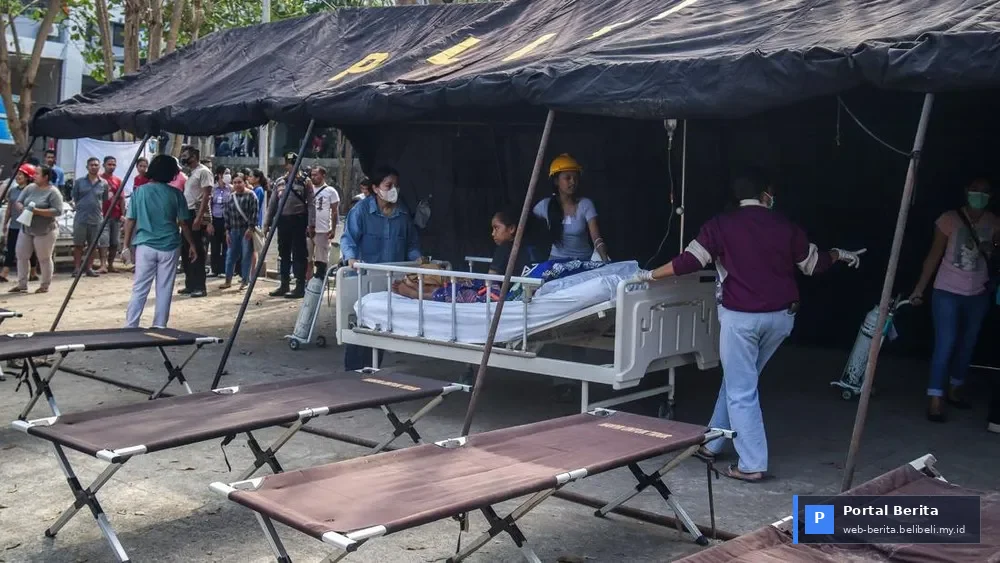
Initial data indicates that at least five referral hospitals and dozens of Puskesmas sustained varying degrees of damage, from minor cracks to total collapse. Consequently, medical teams have been forced to establish temporary health posts and field hospitals to treat patients, a heroic effort amidst limited resources and facilities.
Rapid Response and Long-Term Challenges
In its rapid response, Kemenkes has mobilized medical teams from across the archipelago, including surgical specialists, orthopedic surgeons, anesthesiologists, and psychologists, to NTT. Logistical aid, comprising medicines, emergency medical equipment, and medical tents, continues to pour in. However, the sheer scale of the damage and the vastness of the affected region present significant logistical hurdles, particularly in distributing aid to remote, cut-off areas.
Beyond treating physical injuries, mental health challenges are a grave concern. Millions displaced, having lost homes, family members, or livelihoods, are at high risk of psychological trauma. “We anticipate a surge in cases of post-traumatic stress disorder (PTSD), depression, and anxiety. Long-term psychosocial support programs must be a top priority,” added Dr. Khadijah.
Building Back Better: A 2026 Resilience Focus
Kemenkes has expressed its unwavering commitment not only to recovery but also to rebuilding NTT's health infrastructure to be more resilient against future disasters. The strategic plan for 2026 and beyond includes constructing earthquake-resistant health facilities, integrating telemedicine technology for remote areas, and enhancing human resource capacity in crisis management.
Prof. Budi Santoso, a disaster mitigation expert from Gadjah Mada University, emphasized the importance of a holistic approach. “This is an opportunity to redefine our healthcare system in disaster-prone regions. It's not just about the physical buildings, but also about robust supply chains, reliable communication systems, and an educated populace prepared to act swiftly,” he remarked.
With the support of the central government, non-governmental organizations, and international aid, NTT embarks on a long journey of recovery. The focus on health resilience is expected to minimize similar impacts in the future, ensuring that the people of NTT can access quality healthcare services, even amidst the toughest challenges.
Frequently Asked Questions
1. What is the current status of health services in NTT following the earthquake?
Essential health services are currently being provided through field hospitals, temporary health posts, and partially rehabilitated or operational Puskesmas. Medical aid distribution is ongoing, but access to remote areas remains challenging.
2. What long-term health challenges does Kemenkes anticipate?
Kemenkes anticipates an increase in mental health issues such as PTSD, depression, and anxiety. Additionally, the risk of infectious diseases due to poor sanitation and lack of clean water access is a significant concern.
3. How is Kemenkes ensuring future disaster preparedness?
Kemenkes plans to construct earthquake-resistant health facilities, integrate telemedicine systems for remote service access, and enhance the training and capacity of medical personnel in crisis management and emergency disaster response.