🔑 Key Takeaways
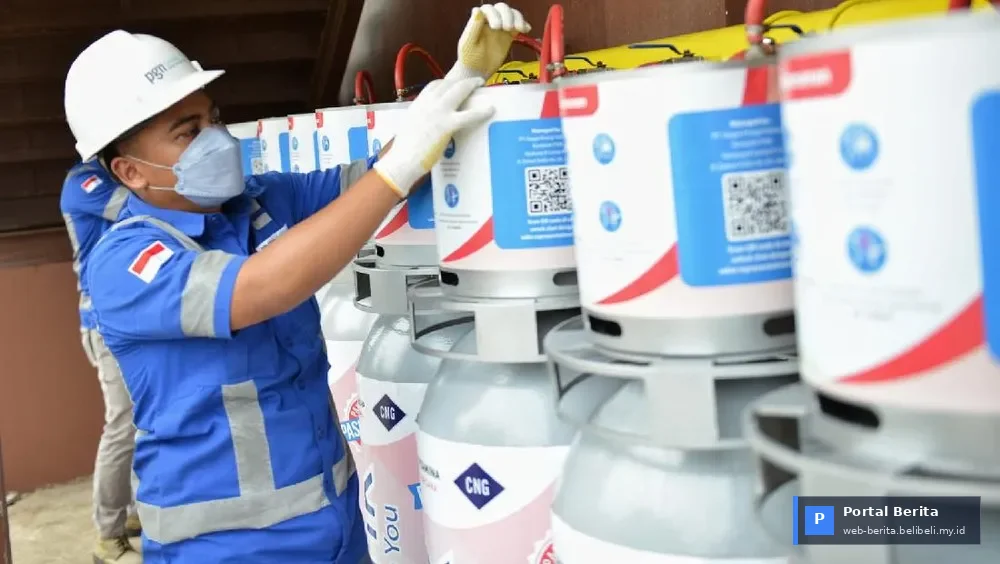
- In 2026, the Indonesian government is intensifying its program to convert 3kg LPG to Compressed Natural Gas (CNG), following successful initial phases in West Java.
- This initiative aims to alleviate the state's subsidy burden, stabilize energy prices for the public, and support the transition to cleaner energy.
- Households will receive assistance with converter cylinders and comprehensive education, with a focus on expanding CNG refueling infrastructure nationwide.
JAKARTA, Indonesia – The year 2026 marks a new chapter in Indonesia's energy roadmap. The government, through the Ministry of Energy and Mineral Resources (ESDM) in collaboration with PT Pertamina (Persero), is aggressively advancing its transition program from subsidized 3-kilogram (kg) Liquefied Petroleum Gas (LPG) to Compressed Natural Gas (CNG). This strategic initiative is more than just a change in fuel type; it's a significant leap towards energy independence, national budget efficiency, and a commitment to a greener environment.
Initial Success in West Java Sets a National Model
The success of pilot programs implemented in several regions of West Java, including Bogor and Bekasi, is the primary driver behind this acceleration. Data from the Ministry of ESDM indicates that public response to the use of 3kg CNG cylinders has been overwhelmingly positive. Consumers experienced significant cost savings, while the government successfully reduced the subsidy burden that has historically strained the national budget.
'The initial trials in West Java from late 2025 to early 2026 demonstrated that the transition to 3kg CNG is highly promising,' stated Mr. Agus Salim, Director General of Oil and Gas at the Ministry of ESDM, in an exclusive interview. 'People are directly experiencing the benefits of savings, and we are seeing a significant reduction in carbon emissions. This is tangible proof that Indonesia can transition to cleaner and more affordable energy.'
Why CNG is a Strategic Choice
The decision to switch to CNG is based on several key pillars:
- Subsidy Efficiency: The 3kg LPG subsidy has been one of the largest expenditures in the state budget. By shifting to CNG, which tends to have more stable prices and is not dependent on global crude oil price fluctuations, the government can reallocate these subsidy funds to other development programs.
- Resource Availability: Indonesia possesses abundant natural gas reserves, making it a sustainable domestic energy source. This reduces reliance on LPG imports, strengthening national energy security.
- Environmentally Friendly: CNG produces significantly lower exhaust gas emissions compared to LPG, contributing to improved air quality and Indonesia's carbon emission reduction targets.
- More Stable Prices: With domestic supply, CNG prices are expected to be more stable and less vulnerable to international market volatility, providing certainty for households and SMEs.
Implementation and Future Challenges
The government aims to gradually distribute 3kg CNG converter cylinders across Indonesia, starting with major cities that have adequate gas infrastructure. Pertamina is tasked with expanding its network of gas fueling stations (SPBG) and converter kit facilities to ensure easy public access to this product.
'We are fully prepared to support the government's program,' said Ms. Dian Paramita, Retail Marketing Director of PT Pertamina (Persero). 'Our current focus is on expanding distribution points, ensuring the availability of cylinders and refills, and providing comprehensive public education on usage and safety.'
While the prospects are bright, this transition also faces challenges, including initial conversion costs, public education on safety and usage, and the acceleration of refueling infrastructure development. However, with full support from various stakeholders, experts are optimistic that this program will bring significant positive changes.
Dr. Fitria Dewi, an Energy Economist from Gadjah Mada University, added, 'This CNG conversion program is a smart move. Besides easing the fiscal burden, it also encourages energy diversification and creates new markets for domestic gas products. The key to its success lies in massive socialization and ensuring quality and safety throughout the supply chain.'
With a clear vision and strong commitment, Indonesia in 2026 is moving towards a more independent, efficient, and sustainable energy future, with 3kg CNG as one of its main pillars.
FAQ: Frequently Asked Questions
What is the main goal of the program to replace 3kg LPG with CNG?
The primary goal is to reduce the state's subsidy burden, stabilize energy prices for the public, and support Indonesia's transition to cleaner, more sustainable energy sources.
How will consumers obtain CNG cylinders and conversion kits?
The government will gradually provide assistance with converter cylinders to eligible households, supported by education and distribution programs through Pertamina's network and partners.
When is this program expected to be fully implemented nationwide?
Following a comprehensive evaluation of the pilot phase and adequate infrastructure development, the government aims for a national rollout within the next few years, with accelerated implementation starting from 2026.