🔑 Key Takeaways
- Jakarta is once again facing a severe air quality crisis in 2026, with its Air Quality Index (AQI) reaching 155, placing the capital in the 'unhealthy' category.
- Long-term exposure to air pollution increases the risk of serious health issues such as chronic respiratory diseases, cardiovascular problems, and negative impacts on child development.
- The government continues to accelerate the transition to electric public transport, tighten industrial emission regulations, and promote green spaces, but significant challenges persist.
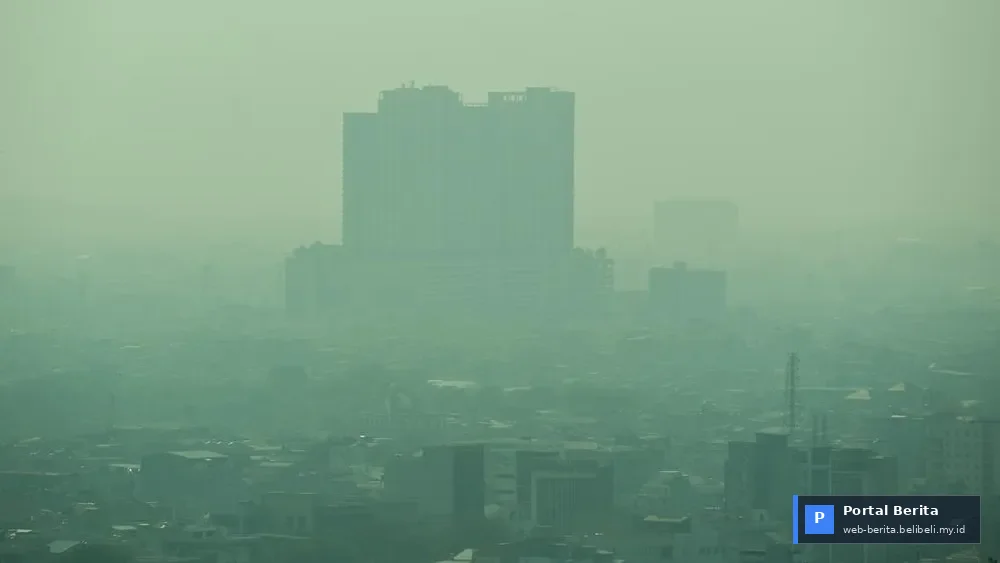
JAKARTA – Indonesia's capital, Jakarta, is once again shrouded in a thick haze, triggering renewed concerns over public health and environmental sustainability. In the latest monitoring in 2026, Jakarta's Air Quality Index (AQI) hit an alarming 155, placing it in the 'unhealthy' category and once again ranking the city among the world's most polluted. This situation is not new but rather a reflection of chronic challenges that continue to plague this densely populated metropolis.
This deteriorating air condition has become a recurring problem, especially during the prolonged dry seasons. The primary sources of pollutants are believed to stem from a combination of continuously increasing vehicular emissions, unregulated industrial activities, and construction dust from massive infrastructure projects. Fine particulate matter (PM2.5) is the main culprit, capable of penetrating deep into the lungs and bloodstream, posing serious health threats.
Escalating Health Threats
The direct impact of poor air quality on public health is substantial. "Chronic air pollution, like what we're witnessing in Jakarta, is a ticking time bomb for public health," explains Dr. Sari Dewi, a leading pulmonologist at Cipto Mangunkusumo Hospital. "We're seeing a rise in cases of asthma, COPD (Chronic Obstructive Pulmonary Disease), and acute respiratory infections, particularly among children and the elderly. Furthermore, there's strong evidence of increased risks of heart disease and stroke due to long-term exposure."
Dr. Dewi also added that vulnerable groups, such as toddlers and pregnant women, face higher risks, including impaired fetal lung development and premature births. The economic implications cannot be ignored either, with rising healthcare costs and lost productivity due to illness.
Measures and Challenges in 2026
In response to this crisis, the DKI Jakarta provincial government, along with the central government, has launched various initiatives. In 2026, accelerating the transition to electric-based public transportation, such as electric TransJakarta buses and the expansion of the MRT/LRT network, is a top priority. Enforcement of Euro 5 emission standards for new vehicles and stricter routine emission testing are also continuously being enhanced.
"We are committed to achieving clean air targets," said Budi Santoso, an environmental policy analyst from the University of Indonesia. "Beyond transportation, our focus is also on stricter industrial emission oversight, planting millions of trees in urban areas, and developing more advanced air monitoring technologies. However, the scale of the problem is immense, requiring strong cross-sector collaboration and public awareness."
The public is also encouraged to take proactive steps, such as wearing N95 masks when AQI is high, minimizing outdoor activities, and using air quality monitoring apps for real-time information. Nevertheless, Jakarta's fight against air pollution appears to be a long marathon requiring consistency, innovation, and active participation from every element of the city.
FAQ: Frequently Asked Questions
1. What is the current air quality status in Jakarta in 2026?
In the latest monitoring in 2026, Jakarta's Air Quality Index (AQI) reached 155, which is categorized as 'unhealthy'. This places Jakarta among the cities with the worst air pollution levels globally.
2. What are the main health risks associated with Jakarta's air pollution?
Long-term exposure to air pollution can lead to chronic respiratory diseases (asthma, COPD), cardiovascular problems (heart disease, stroke), eye and throat irritation, and negative impacts on child development and maternal health.
3. What efforts are the government undertaking to address Jakarta's air pollution in 2026?
Efforts include accelerating the adoption of electric public transportation, enforcing stricter emission standards for vehicles and industries, massive tree planting campaigns, and developing more advanced air quality monitoring systems.