🔑 Key Takeaways
- The Indonesian economy successfully absorbed 1.45 million new workers in H1 2026, showcasing the national job market's resilience.
- This job creation occurred amidst a wave of layoffs in certain sectors, particularly global technology and specific manufacturing industries.
- The digital economy, green industries, services, and Micro, Small, and Medium Enterprises (MSMEs) were the primary drivers of this employment growth.
JAKARTA – Indonesia's labor market has demonstrated remarkable resilience amidst global economic turbulence. Throughout the first half of 2026, recent data indicates that the Indonesian economy successfully absorbed 1.45 million new workers. This impressive figure stands in stark contrast to the widespread news of layoff waves impacting several industries, both globally and domestically.
This achievement highlights the unique dynamics within the national employment landscape, where specific sectors are exhibiting strong growth even as other parts of the economy undergo restructuring or slowdowns. Analysts view this as a significant indicator of ongoing adaptation and structural transformation within Southeast Asia's largest economy.
Behind the Robust Job Absorption Numbers
The Ministry of Manpower reported that the absorption of 1.45 million new workers is a result of significant expansion in rapidly developing sectors. "This figure is not merely a statistic; it reflects the government's strategies and the private sector's innovation in creating an adaptive work ecosystem," stated Dr. Citra Dewi, a senior economist from the Center for Labor Economic Studies. She added that this growth is propelled by massive investments in digital infrastructure, sustainable renewable energy development, and solid increases in domestic consumption within the services sector, including a resurgent tourism industry.
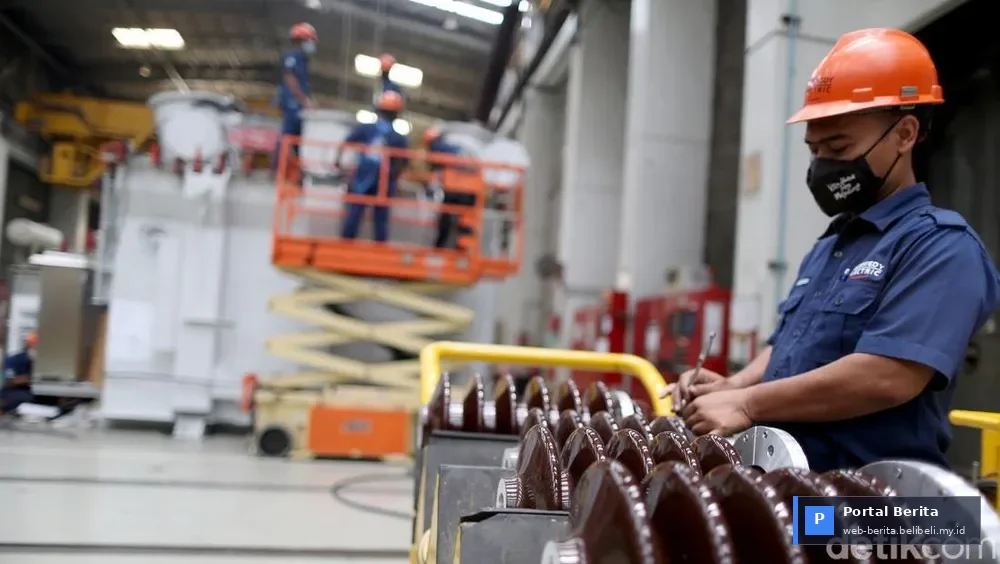
Labor-intensive manufacturing also showed recovery and expansion in several strategic sub-sectors, particularly those export-oriented and with high added value. Furthermore, Micro, Small, and Medium Enterprises (MSMEs) continue to be the backbone of the economy, contributing a large portion of this job creation, supported by improved incubation programs and better access to capital from the government and financial institutions.
Navigating the Layoff Storm: Restructuring or Resilience?
The recent wave of layoffs, particularly in global technology companies and some manufacturing sectors affected by digital disruption and supply chain changes, has indeed raised concerns. However, Dr. Dewi explained that this phenomenon is largely sectoral and often part of global restructuring efforts to adapt to new technologies and changing market conditions.
"It's crucial to look at the broader picture. While some companies are implementing efficiency measures, many other sectors are aggressively hiring. This indicates a structural shift where new skills and adaptive industries are key," she clarified. The government, through various vocational training programs relevant to future industry needs and strengthened social safety net schemes, is working to mitigate the impact of layoffs and facilitate the transition of workers into growing sectors.
H2 2026 Projections and Future Challenges
With the positive momentum from H1, optimism surrounds the labor market projections for the second half of 2026. Continued inflows of foreign direct investment, coupled with the acceleration of national strategic projects, are expected to further support job creation. Nevertheless, challenges such as skill gaps between graduates and industry needs, and the threat of increasingly sophisticated automation, still need to be proactively anticipated.
The government and industry players are expected to continue collaborating on developing education curricula relevant to market needs, and to encourage innovation that creates new jobs rather than merely replacing existing ones. Labor market flexibility and robust social protection will be key to ensuring inclusive and sustainable growth for all segments of society.
❓ Frequently Asked Questions
- Q: Why is job absorption high amidst news of layoffs?
A: High job absorption is driven by growth in new sectors like digital, green economy, and services, while layoffs tend to be concentrated in specific sectors due to global restructuring and technological disruption. - Q: Which sectors absorbed the most new workers in H1 2026?
A: The digital economy, green industries, logistics, healthcare, and domestic tourism sectors, along with MSMEs, are reported to be the largest contributors to new job absorption in Indonesia. - Q: What is the government's role in creating these jobs?
A: The government plays a role through infrastructure investment, vocational training programs, investment incentives, and support for MSMEs, all of which contribute to creating a conducive and adaptive work ecosystem.