🔑 Key Takeaways
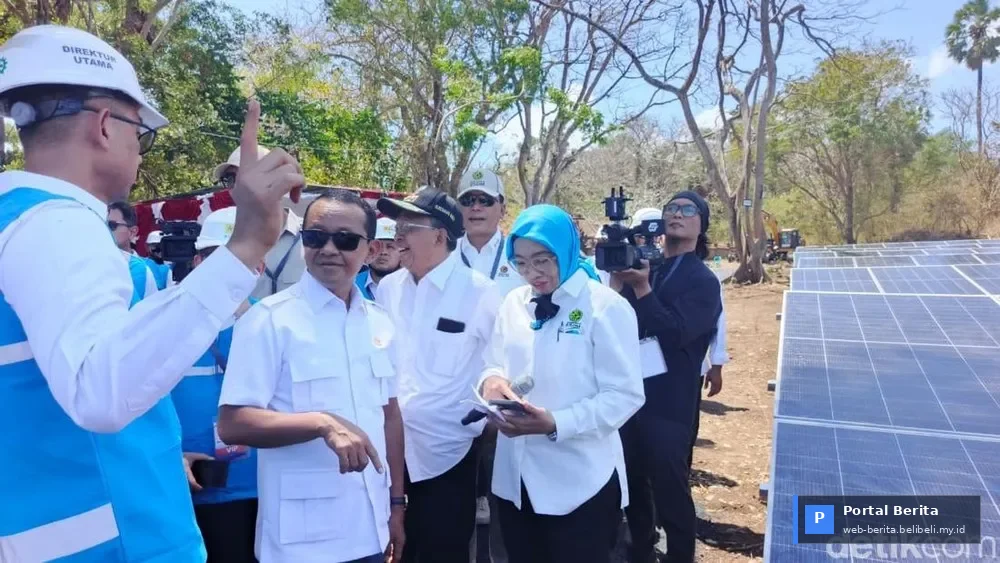
- Fourteen inaugural Solar Power Plants (PLTS) from Indonesia's ambitious 100 GW mega-project are now fully operational in 2026, marking a significant milestone in the nation's energy transition.
- This initiative reaffirms President Prabowo Subianto's commitment to energy independence and economic decarbonization, with the potential to attract trillions of rupiah in investment.
- The 100 GW PLTS project is projected to create millions of jobs and solidify Indonesia's position as a key player in the global green economy.
JAKARTA – The year 2026 heralds a new era for Indonesia's energy landscape. A total of fourteen Solar Power Plants (PLTS), integral to the nation's ambitious 100 Gigawatt (GW) mega-project, have officially commenced full operation, paving the way for a cleaner, more independent energy transition. The operational launch of this pioneering cluster of PLTS, previously envisioned under President Prabowo Subianto's administration, stands as tangible proof of Indonesia's commitment to achieving national energy independence and supporting net-zero emissions targets.
Towards Energy Independence: More Than Just Numbers
The 100 GWp (gigawatt peak) project is one of the government's largest strategic initiatives to harness the abundant solar energy potential across this tropical archipelago. These initial fourteen PLTS, strategically spread across various high-potential regions, are not merely electrical installations; they are the foundational stones for greater energy resilience. “The operation of these first 14 PLTS is not just a technical achievement, but a declaration that Indonesia is serious about shifting its reliance on fossil fuels,” stated Dr. Surya Atmaja, a renewable energy expert from Gadjah Mada University. “This sends a strong signal to both domestic and international investors that Indonesia’s green energy market is exceptionally promising.”
The energy independence driven by these PLTS will have cascading effects. Beyond reducing fossil fuel imports, it will also stabilize energy prices, which in turn will support industrial and economic growth across the board. Vital sectors such as manufacturing, agriculture, and tourism will benefit from a more stable and sustainable electricity supply, mitigating the risks of global commodity price volatility.
Economic Impact and Investment
With an estimated investment reaching trillions of rupiah for the entire 100 GW project, this initiative is expected to trigger a significant wave of investment in the renewable energy sector. The construction and operation of PLTS require an extensive supply chain, ranging from solar panel manufacturing and inverters to construction and maintenance. This translates into large-scale job creation.
“We anticipate that this 100 GW project will create millions of direct and indirect jobs over the coming decade,” said Ms. Fitriani Wijaya, Director General of New, Renewable Energy and Energy Conservation (EBTKE) at the Ministry of Energy and Mineral Resources. “This is not just about energy, but also about inclusive and sustainable economic development for all Indonesians.” Investments in this sector will also encourage technology transfer and local capacity building, strengthening Indonesia's renewable energy industrial ecosystem.
Long-Term Vision and Future Challenges
While these first 14 PLTS represent a monumental step forward, the journey towards 100 GW is still extensive. Challenges include integrating solar energy into the existing national grid, developing energy storage technologies, and supportive regulatory frameworks. The government continues to collaborate with various stakeholders, including the private sector, academia, and civil society, to overcome these hurdles and ensure the project's sustainability.
The long-term vision is to establish Indonesia as a regional leader in renewable energy, not only for domestic consumption but also as a future clean energy export hub. With the operation of these 14 PLTS, Indonesia has sent a clear message: the future of energy is bright, clean, and independent.
FAQ
- When is the 100 GW PLTS project expected to be fully completed?
The 100 GW project is a long-term initiative expected to be completed in phases over the next one to two decades, with finalization targeted around 2040-2050.
- How does this project support Indonesia’s net-zero emissions targets?
By replacing a significant portion of fossil fuel-based power generation with solar energy, this project will substantially reduce greenhouse gas emissions, supporting Indonesia’s commitment to achieve net-zero emissions by 2060 or sooner.
- What are the main impacts of this project on residential energy consumers?
Residential consumers can expect a more stable and cleaner electricity supply, potential long-term reductions in electricity tariffs due to lower operational costs, and improved electricity access in remote areas.