🔑 Key Takeaways
- Finance Minister Purbaya Yudhi Sadewa has reinforced collaboration with PPATK to trace assets of taxpayers who have not yet repatriated funds from previous tax amnesty programs.
- This initiative leverages advanced data analytics, artificial intelligence (AI), and international cooperation to detect suspicious fund flows and ensure fiscal compliance.
- The Indonesian government is committed to global tax transparency and fiscal justice, sending a strong signal to taxpayers to proactively declare their assets.
JAKARTA – The Ministry of Finance of the Republic of Indonesia, under the leadership of Finance Minister Purbaya Yudhi Sadewa, has significantly strengthened its synergy with the Financial Transaction Reports and Analysis Centre (PPATK). This collaboration is focused on rigorously examining every incoming fund and tracing assets of taxpayers who, despite participating in previous tax amnesty or voluntary disclosure programs, have not yet repatriated or fully declared their assets.
Reinforcing the Front Against Tax Evasion
In the increasingly transparent global financial landscape of 2026, the Indonesian government continues to demonstrate its unwavering commitment to combating tax evasion and illicit financial flows. This latest initiative is a continuation of long-term efforts to optimize state revenue and create a fair tax ecosystem. While past tax amnesty and voluntary disclosure programs successfully brought back substantial funds, strong indications suggest that some significant assets remain offshore or have not been fully reported as required.
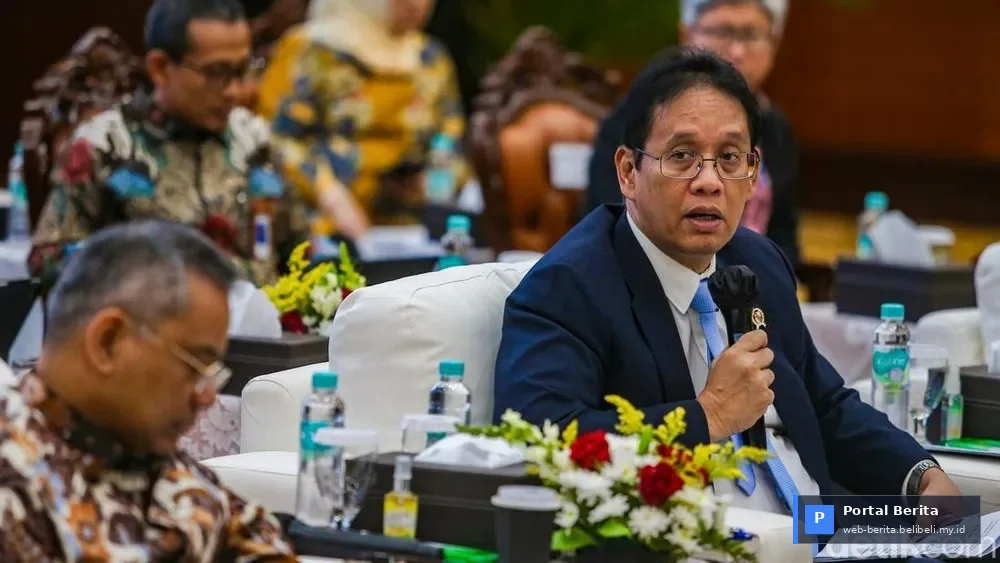
Minister Purbaya Yudhi Sadewa affirmed, 'We will never cease to ensure that every taxpayer fulfills their obligations. Asset repatriation is a crucial pillar in strengthening the national economy and ensuring fiscal justice. With PPATK, we have an invaluable partner in tracing complex financial trails.'
Sophisticated Cross-Institutional Oversight Mechanisms
The cooperation between the Directorate General of Taxation (DGT) and PPATK now utilizes cutting-edge data analytics technology and artificial intelligence (AI) to scan billions of financial transactions. This system is designed to detect suspicious patterns, discrepancies between reported wealth profiles and actual fund flows, and indications of disguised asset ownership. Furthermore, Indonesia actively leverages the global Automatic Exchange of Information (AEoI) framework, which allows for the exchange of financial data with other jurisdictions, to identify offshore assets.
Dr. Risa Permata, Head of the Financial Analysis Bureau at PPATK, explained, 'Our data synergy with the DGT, combined with predictive AI capabilities, allows us to identify anomalies and transaction patterns that were previously difficult to detect. This is no longer about manual inspections but about data intelligence working 24/7 to ensure the integrity of the financial system.'
Economic and Taxpayer Implications
This decisive step is expected to have multi-dimensional impacts. Economically, the potential repatriation of assets or previously undeclared assets will expand the tax base and strengthen foreign exchange reserves. It also sends a strong signal to investors about Indonesia's commitment to good governance and anti-corruption, ultimately boosting the country's investment ratings.
For taxpayers, this is an important reminder of the urgency of compliance. 'The era of hiding assets offshore is truly over. With current technology and international cooperation, the chances of going undetected are almost nil,' stated Prof. Aditya Rahman, a Taxation and Digital Economy Expert from Gadjah Mada University. 'Taxpayers who still hold undeclared assets should immediately seek professional advice to ensure full compliance before enforcement actions are taken.'
Indonesia's Commitment to Global Standards
This initiative also underscores Indonesia's position as a key player on the global financial stage. As a G20 member, Indonesia consistently supports international efforts to combat money laundering, terrorist financing, and tax evasion. This reinforced oversight is a reflection of that commitment, placing Indonesia on par with developed nations in terms of fiscal transparency and integrity.
❓ Frequently Asked Questions
- What is the main objective of this collaboration in 2026?The primary objective is to trace and ensure tax compliance for taxpayer assets that have not yet been repatriated or fully declared after participating in past tax amnesty or voluntary disclosure programs, for fiscal justice and optimal state revenue.
- How does the government identify these unrepatriated assets?The government uses a combination of advanced data analytics, artificial intelligence (AI) to scan transactions, and leverages the global Automatic Exchange of Information (AEoI) framework to obtain financial data from other jurisdictions.
- What are the implications for taxpayers still holding undeclared offshore assets?The implication is an increased risk of enforcement actions, including fines and criminal penalties. Taxpayers are advised to proactively seek professional advice and ensure all their assets are declared transparently and in accordance with applicable regulations.