🔑 Key Takeaways
- Bandung's Legok Nangka Waste-to-Energy (WtE) plant is now fully operational, transforming urban waste challenges into energy solutions.
- The Rp 7.2 trillion (US$400 million) facility processes up to 2,000 tons of waste daily, generating clean electricity for the West Java grid.
- The project stands as a national benchmark for sustainable waste management, renewable energy contribution, and green job creation.
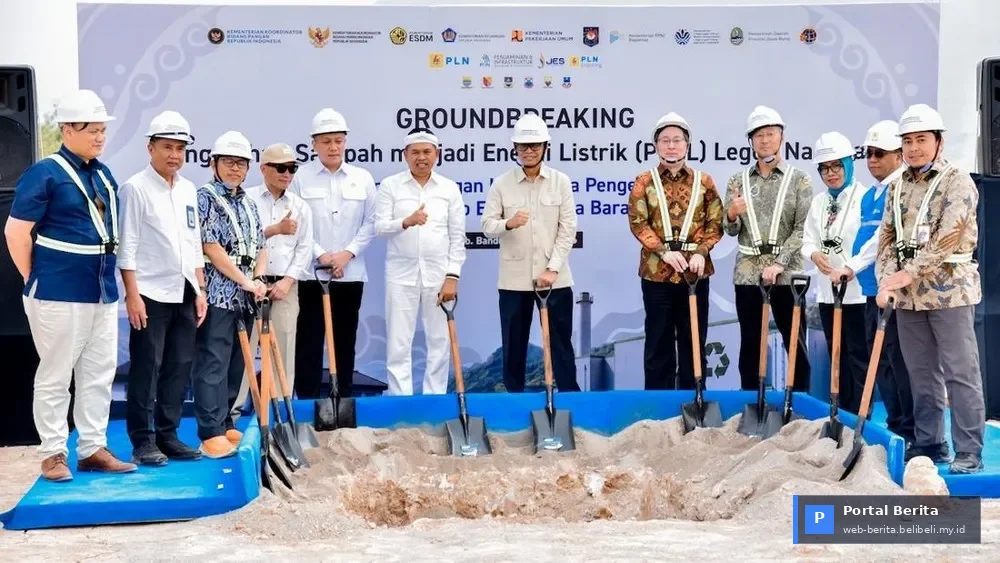
BANDUNG – The capital of West Java, Bandung, now boasts an innovative solution addressing two critical challenges simultaneously: massive urban waste management and escalating energy demands. The Legok Nangka Waste-to-Energy (WtE) plant, a high-tech facility valued at Rp 7.2 trillion (approximately US$400 million), is fully operational in 2026, marking a pivotal moment in Indonesia's journey towards sustainability.
This ambitious project is more than just an infrastructure development; it's a strong statement about Indonesia's commitment to the circular economy and its renewable energy mix targets. With the capacity to process thousands of tons of waste daily, the Legok Nangka WtE plant is expected to significantly ease environmental burdens while providing a stable source of power.
A Comprehensive Solution to Bandung’s Waste Crisis
Daily, the Legok Nangka WtE plant is capable of processing up to 2,000 tons of municipal and commercial solid waste, which would otherwise end up in landfills. Utilizing advanced thermal incineration technology, the facility not only drastically reduces waste volume but also converts it into valuable energy.
'The Legok Nangka WtE plant isn't just about generating electricity; it’s about the future of our environment. It’s tangible proof that waste problems can be transformed into opportunities for sustainability and economic growth,' states Dr. Sri Handayani, a leading waste management expert from Universitas Padjadjaran. She adds that the project significantly reduces greenhouse gas emissions from landfills and mitigates risks of soil and water contamination.
Boosting National Energy Security
With an impressive generation capacity of up to 35 Megawatts (MW), the Legok Nangka WtE plant contributes substantially to the clean energy supply for West Java’s power grid. This contribution is crucial in the nation's efforts to diversify its energy sources and reduce reliance on fossil fuels, aligning with national renewable energy targets.
Ir. Budi Santoso, Director General of New, Renewable Energy, and Energy Conservation (EBTKE) at the Ministry of Energy and Mineral Resources, commented, 'The timely completion and full operation of this project significantly bolsters our national renewable energy mix targets. It's a major step forward in achieving energy independence while mitigating climate change impacts.'
Sustainable Economic and Social Impact
Beyond its environmental and energy benefits, the Legok Nangka project also brings significant economic and social impacts. Its construction created hundreds of jobs, and its ongoing operation requires skilled labor, from engineers to technicians. The project also attracts further investment in green technology sectors and fosters innovation within the local circular economy.
Local communities surrounding Legok Nangka and Greater Bandung are experiencing direct benefits from cleaner air, improved waste management, and new economic opportunities arising from the project's ecosystem. This demonstrates how green infrastructure investments can drive inclusive growth.
Cutting-Edge Technology for a Green Future
The Legok Nangka facility employs some of the world's most advanced thermal incineration technology, designed to ensure high efficiency and adherence to the strictest environmental emission standards. State-of-the-art air pollution control systems ensure that the exhaust gases are clean and safe, minimizing any ecological footprint.
As a pioneer on this scale in Indonesia, the Legok Nangka WtE plant is expected to serve as a blueprint for other cities grappling with waste issues and seeking sustainable energy solutions. The success of this project could accelerate the adoption of similar technologies across the archipelago, bringing Indonesia closer to a greener, cleaner future.
Frequently Asked Questions About Legok Nangka WtE Plant
1. What is the daily waste processing capacity of the Legok Nangka WtE plant?
A: The Legok Nangka WtE plant has the capacity to process up to 2,000 tons of municipal solid waste daily.
2. What was the total investment for the construction of this WtE plant?
A: The total investment for the Legok Nangka WtE project was approximately Rp 7.2 trillion, or equivalent to US$400 million.
3. What are the main benefits of the Legok Nangka WtE plant's operation for Bandung and Indonesia?
A: Its main benefits include significant waste reduction, production of clean electricity contributing to energy security, creation of employment opportunities, and serving as a national model for sustainable waste management.