🔑 Key Takeaways
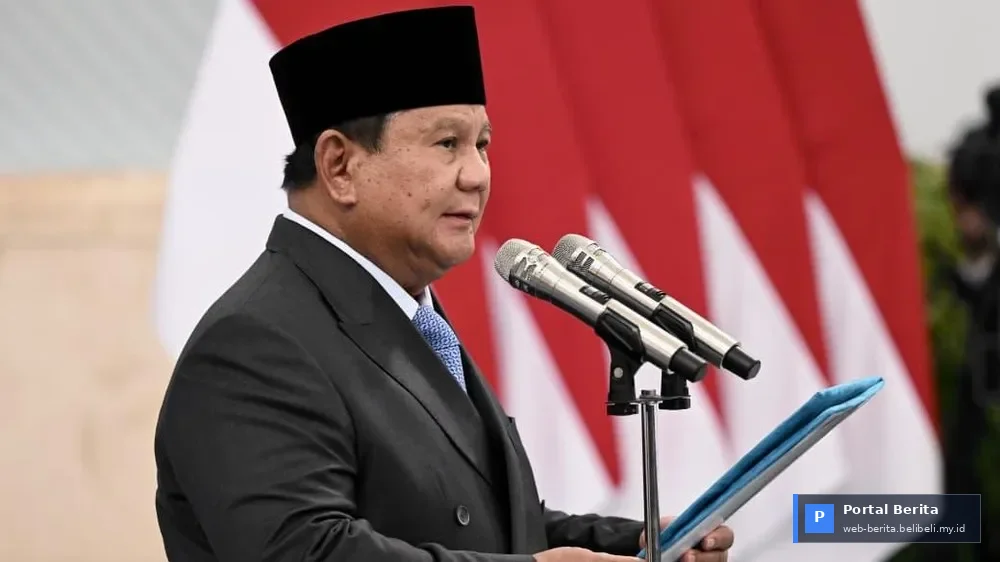
- President Prabowo Subianto is set to inaugurate electricity connections for 1,400 villages before August 14, 2026, marking a significant milestone in national energy equity.
- This multi-trillion rupiah project is targeted to boost rural economic growth by up to 2% and attract new investments in MSMEs.
- The government is committed to ensuring fair and sustainable energy access, with a focus on renewable energy sources in remote areas.
JAKARTA, June 22, 2026 – Indonesian President Prabowo Subianto is scheduled to inaugurate electricity connections for 1,400 villages across the archipelago before August 14, 2026. The announcement was made by the Minister of Energy and Mineral Resources (ESDM), Bahlil Lahadalia, who affirmed the government's commitment to achieving equitable energy access, a crucial step for economic growth and improving the quality of life in rural communities in 2026.
This ambitious project is an integral part of a broader national development strategy, focusing on basic infrastructure to promote equitable development. With an additional 1,400 villages now electrified, the government aims to significantly reduce the energy gap, unlock new economic opportunities, and enhance community productivity.
Economic and Social Impact
Widespread electricity provision is believed to bring transformative economic impacts. Dr. Indah Lestari, a development economist from the University of Indonesia, stated, 'Electricity access is not just about lighting; it's a catalyst for economic growth. We estimate that this project has the potential to boost economic growth in electrified rural areas by 1.5% to 2% within the next two years. This will foster new MSMEs, increase the added value of local products, and accelerate village digitalization.' This statement highlights optimism about electricity's vital role in modernizing rural economies.
Furthermore, social aspects are also a key focus. Electricity enables better access to education through online learning, improved healthcare services with adequate medical facilities, and broader access to entertainment and information. This represents a long-term investment in Indonesia's human resources.
Challenges and Innovation
Minister Bahlil explained that the project involves a multi-trillion rupiah investment, with significant budget allocation for network infrastructure and power generation. 'The challenge is not only the sheer scale of investment but also Indonesia's diverse topography. We are collaborating closely with PLN and the private sector to ensure project efficiency and sustainability,' Bahlil noted.
Technological innovation also plays a critical role. For remote villages difficult to reach by the main grid, renewable energy solutions such as Solar Power Plants (PLTS) and Micro-hydro Power Plants (PLTMH) are prioritized. This hybrid approach not only ensures energy sustainability but also aligns with Indonesia's commitment to a clean energy transition.
Energy expert Ir. Bayu Prasetyo from the Bandung Institute of Technology added, 'Integrating renewable energy in these villages is a smart move. It minimizes the carbon footprint, reduces reliance on expensive fossil fuels, and empowers local communities to manage their own energy resources. This is a model that should be expanded.' This emphasizes the importance of sustainable solutions.
Towards a Brighter Indonesia 2026
The inauguration by President Prabowo Subianto before mid-August 2026 is expected to be a tangible symbol of the government's vision to create a more equitable and prosperous Indonesia. With the continued electrification program, it is hoped that no village in Indonesia will remain in darkness, paving the way for limitless economic and social potential for all citizens.
Frequently Asked Questions (FAQ)
- Q: When will the inauguration of the 1,400-village electricity project take place?
A: The inauguration is scheduled to be conducted by President Prabowo Subianto before August 14, 2026. - Q: What are the main economic benefits of this rural electrification project?
A: This project is expected to boost rural economic growth, foster new MSMEs, increase the added value of local products, and accelerate digitalization at the village level. - Q: Does this project utilize renewable energy?
A: Yes, for remote villages, the government prioritizes the use of renewable energy solutions such as Solar Power Plants (PLTS) and Micro-hydro Power Plants (PLTMH) as part of a hybrid approach.