🔑 Key Takeaways
- PT PLN (Persero) is projected to require 160 million metric tonnes of coal throughout 2026 to maintain national electricity stability.
- The Ministry of Energy and Mineral Resources (ESDM) is tightening oversight of the Domestic Market Obligation (DMO) for mining companies, warning of strict sanctions for non-compliance.
- This situation highlights the crucial balance between short-term energy security and Indonesia's long-term commitment to a clean energy transition.
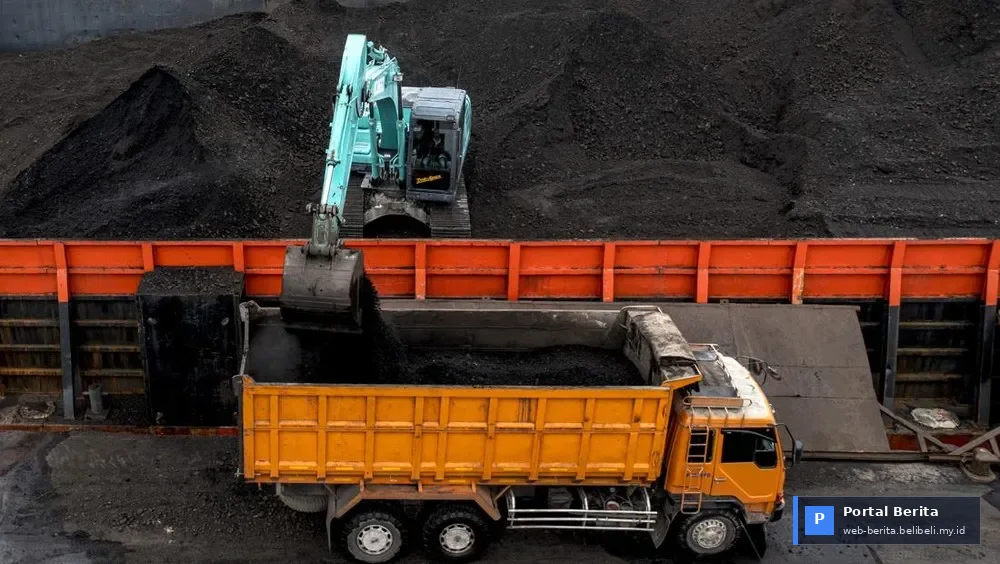
Jakarta, January 16, 2026 – Indonesia's energy demands continue to surge with economic growth, placing PT PLN (Persero) in a critical position to meet national electricity supply. For 2026, projections indicate that the state-owned electricity giant will require an estimated 160 million metric tonnes of coal. This figure re-emphasizes coal's dominant role as the backbone of power generation amid ongoing energy transition efforts.
The Ministry of Energy and Mineral Resources (ESDM) has sternly reminded all coal mining business entities to prioritize their Domestic Market Obligation (DMO). 'Coal supply for PLN is a national mandate. We will not compromise on electricity availability for our people and industries,' stated Dr. Ir. Hadi Pranoto, Director-General of Minerals and Coal at the ESDM Ministry, in an official announcement. 'DMO oversight will be intensified, and strict sanctions await those who fail to fulfill their commitments.'
Challenges Amidst Energy Transition
Despite Indonesia's strong commitment to net-zero emissions targets and continuous promotion of renewable energy development, the reality of 2026 shows that coal remains a vital energy source for the baseload of the electricity system. Renewable energy infrastructure, though rapidly expanding, is not yet capable of fully replacing the substantial capacity of coal-fired power plants (PLTUs).
'We are at a crossroads,' explained Prof. Dr. Sinta Dewi, an energy policy expert from the University of Indonesia. 'On one hand, we must meet the continuously increasing electricity demand to support economic growth. On the other, global and national pressures for decarbonization are intensifying. Coal still serves as a crucial bridge, but this bridge must be managed wisely, ensuring domestic supply security while planning for its gradual decline.'
DMO Mechanism and Strict Oversight
The DMO system mandates coal mining companies to set aside a portion of their production for domestic needs at government-regulated prices. This aims to protect PLN from volatile global coal price fluctuations and ensure a stable supply. In previous years, supply disruptions sometimes occurred as companies opted to export coal for higher profits.
To prevent a recurrence of supply crises, ESDM has developed a more sophisticated real-time monitoring system, collaborating with related institutions such as PT Surveyor Indonesia. This measure is expected to enable early detection of potential supply shortages and rapid intervention.
Impact on the Mining Industry
For coal entrepreneurs, the DMO obligation is often a double-edged sword. While it guarantees a domestic market, the lower DMO prices compared to export prices can affect their profit margins, especially for companies with high production costs. However, the government insists that this obligation is part of their social and national responsibility. Industry players are expected to continue investing in operational efficiency and market diversification to ensure the long-term sustainability of their businesses.
With a secure coal supply, PLN can continue to support industrial operations, public services, and the daily lives of citizens. However, the real challenge remains how Indonesia can gradually reduce this dependence and transition towards a cleaner, more sustainable energy future.
❓ Frequently Asked Questions
1. Why does PLN still require so much coal in 2026?
Despite the push for renewable energy, coal remains the primary source for meeting Indonesia's electricity baseload demand because renewable energy infrastructure is not yet sufficient to fully replace the capacity of coal-fired power plants (PLTUs).
2. What is the Domestic Market Obligation (DMO) for coal?
The DMO is an obligation for coal mining companies in Indonesia to allocate a portion of their production for the domestic market, specifically for PT PLN (Persero), at government-set prices, to ensure national energy security.
3. What are the consequences for companies that fail to meet DMO obligations?
The Ministry of ESDM can impose strict sanctions, ranging from administrative fines, suspension of export permits, to the revocation of Mining Business Permits (IUP), depending on the severity of the violation and its impact on national energy supply.