🔑 Key Takeaways
- Metrology officers are intensely re-calibrating merchant scales at Setonobetek Market, Kediri, as part of a nationwide effort to ensure measurement accuracy in 2026.
- This initiative is essential for protecting consumers from unfair practices, guaranteeing fair transactions, and building trust in the buying and selling process.
- The re-calibration program is a sustained government commitment in 2026 to create a fair, transparent, and supportive market ecosystem for local economic growth.
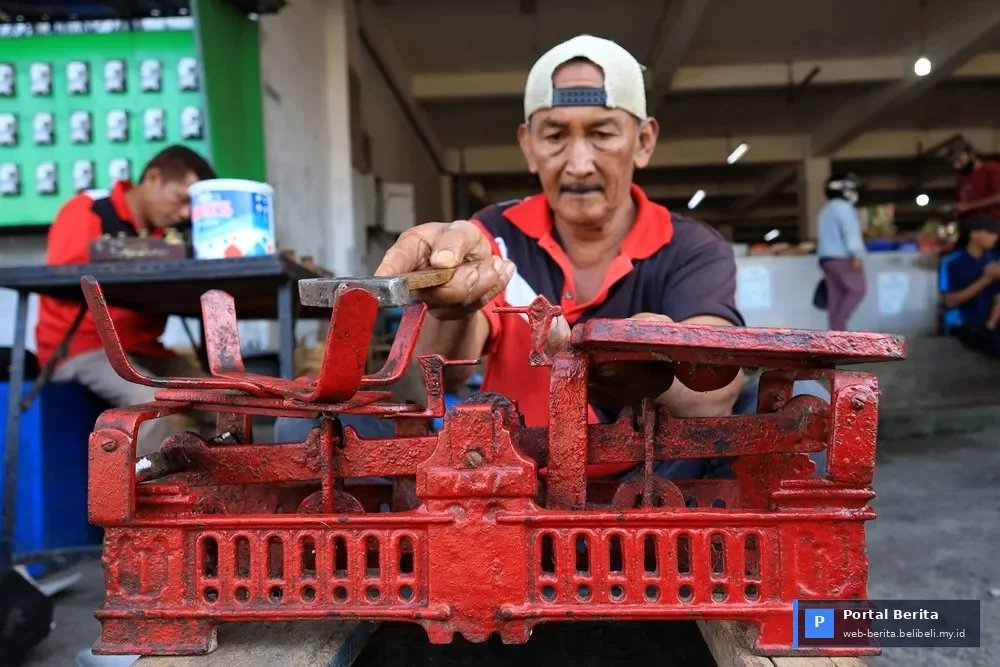
KEDIRI, INDONESIA – In an ongoing endeavor to ensure economic fairness and safeguard fundamental consumer rights, metrology officers from the Kediri City Department of Industry and Trade (Disperindag) are actively re-calibrating merchant scales at Setonobetek Market. This vital activity, part of a national program in 2026, aims to ensure that every measuring device used in commercial transactions is accurate and adheres to established standards, thereby fostering a transparent and trustworthy business environment.
Daily, millions of transactions occur in traditional markets across Indonesia. The accuracy of scales forms the primary foundation of fairness in every purchase, from basic necessities to various goods. Without stringent standards, the risk of losses for consumers and unfair competition among vendors can increase, eroding the trust essential for the economic engine.
The Vital Role of Metrology in Modern Economies
Metrology, the science of measurement, plays a crucial role in maintaining the stability and integrity of a nation's economy. In 2026, the Indonesian government, through various related agencies, continues to strengthen the function of monitoring and calibrating measuring instruments. “This scale re-calibration program is not merely a routine; it is a fundamental pillar in building an equitable market. We ensure that every kilogram purchased by consumers is indeed one kilogram. This is a direct form of protection for their money and their rights,” stated Mr. Budi Santoso, Head of the Kediri City Department of Industry and Trade, in an exclusive interview.
Initiatives like the one at Setonobetek Market reflect the strong commitment of central and local governments in 2026 to create a fair, efficient, and fraud-free trading ecosystem. With strict oversight and regular re-calibration, it is hoped that no merchants will attempt to profit from inaccurate scales, and consumers can shop with peace of mind.
Re-calibration Mechanism and Its Benefits
The re-calibration process involves checking and adjusting scales using standard, calibrated weights. Metrology officers ensure that the scale’s needle reads zero when unloaded and indicates the correct weight when standard loads are placed upon it. If there are discrepancies, the scale will be readjusted or recommended for repair.
Scales that pass re-calibration will be marked with an official seal or stamp, indicating that the measuring instrument is legal and accurate. This seal typically comes in the form of a holographic sticker or an embossed stamp showing the calibration date and validity period. “Merchants who comply with these regulations indirectly help improve the market’s reputation and also their income, as consumers will be more confident in shopping there,” Mr. Budi added.
Consumer Protection and Business Trust in 2026
Trust is the primary currency in commerce. When consumers feel confident that they are getting what they pay for, they tend to shop more frequently and recommend the place to others. This not only benefits individual merchants but also drives the overall economic growth of the market.
In 2026, the government has also launched various digital complaint channels that make it easier for consumers to report suspected scale fraud. Through official applications or websites, reports can be submitted quickly and addressed by the authorities. This transparency strengthens the consumer’s position and provides a deterrent for individuals attempting to commit fraud.
With the continuation of the scale re-calibration program in markets across Indonesia, as seen in Kediri, the government in 2026 reaffirms its commitment to creating a fair, transparent, and sustainable trading environment. This is a long-term investment for community well-being and economic growth founded on integrity.
Frequently Asked Questions
Why is scale re-calibration so important?
Scale re-calibration is crucial for ensuring the accuracy of measuring instruments, protecting consumer rights from fraud, and maintaining fairness and trust in every trade transaction.Who is responsible for conducting scale re-calibration?
Official metrology officers from the Department of Industry and Trade (Disperindag) or related local government agencies that possess the authority and expertise to calibrate and monitor measuring instruments.What should I do if I suspect a market scale is inaccurate?
You are advised to promptly report your suspicion to the market management, directly to the local Department of Industry and Trade, or through official government consumer complaint channels available in 2026.