🔑 Key Takeaways
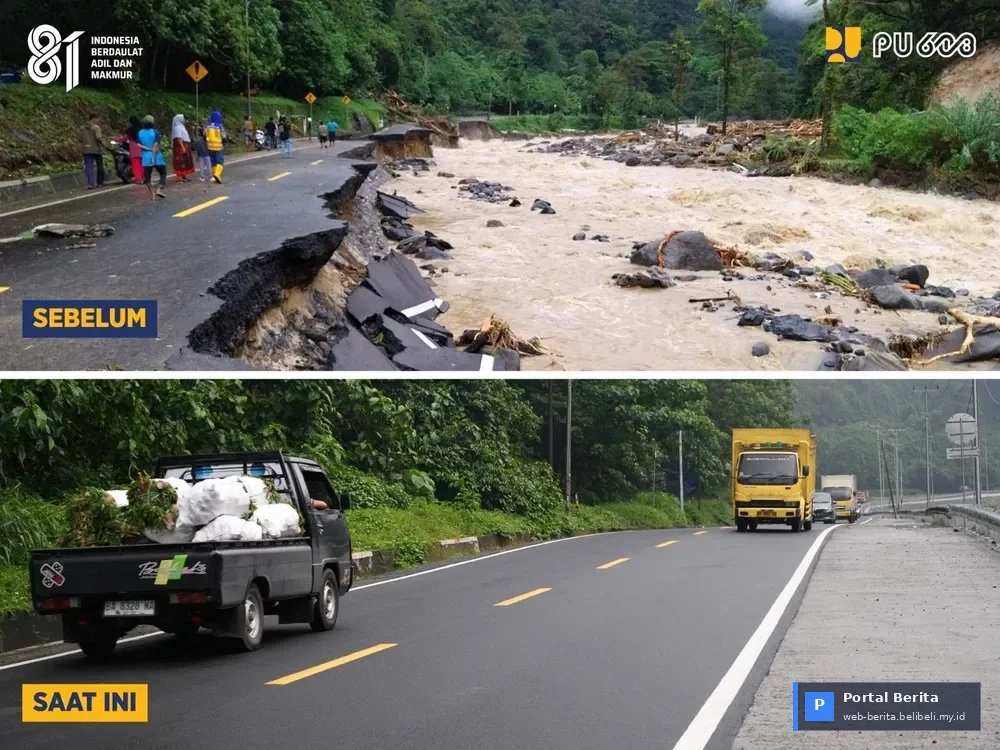
- The Ministry of Public Works and Housing (PUPR) has completed post-disaster recovery efforts in the Anai Valley, fully restoring the vital Padang-Bukittinggi route.
- This restored connectivity significantly reduces logistics costs and travel times, boosting trade, tourism, and commodity distribution across West Sumatra.
- The project not only rehabilitated but also strengthened road infrastructure with cutting-edge disaster mitigation technology, ensuring the resilience of this key economic artery for the future.
PADANG, WEST SUMATRA – West Sumatra's economic pulse is beating strong again with the completion of post-disaster recovery efforts in the Anai Valley, a crucial corridor connecting the provincial capital, Padang, with highland economic centers like Bukittinggi. The Ministry of Public Works and Housing (PUPR) announced that all road infrastructure along this vital stretch is now fully operational, reopening a golden artery that was previously hindered by natural disasters.
The completion of this project, involving extensive reconstruction and slope reinforcement, marks a new chapter for regional connectivity and economic growth. The Padang-Bukittinggi road is more than just physical access; it's a primary artery for the distribution of goods and services, worker mobility, and the thriving tourism sector that underpins the region's revenue.
Immediate and Long-Term Economic Impact
The reopening of the Anai Valley route carries massive economic implications. Businesses, from wholesale traders to farmers in Agam and Tanah Datar, can now transport their products to Padang and the port more quickly and efficiently. 'This is the news we've been waiting for. Previously, our logistics costs soared dramatically because we had to take long detours, and the freshness of our agricultural products was often compromised,' said Rahman, a produce distributor from Bukittinggi.
Restored travel times mean significant savings for the transportation sector. Regional economic analyst, Dr. Irfan Hakim from Andalas University, estimates that the route's recovery will contribute to a decrease in local inflation and an increase in the competitiveness of West Sumatra's MSME products. 'This reduction in operational logistics costs by 20-30% will stimulate real sector growth, accelerate capital turnover, and ultimately create more jobs,' explained Dr. Irfan.
Infrastructure Investment for Economic Resilience
Minister of PUPR, Basuki Hadimuljono, in his statement, emphasized the government's commitment not only to restore but also to strengthen strategic infrastructure. 'The work in the Anai Valley wasn't just a repair; it was a rebuilding to higher disaster mitigation standards. We used modern slope reinforcement technology and drainage systems to ensure this route is more resilient against potential future disasters,' Minister Basuki stated.
Investment in robust infrastructure is crucial given West Sumatra's disaster-prone geographical position. The project includes the construction of retaining walls, bridge repairs, and the normalization of waterways, all designed to maintain smooth traffic flow under all weather conditions, barring extreme disaster scenarios.
Boosting Tourism and Investment
Beyond logistics and trade, tourism will also receive a significant boost. Popular destinations like Sianok Canyon, Lake Singkarak, and Pagaruyung Palace, which were previously difficult to access, are now easily reachable by both domestic and international tourists. The hospitality industry, restaurants, and souvenir MSMEs along the tourist routes are expected to see a surge in visitors.
Ultimately, the restoration of this key connectivity sends a positive signal to investors. Infrastructure stability is one of the primary determinants for investment decisions, and with the strengthened Anai Valley route, West Sumatra becomes even more attractive as an economic growth hub in western Indonesia.
❓ Frequently Asked Questions
-
What was the primary cause of the previous damage in the Anai Valley?
The damage was caused by natural disasters, specifically landslides and flash floods triggered by extreme rainfall, which severely impacted the road structure and surrounding slopes. -
How does this restoration contribute to West Sumatra's economy?
The restoration significantly reduces logistics costs and travel times, enhances the efficiency of goods distribution, boosts tourism, and accelerates local and regional economic circulation. -
Are there new mitigation measures in place to prevent similar damage in the future?
Yes, the project incorporated advanced slope reinforcement technology, improved drainage systems, and retaining wall construction to enhance the route's resilience against future natural disasters.