🔑 Key Takeaways
- PT PELNI (Persero) swiftly confirmed that ship operations to and from Maumere Port, NTT, remain normal after a local M6.5 earthquake struck the region in early 2026.
- This decisive action is vital for maintaining supply chain stability, ensuring the delivery of essential goods, and supporting local economic activities post-disaster.
- Pelni is committed to strengthening maritime infrastructure and cross-sector coordination to enhance logistics resilience in disaster-prone zones like NTT, addressing future geographical and geological challenges.
JAKARTA, March 18, 2026 – Following a Magnitude 6.5 earthquake that shook the offshore waters of Flores, East Nusa Tenggara (NTT), earlier this year, PT Pelayaran Nasional Indonesia (Persero), or PELNI, has swiftly confirmed that ship operational services at Maumere Port, Sikka, NTT, remain unaffected. This rapid response not only reiterates the state-owned maritime logistics company's commitment but also provides assurance for the continuity of economic activities and logistics distribution in one of Flores' main gateways.
Maumere's Uninterrupted Lifeline: PELNI's Top Priority
After the earthquake, concerns about disruptions to distribution channels and the supply of essential goods were natural. However, PELNI immediately conducted a thorough assessment of the pier, port facilities, and vessel operational safety. The results confirmed no structural damage that would impede cargo handling or ship departures.
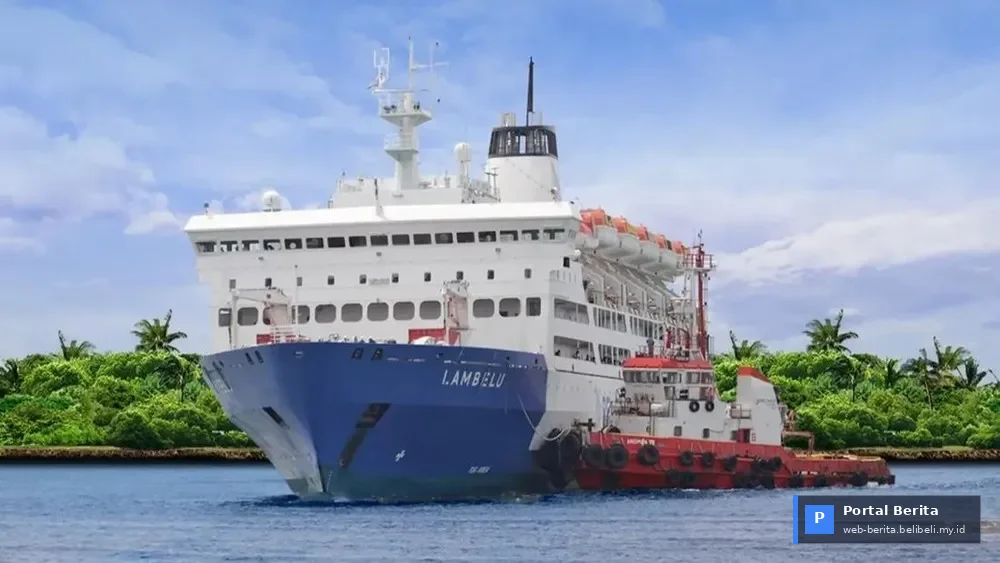
“We understand how crucial Maumere Port is as the main logistics gateway for Flores and its surrounding areas. Our top priority is the safety of all crew, passengers, and cargo, while ensuring vital supplies are not interrupted,” stated Dr. Ir. Anton Wijaya, M.Sc., PELNI's Director of Passenger Transport Business, during a press conference in Jakarta. “With strict safety protocols and comprehensive inspections, we can confirm that operations for vessels such as KM Lambelu, KM Awu, and other pioneer ships continue to sail on schedule.”
Economic Resilience and Supply Chain Stability
The continuity of PELNI's services plays a central role in maintaining local economic stability in NTT. Maumere, as an economic and educational hub in Flores, heavily relies on sea routes to bring in staple goods, construction materials, and transport agricultural and fishery products out of the region. Without stable shipping services, inflation could surge, and the economy could come to a halt.
Dr. Rina Agustina, a maritime economist from Gadjah Mada University, underscored PELNI's vital role. “In post-disaster situations, smooth logistics are the backbone of economic recovery. PELNI’s swift action saved many small businesses from greater losses and ensured relatively stable prices. This is a clear example of how a state-owned enterprise can be an economic anchor amidst challenges,” she explained.
Beyond goods supply, PELNI's services are also crucial for the mobility of residents and aid workers. Thousands of citizens wishing to return home or medical personnel and volunteers heading to affected areas can rely on this maritime transportation.
Futureproofing Maritime Logistics in Disaster-Prone Zones
The earthquake incident in NTT once again highlights the importance of long-term strategies to strengthen the resilience of maritime infrastructure in disaster-prone areas. PELNI, in collaboration with the Ministry of Transportation and the National Disaster Management Agency (BNPB), continues to coordinate efforts to develop more effective early warning systems and earthquake-resistant port construction standards.
“Upgrading earthquake-resistant port infrastructure, digitizing logistics systems for real-time monitoring, and conducting regular disaster simulation drills are crucial investments that we must continue to enhance,” added Professor Budi Santoso, a disaster mitigation expert from the Bandung Institute of Technology. “PELNI demonstrates good adaptation, but cross-sector collaboration must be continuously strengthened to create a truly robust maritime logistics system in the future.”
PELNI's commitment to maintaining connectivity in NTT post-earthquake is not merely a business operation but a national mission to support regional resilience and recovery. It is clear evidence that reliable maritime infrastructure and services are essential foundations for Indonesia's development, especially in archipelagic regions with unique geographical challenges.
Frequently Asked Questions (FAQ)
1. How does PELNI ensure operational safety after an earthquake?
PELNI conducts a rapid and comprehensive assessment of pier and port facility conditions post-earthquake. With strict safety protocols and structural checks, operations only resume once confirmed safe and free from significant damage.
2. Were there any PELNI ship schedule delays to Maumere after the earthquake?
There were no significant schedule delays. PELNI ensured that key and pioneer vessels remained operational as scheduled to maintain smooth logistics distribution and passenger mobility, after port safety verification was completed.
3. What is PELNI's role in NTT's economic recovery post-earthquake?
PELNI plays a crucial role in maintaining supply chain stability by transporting essential goods and construction materials, and supporting local trade. This helps prevent price surges and accelerates rehabilitation and reconstruction efforts in affected areas.