🔑 Key Takeaways
- The Ministry of Agriculture has uncovered a widespread scheme of mislabeled fortified rice that fails to meet quality standards.
- This fraudulent practice poses a severe threat to public health, especially vulnerable groups, and undermines national nutrition programs.
- The government has launched enforcement operations and urges the public to enhance vigilance and report any suspicious findings.
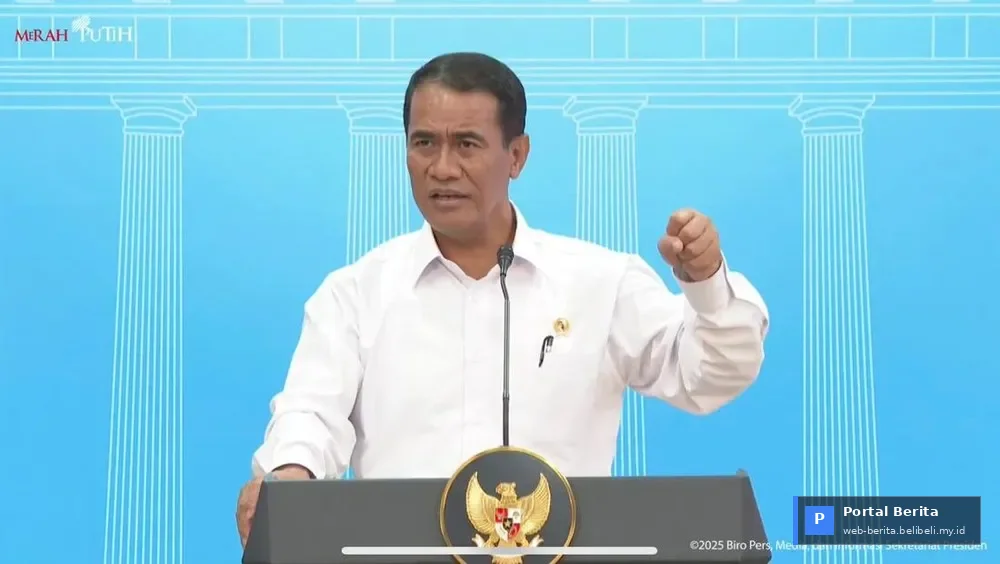
Jakarta, April 15, 2026 – The Indonesian public has been alarmed by the revelation of a large-scale fortified rice deviation scheme uncovered by the Ministry of Agriculture. Minister of Agriculture, Amran, in a press conference held today, asserted that the government has detected the circulation of rice labeled as fortified rice but which utterly fails to meet established quality and nutritional standards.
'This is a serious threat to our national nutrition improvement programs and public trust in food products,' Amran stated, emphasizing the urgency of the issue amidst government efforts to combat malnutrition.
Fraudulent Practices Endangering Health
Amran explained that the perpetrators skillfully exploit loopholes in the distribution system. The primary modus operandi involves labeling ordinary rice or rice fortified with substandard micronutrients as 'premium fortified rice.' Ministry investigations found that many of these counterfeit products are widely distributed in both traditional markets and modern retail, deceiving consumers who rely on the labels for additional nutritional intake.
'We found several brands claiming to contain iron, zinc, and B-complex vitamins, but laboratory test results showed zero or significantly low nutrient content, far below the minimum required standards,' Amran added. 'This means millions of families who purchase this rice, hoping to boost their children's nutrition, are getting no benefits whatsoever, and are even at risk of chronic micronutrient deficiencies.'
Broad Impact on Public and Market
These fraudulent practices not only have fatal health consequences, especially for vulnerable groups such as toddlers, pregnant women, and the elderly, but also damage the integrity of the food market. Prof. Dr. Siti Rahayu, a food safety expert from Gadjah Mada University, contacted separately, expressed her concern. 'The erosion of trust is the most severe. When the public no longer trusts food labels, it can derail all fortification programs that have been painstakingly built,' she remarked.
Economically, legal fortified rice producers who have invested heavily to comply with standards and certifications face unfair competition from illegal products that can be sold at lower prices due to minimal production costs.
Decisive Government Action and Enhanced Oversight
In response to these findings, the Ministry of Agriculture, alongside the National Food Agency (Bapanas) and law enforcement, has launched a series of joint operations. Amran reported that dozens of tons of counterfeit fortified rice have been seized from various storage warehouses across Java and Sumatra. Several key suspects, believed to be part of the distribution network, have been apprehended and are undergoing further investigation.
The government is also committed to strengthening oversight systems from upstream to downstream. This includes stricter routine inspections at milling factories and storage facilities, as well as increased use of traceability technology to verify the authenticity of fortified rice. Consumer education programs will also be intensified to help the public identify genuine products.
Consumer Advisory
Minister Amran urged all members of the public to exercise increased vigilance when purchasing fortified rice. 'Always carefully check the packaging and labels. Ensure there is a valid Indonesian National Standard (SNI) logo and registration number from the Food and Drug Supervisory Agency (BPOM),' he emphasized. The public is encouraged to purchase products from reputable distributors or official stores and promptly report any indications of fraud or suspected substandard products. 'Active public participation is key to eradicating these fraudulent practices,' Amran concluded.
Frequently Asked Questions About Fortified Rice
- What is fortified rice?
Fortified rice is regular rice that has been enriched with one or more essential micronutrients, such as iron, zinc, and B-complex vitamins, to enhance its nutritional value and address malnutrition issues in the community. - How can consumers identify genuine and trustworthy fortified rice?
Look for clear product labels with the SNI (Indonesian National Standard) logo, a BPOM registration number, and complete nutritional and manufacturer information. Purchase from reputable retailers and ensure the packaging is neatly sealed and undamaged. - What are the legal penalties for fortified rice fraud?
Perpetrators of fortified rice fraud can be charged under the Food Law and Consumer Protection Law, facing threats of multiple years in prison and substantial financial fines, given the serious impact on public health and the economy.