🔑 Key Takeaways
- Prof. Dr. Achmad Mochtar, a revered figure in Indonesian medicine, is on the verge of being posthumously declared a National Hero in 2026, recognizing his ultimate sacrifice during World War II.
- As director of the Eijkman Institute, Mochtar took personal responsibility for a tainted tetanus vaccine under Japanese occupation, saving his research team from torture and execution.
- This recognition champions not only his individual heroism but also the enduring principles of medical ethics and scientific integrity crucial for modern healthcare.
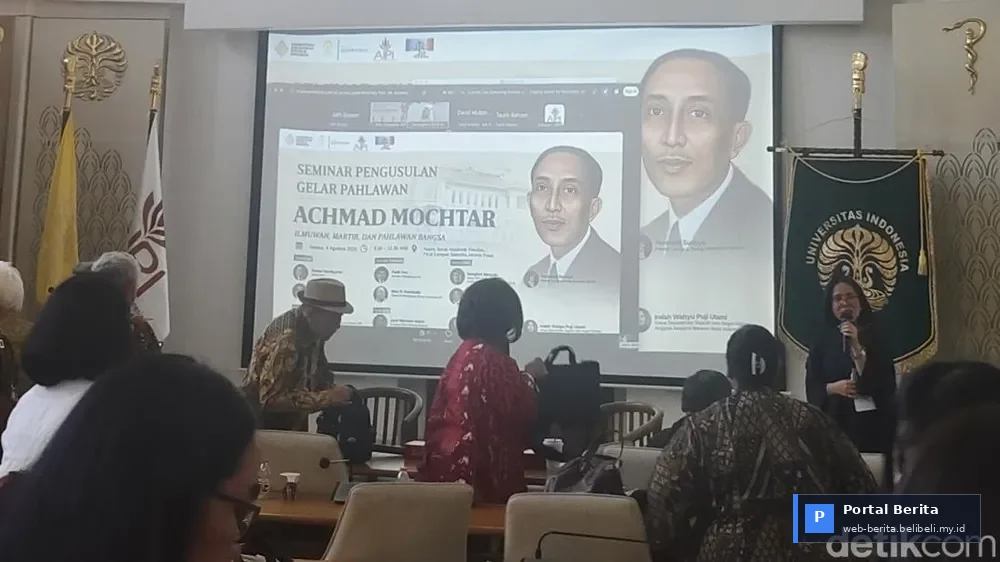
JAKARTA – As 2026 unfolds, Indonesia stands poised to honor one of its most courageous medical figures, Prof. Dr. Achmad Mochtar, with the esteemed title of National Hero. Decades after his heroic sacrifice during the Japanese occupation, strong historical evidence and widespread support from medical communities and historians are propelling his nomination toward a final decision, expected to cement his place in the nation’s pantheon of heroes.
The push for Mochtar’s recognition gained significant momentum in recent years, culminating in a thorough review by a special committee for national hero nominations. Their findings, which have been widely discussed in academic and public forums throughout late 2025 and early 2026, unequivocally highlight his profound contributions and ultimate personal cost to protect his colleagues and scientific integrity.
The Unwavering Spirit of a Medical Pioneer
Born in 1889, Achmad Mochtar was a trailblazing physician and scientist. He served as the first Indonesian director of the Eijkman Institute for Bacteriology in Jakarta from 1938. His tenure coincided with one of the most tumultuous periods in Indonesian history, marked by the escalating tensions of World War II and the subsequent Japanese occupation.
His leadership during this era was critical, as he strove to maintain the institute's vital work in public health amidst severe wartime constraints. However, it was a harrowing incident in 1945 that etched his name into the annals of medical heroism.
A Sacrifice for Science and Humanity
In the final months of the Japanese occupation, a batch of tetanus vaccines produced by the Eijkman Institute was suspected of causing illness and death among Japanese soldiers. The Japanese military police (Kempeitai) launched a brutal investigation, accusing Mochtar and his entire research team of sabotage. Faced with the torture and imminent execution of his staff, Mochtar made an agonizing decision.
He courageously took full responsibility for the alleged contamination, signing a confession that he knew was false. This act of self-sacrifice spared his colleagues from further suffering, but it sealed his own fate. Achmad Mochtar was executed by the Kempeitai in July 1945, just weeks before Indonesia declared its independence. His body was never found.
Echoes in Modern Medical Ethics
"Achmad Mochtar's story is not just a historical footnote; it is a foundational lesson in medical ethics that continues to resonate profoundly in 2026," states Dr. Ratna Sari, a prominent medical ethicist and professor at the University of Indonesia. "His willingness to sacrifice his life to protect his team and uphold the integrity of scientific research in the face of tyranny sets an unparalleled standard. It reminds us of the moral courage required in scientific pursuits and patient care."
The recognition of Mochtar as a National Hero is seen as a crucial step in acknowledging the often-overlooked heroism within the scientific and medical fields. It underscores the nation’s commitment to valuing integrity, empathy, and selflessness, particularly relevant in an age where scientific truth and public health are continuously challenged.
A Legacy That Inspires the Future
For the Indonesian medical community, Mochtar's impending recognition is a source of immense pride. "We have long advocated for Prof. Dr. Achmad Mochtar to receive this highest honor," says Dr. Budi Santoso, Chairman of the Indonesian Medical Association (IDI) in a recent press statement. "His dedication to science, his leadership, and his ultimate sacrifice embody the highest ideals of our profession. His story will inspire generations of Indonesian doctors and researchers to pursue knowledge with integrity and serve humanity with unwavering commitment."
As the final administrative processes conclude, the nation eagerly awaits the official declaration. This acknowledgment will not only rectify a historical oversight but will also serve as a powerful beacon, illuminating the path for future leaders in Indonesian healthcare and science, reminding them of the extraordinary courage that can define a life dedicated to medicine.
Frequently Asked Questions
- What was Prof. Dr. Achmad Mochtar's key contribution?
- His key contribution was his ultimate self-sacrifice in 1945, taking false blame for a tainted vaccine to save his entire research team from torture and execution by the Japanese Kempeitai.
- Why is he being proposed as a National Hero now in 2026?
- After years of advocacy and extensive historical review, strong evidence and widespread support from medical and historical communities have culminated in a final push for his official recognition, expected in 2026, acknowledging his unparalleled sacrifice and contributions.
- What is the significance of his recognition for modern Indonesia?
- His recognition in 2026 reinforces the nation's commitment to medical ethics, scientific integrity, and moral courage. It serves as an enduring inspiration for current and future generations of healthcare professionals and researchers.