🔑 Key Takeaways
- Indonesia has officially ceased all diesel imports in 2026, marking a significant milestone in energy self-sufficiency.
- The B50 biodiesel mandate, requiring a 50% blend of palm oil-derived biodiesel, is the core driver of this achievement.
- This initiative is projected to save billions in foreign exchange, boost the domestic palm oil industry, and substantially reduce carbon emissions.
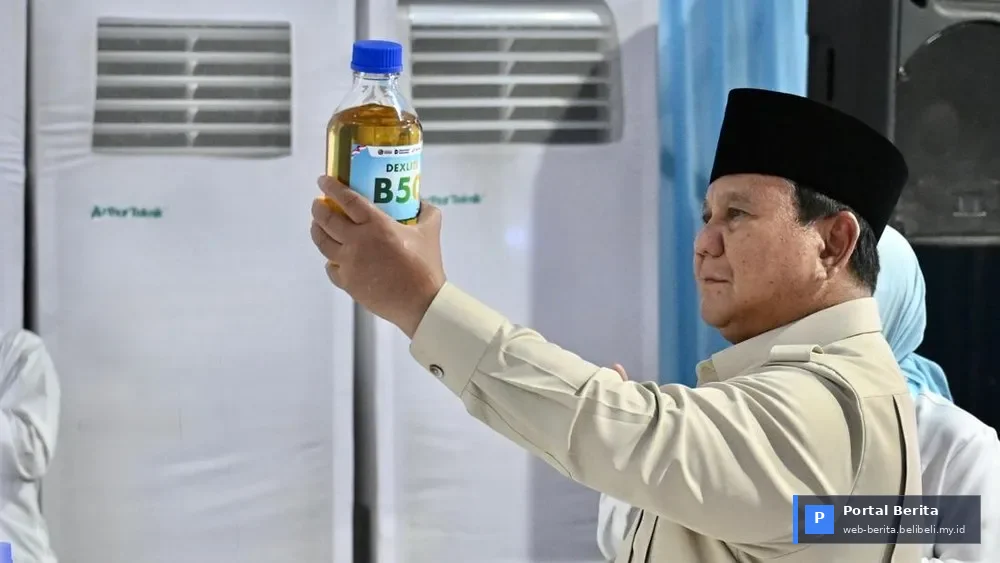
Jakarta, 2026 – President Prabowo Subianto today officially announced a new historical milestone for Indonesia: the complete cessation of diesel imports. A claim made early in his tenure has now fully materialized in 2026, thanks to the massive implementation of the B50 biodiesel program. This achievement marks a new chapter in energy sovereignty, while delivering multi-sectoral positive impacts on the economy and environment.
'Starting today, we can proudly declare that Indonesia is no longer dependent on imported diesel. This is tangible proof of our commitment to energy independence and sustainability,' President Prabowo stated during the inauguration speech at the largest biodiesel production facility in Dumai, Riau. 'B50 is not just a fuel blend; it is a symbol of our national resilience.'
The Mechanism Behind B50's Success
The B50 program, which mandates a blend of 50% palm oil-based biodiesel (CPO) with 50% petroleum diesel, has undergone various stages of testing and adjustments since its initiation. 'The transition to B50 was not without its challenges,' explained Dr. Surya Atmaja, an energy expert from Gadjah Mada University. 'It required significant investment in infrastructure, adjustments to engine standards, and a guarantee of stable CPO supply. However, with strong coordination among the government, industry, and academia, these obstacles were successfully overcome.'
The nationwide use of B50 has been verified as compatible with most modern diesel engines, following minor modifications and adaptations to fuel systems. The government has also provided incentives and technical support to ensure a smooth transition for the transportation and industrial sectors.
Encouraging Economic Impact
The halt of diesel imports is projected to generate foreign exchange savings of up to 7-8 billion US dollars annually, a significant figure that strengthens Indonesia's economic fundamentals. These funds can be reallocated to finance other infrastructure development projects or public welfare programs.
The palm oil industry, as the backbone of biodiesel production, has experienced a stable surge in demand. 'CPO prices are now more stable and provide income certainty for millions of palm oil farmers,' said Mr. Agus Salim, Chairman of the Indonesian Palm Oil Association (GAPKI). 'This creates a positive domino effect, from job creation in the plantation sector to the downstream biodiesel processing industry.'
Environmental Benefits and Future Prospects
In addition to economic gains, B50 also brings positive environmental impacts. The use of biodiesel significantly reduces greenhouse gas emissions and particulates compared to conventional diesel. Data from the Ministry of Environment and Forestry indicates a 12-15% reduction in carbon dioxide emissions from the transportation sector since B50 was fully implemented.
Looking ahead, the government does not rule out further increasing the biodiesel blend, for example to B60 or even B70, in line with technological advancements and increased sustainable CPO production. Indonesia's ambition to become the world's largest producer and exporter of biodiesel is now wide open, positioning the country as a global leader in bio-based renewable energy.
❓ Frequently Asked Questions (FAQ)
- What is B50 Biodiesel?
B50 Biodiesel is a diesel fuel blend consisting of 50% Fatty Acid Methyl Ester (FAME) or biodiesel derived from vegetable oils (commonly palm oil) and 50% petroleum diesel. - How does B50 help Indonesia stop diesel imports?
By utilizing 50% domestically produced bio-fuel, the need for imported petroleum diesel can be drastically reduced, ultimately leading to self-sufficiency and a complete halt of imports. - Is my vehicle compatible with B50?
Most modern diesel vehicles in Indonesia have undergone adaptation processes or have been designed to be compatible with higher biodiesel blends, including B50. Consult your vehicle dealer or manufacturer for more specific compatibility information.