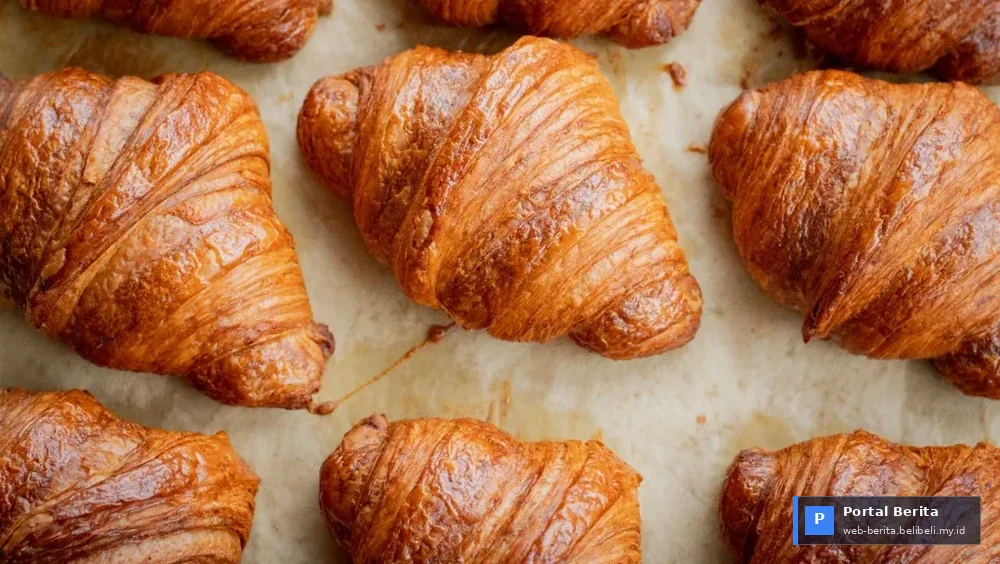
🔑 Key Takeaways
- The Pattaya Croissant gained viral attention in 2026 for its provocative shape, sparking widespread social media discussion.
- LPPOM and MUI explicitly denied halal certification for this product, citing that presentation and ethical considerations are integral to halal standards.
- This decision highlights the crucial balance between culinary innovation and adherence to religious values and ethics within Indonesia's food industry.
JAKARTA, March 22, 2026 – The Indonesian culinary scene is once again buzzing, this time with a product that has ignited fierce debate: the Pattaya Croissant. This crispy pastry, originating from Thailand, went viral in early 2026 not for its taste or exotic ingredients, but for its unique and, to many, provocative or even vulgar shape. The controversy extends beyond public discourse, drawing serious attention from Indonesia's leading halal certification body, LPPOM MUI, and the Indonesian Ulema Council (MUI).
The Viral Wave and Pattaya Croissant Controversy
Since its appearance on social media platforms like TikTok and Instagram, images and videos of the Pattaya Croissant, featuring a shape resembling human intimate organs, have circulated widely. Public reactions were divided: some viewed it as an innovative and daring form of culinary art, while the majority expressed deep concern over its inappropriateness and potential to offend religious and cultural sensitivities. “We see this phenomenon as an alarm for the food creative industry,” stated Dr. Siti Nurhayati, a food sociologist from the University of Indonesia, in an online interview in late February 2026. “Innovation should not come at the expense of ethics and prevailing societal norms.”
Why Halal Certification Was Rejected: LPPOM and MUI's Clarification
In response to the uproar, LPPOM MUI quickly issued an official statement asserting that the Pattaya Croissant could not be granted halal certification in Indonesia. Mr. Ir. Lukmanul Hakim, Director of LPPOM MUI, explained in a virtual press conference in early March 2026, “Halal certification is not merely about using pure and permissible ingredients. Beyond that, the production process, presentation, and even the final shape of the product must meet the criteria of thayyiban – that is, good, clean, and not detrimental to morals or causing slander.”
MUI further added that food products whose shapes explicitly resemble or associate with things considered vulgar or against public decency will automatically find it difficult to obtain a halal fatwa. “Halal encompasses both material and non-material aspects. If the product’s appearance itself generates negative interpretations and has the potential to undermine noble values, then it contradicts the comprehensive principle of halal,” affirmed KH. Miftahul Akhyar, Chairman of MUI, quoting from an official statement released on the MUI website on March 15, 2026. This rejection demonstrates that halal standards in Indonesia are highly comprehensive, encompassing the ethical and moral dimensions inherent in a product.
Implications for the Culinary Industry and Consumer Health in 2026
This decision by LPPOM and MUI carries significant implications for the culinary industry in 2026. Food innovators are now challenged not only to create delicious and appealing products but also to be sensitive to Indonesia's cultural and religious context. “This isn’t about limiting creativity, but about innovating responsibly,” commented Ms. Rina Anggraini, an independent food ethics consultant. “Muslim consumers seek assurance that the food they consume is not only halal in terms of ingredients but also produced and presented in a way that respects their values. This is part of holistic health—physical and spiritual well-being.”
From a health perspective, halal certification is often perceived as a guarantee of hygiene and food safety. While the Pattaya Croissant issue is more about form than ingredient safety, the halal denial indirectly highlights the importance of consumer trust. When a product is deemed to violate norms, public trust can erode, potentially impacting general perceptions of the product's quality and safety. For many Muslims, consuming halal and thayyib food is an integral part of a healthy lifestyle and peace of mind.
Ensuring Trust and Harmony in Food Innovation
Amidst the proliferation of global food trends and boundless innovation in 2026, the Pattaya Croissant case serves as a crucial reminder for food producers. Adherence to halal standards—which include ethical presentation—is not merely a religious requirement but also an essential business strategy for building trust and sustainability in a predominantly Muslim market. LPPOM and MUI continue to play a leading role in safeguarding halal integrity in Indonesia, ensuring that products circulated are not only safe and clean but also align with the noble values of society.
Frequently Asked Questions (FAQ)
- Q: What is the viral Pattaya Croissant in 2026?
A: The Pattaya Croissant is a pastry that went viral in 2026 due to its unique shape, which many found to resemble human intimate organs, sparking controversy. - Q: Why did LPPOM MUI deny halal certification for the Pattaya Croissant?
A: The denial is based on the principle of thayyiban within halal standards, which covers not only ingredients but also ethical aspects, presentation, and the product's shape to ensure it is not vulgar or morally offensive. - Q: How does this case impact the culinary industry in Indonesia?
A: This case emphasizes the importance of responsible innovation and cultural/religious sensitivity, urging producers to consider the ethical presentation of products alongside ingredients when seeking halal certification.