🔑 Key Takeaways
- Indonesia's subsidized fuel (BBM Subsidi) quota for 2026 has been finalized at 20.09 million kiloliters (KL), marking a significant reduction.
- This policy primarily aims for greater state budget efficiency, precise targeting of subsidies to those in need, and accelerated energy transition.
- The move is expected to encourage shifts towards public transport and renewable energy, while the government continues to protect vulnerable groups through social assistance schemes.
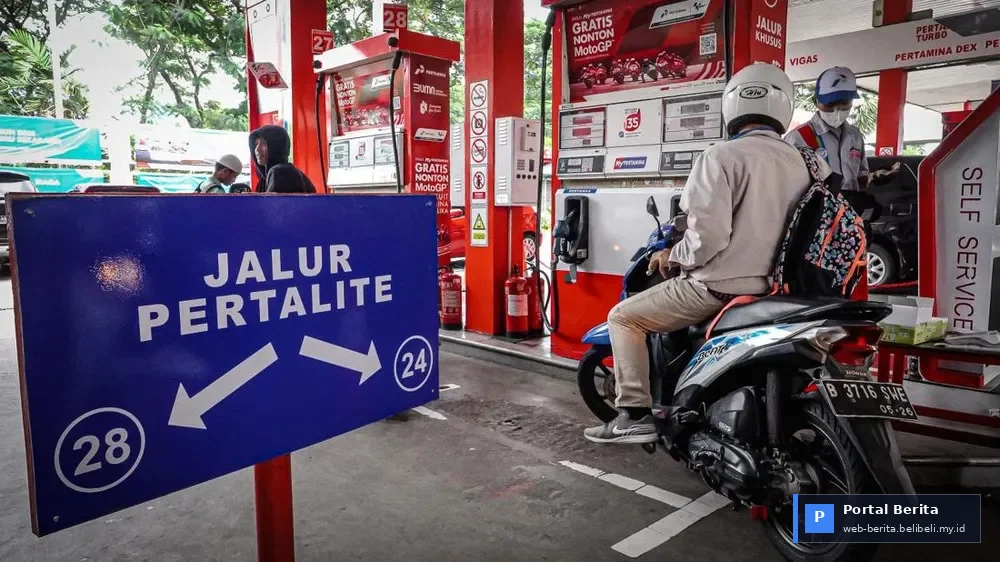
Jakarta, January 10, 2026 – The Indonesian government has officially announced the subsidized fuel (BBM Subsidi) quota for 2026, set at 20.09 million kiloliters (KL). This figure represents a significant reduction compared to previous years, marking a new chapter in national energy management. This strategic policy, which has undergone a series of in-depth studies, is being rolled out as part of the government's commitment to achieving budget efficiency, equitable distribution of subsidies, and accelerating energy transition in the country.
The reduction in the subsidized fuel quota is not without strong reasons. The government emphasizes the importance of maintaining the nation's fiscal health amidst global economic dynamics and development priorities. Fuel subsidies have long been a substantial burden on the State Budget (APBN), hindering the allocation of funds to other productive sectors.
Budget Efficiency and Targeted Subsidies
One of the main pillars behind this policy is budget efficiency. By cutting the subsidy quota, the government hopes to save trillions of rupiah, which can then be reallocated to priority programs. These reallocated funds are expected to strengthen infrastructure development, improve the quality of education and health, and stimulate economic sectors capable of creating broader employment opportunities.
Dr. Ardi Wijaya, an energy economist from the University of Indonesia, commented, 'Reducing the subsidized fuel quota is a crucial step to maintain the nation's fiscal health. With trillions of rupiah saved from misdirected subsidies, these funds can be reallocated to productive sectors such as education, infrastructure, or renewable energy research. This is a long-term investment for economic independence.'
The government is also committed to ensuring that subsidies truly benefit the communities in need. The distribution system for subsidized fuel continues to be improved, with a focus on more accurate recipient identification through digitalization and integrated data collection. This aims to reduce leakage and misuse, allowing the benefits of subsidies to be maximally felt by low-income communities and micro, small, and medium enterprises (MSMEs).
Driving National Energy Transition
More than just savings, this policy is also an integral part of Indonesia's energy transition agenda towards cleaner and more sustainable resources. By reducing dependence on subsidized fossil fuels, the government aims to encourage the public to switch to more environmentally friendly modes of transportation, such as public transport, electric vehicles, or other alternative energies.
Public policy observer, Ms. Rina Safitri, added, 'This policy sends a strong signal that Indonesia is serious about its commitment to clean energy. It will accelerate the adoption of electric vehicles and the development of renewable energy infrastructure, in line with national carbon emission reduction targets.'
The government is also preparing various incentives and facilities to support this accelerated transition, including the development of public electric vehicle charging stations (SPKLU) and energy conversion programs. The focus is on creating a new, more efficient, and sustainable energy ecosystem.
Impact and Societal Adaptation
While there may be potential adjustments at the consumer level, the government affirms its commitment to carefully monitoring the policy's impact. Various social assistance schemes and economic empowerment programs are being prepared to protect vulnerable communities from price fluctuations. Dialogue with various stakeholders, including transportation business associations and community representatives, will continue to ensure a smooth transition.
The public is urged to be more prudent in energy consumption and to start considering available alternatives. With a spirit of mutual cooperation and adaptation, it is hoped that this policy can bring long-term positive impacts for Indonesia's economy and environment.
Frequently Asked Questions (FAQ)
- Who is still eligible for subsidized fuel?
The government continually updates the eligibility criteria for subsidized fuel, which generally includes low-income communities, MSMEs, certain public transport operators, and specific fishermen or farmers with defined volume limits. Digital identification systems are used to ensure accurate targeting.
- How does the government ensure subsidies are precisely targeted?
Through digital registration and identification systems for vehicles and users, such as using identity cards or QR codes linked to an integrated database, to limit subsidized fuel purchases according to specified quotas and criteria.
- What is the impact of this policy on non-subsidized fuel prices?
The subsidized fuel quota policy does not directly affect non-subsidized fuel prices, which typically follow global crude oil price fluctuations and exchange rates. However, it is expected to reduce market distortions and encourage overall energy efficiency.