🔑 Key Takeaways
- KRL Rangkasbitung-Tanah Abang services fully resumed at 10:02 PM WIB, concluding a brief technical disruption.
- The disruption was triggered by a technical issue identified during a network optimization phase, highlighting the increasing complexity of modern infrastructure.
- KAI Commuter demonstrated a swift and efficient response, minimizing impact on thousands of commuters thanks to advanced 2026 diagnostic systems.
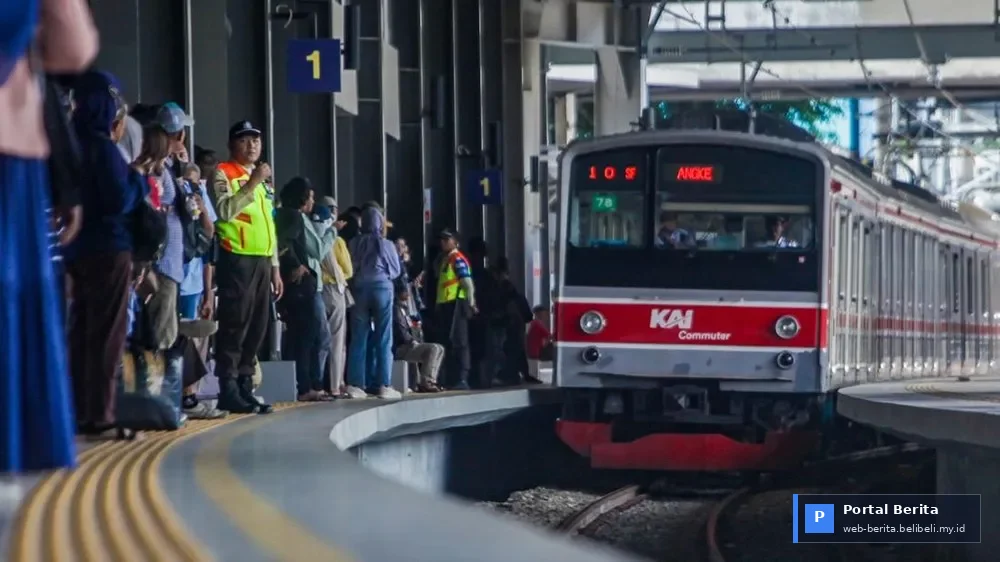
JAKARTA, April 22, 2026 – Thousands of commuters on the busy KRL Rangkasbitung-Tanah Abang route can breathe a sigh of relief after the Commuter Line service fully returned to normal on Wednesday night, at 10:02 PM WIB. The brief disruption, which occurred earlier, was swiftly resolved by the KAI Commuter team, reaffirming their commitment to public transport reliability amidst the demands of mobility in the capital and its surrounding areas.
The return to normal operations is crucial given the vital role of this route as the backbone of mobility for residents from Banten and western Jakarta areas traveling to the city center. This incident, though brief, underscores the ongoing challenges in maintaining modern transport infrastructure at peak performance.
Technical Glitch and Rapid Response
According to an official statement from KAI Commuter, the disruption stemmed from an unexpected technical issue within the integrated signaling system. 'This is part of our regular network optimization phase aimed at enhancing capacity and stability. Although rare, sometimes adjustments can cause temporary disruptions,' explained Anneke Putri, Head of Public Relations for KAI Commuter, in a virtual press conference held Thursday morning.
Technical teams were immediately deployed, utilizing advanced diagnostic systems that had been upgraded in early 2026. 'We managed to identify the root cause and implement a solution in less than two hours after the first report,' Putri added. This rapid response minimized passenger buildup at critical stations like Tanah Abang and Duri, known as major transport hubs.
Impact and Economic Implications
Despite being quickly resolved, any disruption to KRL services has significant ripple effects. During peak hours, the Rangkasbitung-Tanah Abang line transports tens of thousands of passengers per hour. 'For businesses, even an hour's delay can mean lost productivity. It also impacts informal sectors and SMEs that heavily rely on timely distribution and meetings,' stated Dr. Budi Santoso, a transport economics observer from the University of Indonesia.
Dr. Santoso emphasized the importance of continuous investment in technology and predictive maintenance. 'The government and operators like KAI Commuter need to keep investing in more resilient and intelligent systems to prevent future disruptions, especially as Greater Jakarta's population and mobility continue to grow,' he remarked.
KAI Commuter's Commitment to 2026 Service Excellence
KAI Commuter reiterated its commitment to ensuring passenger safety and comfort. 'Incidents like this serve as valuable lessons for us. We will continue to evaluate and improve our disruption handling protocols and maintenance systems,' said Anneke Putri.
Aligned with its 2026 operational targets, KAI Commuter plans to implement more AI-driven predictive maintenance technologies and update its KRL fleet to reduce the potential for technical malfunctions. These steps are expected to strengthen public trust in KRL services as an efficient and reliable mass transit option in the modern era.
FAQ - Frequently Asked Questions
- Are KRL Rangkasbitung-Tanah Abang services fully back to normal?
- Yes, KRL Rangkasbitung-Tanah Abang services have fully resumed normal operations since 10:02 PM WIB on Wednesday night.
- What caused the disruption to the KRL service this time?
- The disruption was caused by a technical issue within the integrated signaling system that occurred during KAI Commuter's network optimization phase.
- How is KAI Commuter ensuring similar incidents do not recur in the future?
- KAI Commuter is committed to continuously evaluating handling protocols, improving maintenance systems, and investing in AI-driven predictive maintenance technologies and KRL fleet updates.