🔑 Key Takeaways
- The 21-hectare Natural Medicinal Plant Center (PTOBA) at Pondok Pesantren Al Ittifaqiah, South Sumatra, is fully operational in 2026, focusing on herbal downstreaming.
- This BPOM initiative aims to boost the natural resource-based economy, enhance the value of local products, and strengthen national pharmaceutical independence.
- The center integrates cultivation, research, and standardization of herbal products, actively involving the local community, and is projected to increase national herbal exports.
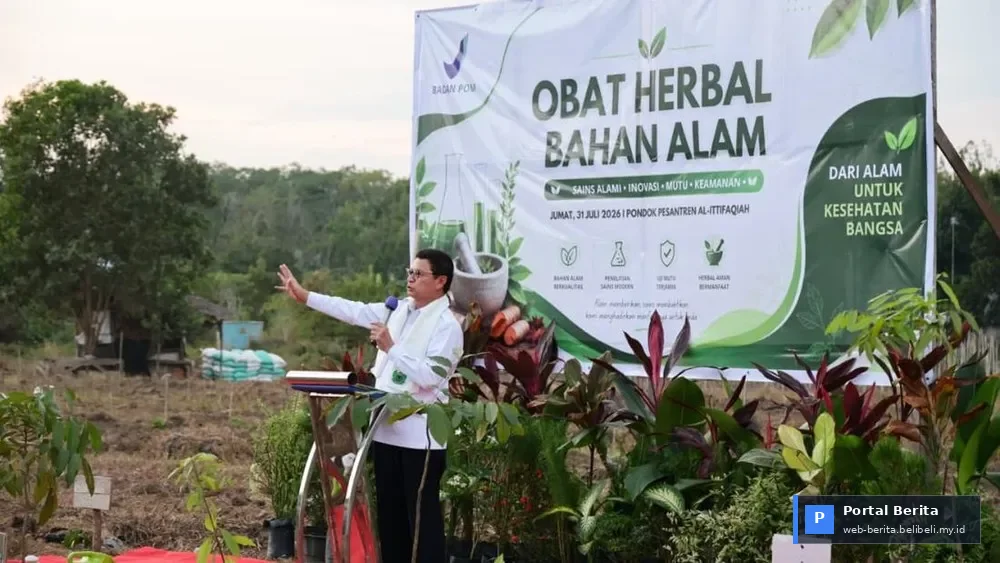
Palembang, South Sumatra – The year 2026 marks a new era for Indonesia's herbal industry. The National Agency of Drug and Food Control (BPOM) has officially announced that the 21-hectare Natural Medicinal Plant Center (PTOBA) located at Pondok Pesantren Al Ittifaqiah, South Sumatra, is now fully operational. This strategic initiative, inaugurated by the Head of BPOM, represents a significant step to accelerate the downstreaming of herbal commodities and bolster the national economy based on natural resources.
Driving a Natural Resource-Based Economy and Health Sovereignty
Indonesia, with its unparalleled biodiversity, possesses immense potential to become a global leader in the herbal industry. The PTOBA in Palembang is designed as the epicenter of this development. 'This initiative is not just about cultivation, but about creating a sustainable economic ecosystem that empowers farmers, local industries, and ultimately, the entire nation,' stated Dr. (HC) Penny K. Lukito, Head of BPOM RI, in her address regarding the full operation of this facility in 2026. She emphasized that the center will serve as a locomotive for downstreaming, transforming raw materials into high-value-added products such as phytopharmaca, standardized herbal medicines, and health supplements.
This development aligns with the government's vision to achieve health self-sufficiency by 2045, with herbal products as one of its pillars. With modern facilities for cultivation, extraction, and formulation, PTOBA is expected to reduce dependence on imported pharmaceutical raw materials and enhance the competitiveness of Indonesian herbal products in the global market.
Strategic Role of Pondok Pesantren Al Ittifaqiah and Community Empowerment
The selection of Pondok Pesantren Al Ittifaqiah as the location for PTOBA is not arbitrary. It represents a synergy between the government, educational institutions, and the community. The Islamic boarding school not only provides extensive land but also a potential human resource pool. Students and local residents are directly involved in the cultivation, processing, and marketing, gaining valuable training and new skills.
'Community involvement is key to our success,' said a representative from Pondok Pesantren Al Ittifaqiah. 'We see this as a golden opportunity not only to improve the economic well-being of the residents but also to educate the younger generation about the importance of environmental preservation and knowledge development based on local wisdom.' This collaborative model creates a positive ripple effect, fostering grassroots entrepreneurship and ensuring program sustainability.
From Field to Lab: Standardization and Herbal Innovation
PTOBA focuses not only on cultivation but also on research, development, and quality standardization. The facility is equipped with state-of-the-art laboratories for phytochemical research, safety testing, and efficacy validation of herbal products. 'Quality, safety, and efficacy are inseparable principles of every product originating from this center,' affirmed Dr. Lukito. 'Through stringent quality control processes and innovative research, we ensure that Indonesian herbal products can compete and be trusted in both domestic and international markets.'
Continuous innovation is also a priority, involving the development of superior medicinal plant varieties, optimization of extraction methods, and formulation of new products that meet modern market demands. PTOBA collaborates with universities and research institutions to push the boundaries of herbal science.
National Impact and Future Projections
Since its full operation in 2026, PTOBA is projected to make a significant contribution to the national GDP. Economic analysis indicates a potential 15% increase in herbal product exports by 2027, along with the creation of tens of thousands of new jobs in the agricultural, processing, and distribution sectors. Furthermore, this center is expected to become a pilot model to be replicated in various other regions across Indonesia, solidifying Indonesia's position as the 'lungs of the world' and the 'world's herbal pharmacy'. With BPOM's support and active community participation, the future of Indonesia's herbal industry looks increasingly bright and promising.
FAQs About BPOM's Palembang Medicinal Plant Center
1. What is the primary goal of BPOM's Medicinal Plant Center in Palembang?
Its main goal is to downstream herbal commodities, foster a natural resource-based economy, enhance the value of local herbal products, and strengthen national pharmaceutical independence.
2. How does this center benefit the local community and economy?
The center creates jobs, empowers farmers and MSMEs through training and direct involvement in cultivation and processing, and increases the income of communities around Pondok Pesantren Al Ittifaqiah.
3. What is BPOM's role in the development of herbal medicine in Indonesia?
BPOM plays a crucial role in regulating, ensuring quality control, standardizing, researching, and developing herbal products, guaranteeing product safety and efficacy, and supporting innovation within the industry.