🔑 Key Takeaways
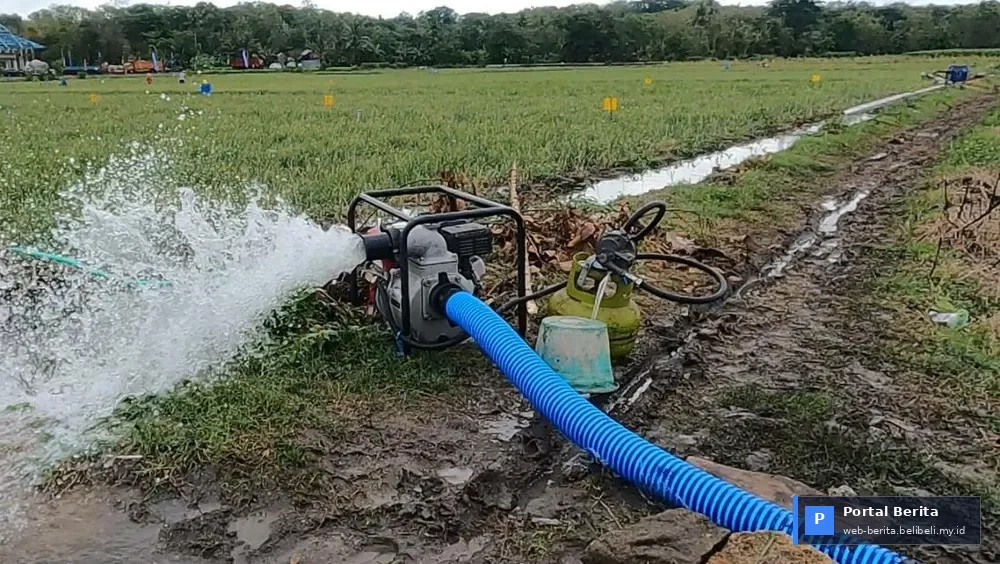
- The Ministry of Agriculture (Kementan) has allocated funding for 56,000 water pump units to be distributed in Fiscal Year 2026 for drought mitigation.
- This initiative aims to protect productive agricultural land and ensure stable national food supplies amidst climate change threats and El Niño phenomena.
- The approach integrates modern technology with climate adaptation strategies to support the sustainability of Indonesia's agricultural sector.
JAKARTA – The Ministry of Agriculture (Kementan) reaffirms its commitment to strengthening national food security amidst global climate challenges. As a strategic anticipatory measure, Kementan has officially announced the procurement and distribution of 56,000 new water pump units that will be fully operational in Fiscal Year 2026. This ambitious initiative is designed to protect tens of thousands of hectares of rice fields from the increasingly intense impacts of drought.
This program is not merely a response to short-term threats but is part of Kementan's long-term vision to create a more resilient and adaptive agricultural system to climate change. With this significant investment, the government aims to boost agricultural land productivity and stabilize food supplies, especially rice, which is crucial for the economy and public welfare.
Comprehensive Mitigation Strategy
The decision to provide thousands of water pumps is based on in-depth analysis of global weather patterns and climate projections. Experts predict that the El Niño phenomenon will continue to bring significant drought impacts to various regions, including Indonesia, throughout 2026. Therefore, Kementan is taking proactive steps to ensure farmers have access to adequate irrigation technology.
'We learned a great deal from past drought challenges. 2026 is a crucial moment to implement more robust and sustainable solutions,' stated Dr. Ir. Budi Santoso, M.Agr., Director General of Food Crops at Kementan, during a virtual press conference. 'These 56,000 water pumps are not just a number; they are an investment in the future of our food security. They will help farmers manage water more efficiently, especially in rain-fed areas or those with limited irrigation infrastructure.'
Economic and Social Impact
The distribution of these water pumps is expected to bring multiple positive impacts. Economically, guaranteed water availability will reduce the risk of crop failure, maintain farmers' income stability, and curb food price volatility in the market. It will also support rural economic growth through increased agricultural activities and job creation.
Socially, the program is expected to reduce migration pressure from rural to urban areas due to economic difficulties in the agricultural sector. Furthermore, with stable food supplies, the government can focus more on other development programs, such as education and health.
Collaboration and Technology
Kementan also emphasizes the importance of collaboration with local governments, farmer groups, and technology providers. Training on the use and maintenance of water pumps will be an integral part of the program, ensuring that the tools can be optimally utilized by farmers. In addition to conventional water pumps, Kementan is exploring the use of solar-powered pumps for remote areas difficult to reach by electricity, simultaneously supporting sustainable and environmentally friendly agriculture.
'Our approach is holistic,' added Dr. Budi. 'It's not just about providing tools, but also empowering farmers with relevant knowledge and skills. We want to see every drop of water utilized maximally to yield the best harvest.' With this thorough preparation, Indonesia is determined to face the climate challenges of 2026 with optimism and a solid strategy.
❓ Frequently Asked Questions
What is Kementan's main goal in preparing 56,000 water pumps for 2026?
The primary goal is to mitigate the projected impacts of extreme drought, safeguard national food security, and ensure stable agricultural production across Indonesia.
How will these water pumps be distributed to farmers?
The water pumps will be distributed through a coordinated program with local governments and farmer groups, focusing on drought-prone areas and major food production regions.
Besides water pumps, what other drought mitigation steps is Kementan taking?
In addition to water pumps, Kementan is also focusing on the construction and rehabilitation of irrigation networks, the development of drought-tolerant crop varieties, and farmer education programs on climate-smart agricultural practices.