🔑 Key Takeaways
- Indonesia and China are significantly strengthening their strategic partnership in 2026, focusing on cutting-edge Artificial Intelligence (AI) development and substantial green investment.
- The collaboration involves sharing expertise in AI research, digital talent development, as well as renewable energy projects and electric vehicle infrastructure.
- This bilateral cooperation is expected to significantly boost Indonesia's economic growth, create jobs, and position Southeast Asia as a hub for sustainable innovation.
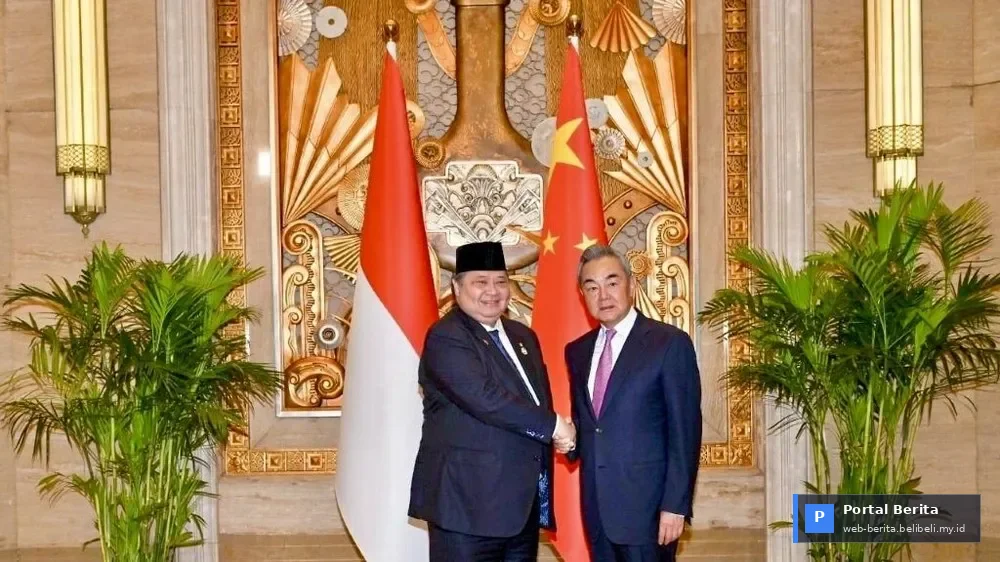
Shanghai, China – March 15, 2026 – Indonesia and China continue to solidify the foundations of their strategic partnership with an intensified focus on transformative sectors: Artificial Intelligence (AI) and Green Investment. A high-level meeting between Indonesia's Coordinating Minister for Economic Affairs, Airlangga Hartarto, and Politburo Member of the Communist Party of China Central Committee, Wang Yi, in Shanghai, marks a new chapter in this mutually beneficial collaboration, with ambitious targets set for 2026 and beyond.
The discussions underscored both nations' commitment to pooling their economic and technological strengths to drive sustainable development and regional innovation. This partnership is not just a promise but a concrete roadmap designed to address global challenges and capitalize on digital and sustainability opportunities.
Bolstering AI Collaboration for Digital Supremacy
The AI sector took center stage in the discussion agenda. Indonesia, with its dynamic young population and rapidly expanding digital market, views China as a key partner in accelerating AI adoption and development. Wang Yi conveyed China's appreciation for Indonesia's digital economy potential, which is projected to reach a valuation of approximately USD 250 billion by late 2026.
“Collaboration in AI is not just about technology transfer, but also about capacity building, expert exchange, and creating an inclusive innovation ecosystem,” stated Coordinating Minister Airlangga Hartarto in a press conference following the meeting. “We are exploring joint training programs, AI research centers, and the development of ethical AI frameworks adaptable to the regional context.”
Dr. Anisa Rahayu, Senior Economist at the Jakarta-based Institute for Economic & Social Research (LPEM FEB UI), observed, “The synergy between Indonesia's burgeoning digital talent pool and China's technological prowess in AI is a game-changer for regional innovation by 2026. This will accelerate digital transformation across various sectors, from manufacturing to healthcare.”
Pioneering Green Investment and Sustainable Development
Beyond AI, green investment stands as a critical pillar of this partnership. Both nations are committed to accelerating the transition to a low-carbon economy. China, as a major global investor, has shown significant interest in renewable energy projects in Indonesia, including solar, wind, and geothermal power, as well as the development of electric vehicle (EV) infrastructure and sustainable manufacturing.
“Capital flow into renewable energy projects in ASEAN, especially Indonesia, has surged by roughly 30% in the last year, reflecting robust confidence in green development initiatives for 2026,” said Professor Li Ming, Director of the Asian Digital Policy Think Tank in Beijing. “This partnership will ensure that economic growth aligns with environmental sustainability goals.”
Various pilot projects for green factories and advanced recycling facilities were also discussed, with the potential for billions of dollars in investment, creating thousands of new jobs and promoting more eco-friendly industrial practices in Indonesia.
Economic Implications and Regional Impact
This Indonesia-China strategic partnership is projected to yield substantial economic impacts. Beyond job creation and technology transfer, the collaboration is expected to enhance Indonesia's economic competitiveness in the global market. With a focus on AI and sustainability, both nations aim to position themselves as leaders in the future economy.
This cooperation is also anticipated to have broader positive ripple effects across Southeast Asia, elevating standards of innovation and sustainability throughout the region. With China's support, Indonesia's ambition to become a digital and green economic hub in Southeast Asia becomes increasingly realistic by 2026.
Frequently Asked Questions
1. What are the primary focuses of the Indonesia-China strategic partnership in 2026?
The primary focuses are on the development of Artificial Intelligence (AI) and increased investment in green sectors, including renewable energy and sustainability.
2. How will AI collaboration benefit Indonesia?
Through AI collaboration, Indonesia will gain access to technological expertise, joint training programs, and the development of ethical AI frameworks, aiming to accelerate digital transformation and create high-quality jobs.
3. Which green sectors are key targets for Chinese investment in Indonesia?
Chinese green investments are concentrated on renewable energy projects such as solar, wind, and geothermal power, as well as the development of electric vehicle infrastructure and sustainable manufacturing.