🔑 Key Takeaways
- Tomato prices at the farmer level in Indonesia have plummeted in early 2026 due to abundant production, raising significant concerns among farmers and the food industry.
- The National Food Agency (Bapanas) has urged local governments to immediately implement 'Buy Local' campaigns, encouraging civil servants and the public to purchase tomatoes directly from farmers.
- Long-term strategies focus on improving supply chain management, diversifying processed tomato products, and strengthening export capabilities to stabilize prices and support farmer welfare.
JAKARTA – A surge in tomato supply at the beginning of 2026 has led to a significant drop in the commodity's price at the farmer level, triggering widespread concern about the welfare of local food producers. The National Food Agency (Bapanas) has responded swiftly to the situation, calling upon all local governments across Indonesia to promote 'Buy Local' (Aksi Bela Beli) campaigns as an urgent mitigation step.
Price Plunge: A Farmer's Dilemma During Peak Harvest
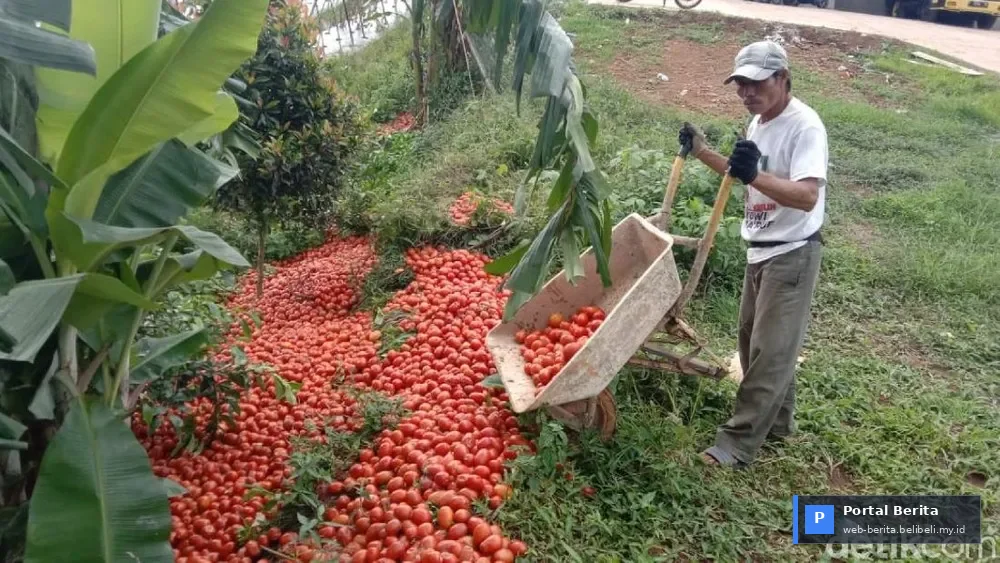
The phenomenon of tomato overproduction, often referred to as a 'bumper harvest,' has now become a double-edged sword for farmers. While normally a blessing, without adequate market management, it can lead to losses. Tomato prices have reportedly fallen below production costs in several key agricultural centers, forcing farmers to sell their produce at extremely low prices or even leave it to rot.
Dr. Siti Aminah, an agricultural economist from Gadjah Mada University, explained, 'Poorly coordinated production cycles, coupled with a lack of accurate market forecasting data at the farmer level, are often the primary triggers. In 2026, the success of productivity improvement programs has ironically turned into a challenge when domestic market absorption is not ready.' She added the importance of an integrated market information system to prevent similar situations in the future.
Bapanas and 'Buy Local' Campaigns: Short-Term Solutions
Addressing this critical situation, Bapanas Head, Mr. Arif Satria, stated in a press release, urging local governments to immediately instruct civil servants and the general public to actively participate in the 'Buy Local' campaigns. 'We are asking local governments to initiate movements for direct tomato purchases from farmers or through agricultural cooperatives. This is not just about buying; it's about solidarity and maintaining economic stability at the grassroots level,' emphasized Mr. Satria.
This initiative is expected to directly absorb the surplus tomato production, helping to prop up prices and reduce farmer losses. Several local governments have reportedly responded quickly, organizing direct sales points at government offices, traditional markets, and public areas, making it easier for communities to buy fresh tomatoes at fairer prices for farmers.
Long-Term Steps: Securing the Future of Tomato Commodities
Beyond emergency solutions, Bapanas also stressed the importance of long-term strategies to prevent the recurrence of similar crises. These include strengthening partnerships between farmers and the food processing industry to diversify processed tomato products, such as sauces, juices, or sun-dried tomatoes, which have higher added value and longer shelf lives. Export capacity building programs are also a priority, encouraging farmers and cooperatives to meet international quality standards and access global markets.
Furthermore, education on data-driven planting management and precision agriculture technology is expected to help farmers make more informed decisions regarding planting patterns and production volumes. 'Investment in soil sensor technology and AI-driven weather forecasts will be key to optimizing planting and harvesting schedules, minimizing the risk of oversupply in the future,' concluded Dr. Aminah.
The 2026 tomato price crisis serves as an important reminder of the need for synergy among the government, farmers, and industry players to create a more resilient and sustainable food ecosystem.
Frequently Asked Questions About the 2026 Tomato Price Drop
Why have tomato prices dropped significantly in 2026?
Tomato prices have fallen due to a substantial surplus in production in several regions, exceeding the domestic market's absorption capacity, leading to an oversupply.
What is Bapanas's proposed 'Buy Local' campaign?
The 'Buy Local' campaign is an initiative by Bapanas urging local governments to instruct civil servants and the public to purchase tomatoes directly from farmers or cooperatives to absorb excess supply and stabilize prices.
What are the long-term solutions for this issue?
Long-term solutions include increasing the diversification of processed tomato products, strengthening exports, improving supply chain management, and utilizing precision agriculture technology for more accurate planting planning.