🔑 Key Takeaways
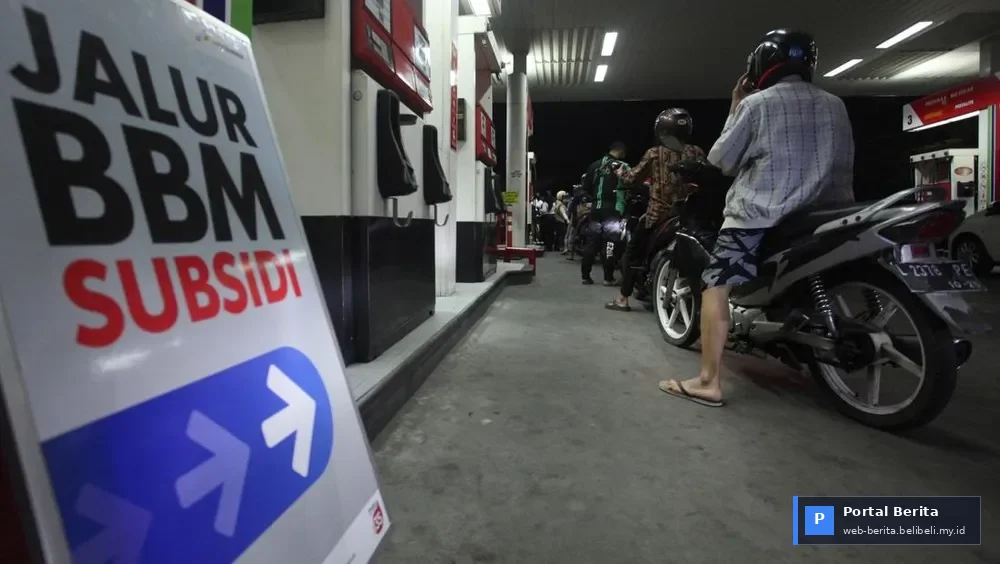
- The Indonesian government has guaranteed that the price of subsidized fuel, Pertalite, will remain stable without any increases until December 2026.
- This measure aims to curb inflationary pressures, maintain public purchasing power, and support the sustainability of micro, small, and medium-sized enterprises (MSMEs).
- Economic analysts highlight the positive impact on domestic stability but also stress the need for continuous evaluation of the budgetary burden of subsidies and long-term energy strategies post-2026.
JAKARTA – Good news for millions of motorists and business owners across Indonesia. The government has officially announced its guarantee of Pertalite fuel price stability until the end of 2026. This decision underscores the government's commitment to maintaining domestic economic stability amidst global commodity price fluctuations and efforts to control inflation.
The announcement, made by the Ministry of Energy and Mineral Resources (ESDM) earlier this year, confirms that there will be no price increase for Pertalite, which is one of the most widely used subsidized fuel types by the public. This policy is expected to provide certainty for households and industries, especially MSMEs that heavily rely on logistics costs.
Government's Commitment and Economic Impact
The guarantee of stable Pertalite prices is not without reason. According to a spokesperson from the Ministry of Finance, this move is strategic to dampen potential inflationary spikes that could hit people's purchasing power. "Stable subsidized fuel prices are a crucial foundation for keeping inflation in check, especially amidst projected global economic uncertainties throughout 2026," they explained.
The direct impact of this policy is expected to be significantly felt in the transportation and logistics sectors. Mr. Budi Santoso, Chairman of the Indonesian Truck Entrepreneurs Association (APTI), welcomed the decision. "The certainty of Pertalite prices until December 2026 provides a breathing space for logistics players. We can plan operational costs better, which ultimately helps keep product prices stable in the market," he stated.
Furthermore, this stability is also expected to foster the growth of MSMEs. With more predictable operational costs, small businesses can focus more on innovation and development without being haunted by sudden energy cost increases.
Analyst Perspectives and Budgetary Challenges
While positively received, the policy has not escaped the scrutiny of economists. Dr. Lina Cahyadi, a senior economist from the Center for Economic Studies at the University of Indonesia, shared her perspective. "This policy is a necessary intervention to protect the public and the economy from external shocks. However, we must also be realistic about the budgetary burden borne by the state. Fuel subsidies are a powerful instrument, but their sustainability needs continuous evaluation in line with global crude oil price dynamics and clean energy transition targets," she noted.
The energy subsidy budget indeed constitutes one of the government's largest expenditures. Unpredictable global oil price fluctuations can exacerbate this burden. On the other hand, the government is also striving to achieve clean energy targets and reduce emissions, which may necessitate a re-evaluation of traditional fuel subsidy schemes in the future.
Looking Ahead: The Future of Subsidized Energy Policy
A major question that arises is what will happen after December 2026? The government indicated that this period would be used for a comprehensive review of the energy subsidy scheme. "We will continue to monitor global and domestic economic developments. After December 2026, there will likely be more targeted and sustainable policy adjustments, possibly focusing on subsidies for those who truly need them," stated a senior official from the Fiscal Policy Agency.
Discussions around quota-based subsidies or the use of technology for more efficient subsidy distribution are hot topics among policymakers. The goal is to ensure that state funds are optimally utilized while maintaining public welfare.
With the guaranteed stable price of Pertalite until the end of this year, the Indonesian public can breathe a small sigh of relief. However, the journey towards a more sustainable and efficient energy policy remains a top priority for the government in the coming years.
Frequently Asked Questions (FAQ)
- What is Pertalite and why is its price guaranteed to be stable?
Pertalite is a type of subsidized fuel in Indonesia. Its price is guaranteed stable by the government until December 2026 to control inflation, maintain public purchasing power, and protect businesses from global economic fluctuations. - Who primarily benefits from this Pertalite price stability policy?
Private vehicle users (motorcycles and cars), as well as micro, small, and medium-sized enterprises (MSMEs) who heavily rely on transportation and logistics costs for their business operations. - What are the government's plans regarding Pertalite prices after December 2026?
The government plans to review its energy subsidy policies after December 2026, with potential adjustments to make the subsidy scheme more targeted and efficient, while also considering the transition towards cleaner energy.