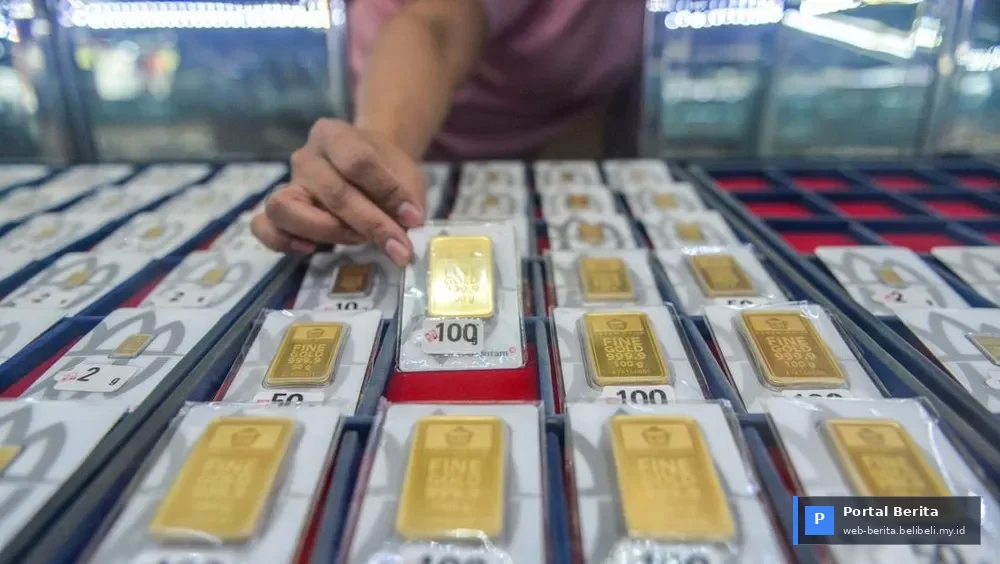
🔑 Key Takeaways
- Gold prices are showing unusual stagnation in 2026, despite escalating geopolitical tensions in the Middle East.
- Key economic factors, including high real interest rates and a strong US dollar, are dampening gold's appeal.
- Investors are increasingly diversifying their safe-haven allocations beyond gold, exploring government bonds and select digital assets.
Jakarta, May 21, 2026 — As geopolitical tensions once again simmer in the Middle East, global markets are witnessing an unusual phenomenon: the price of gold remains remarkably subdued. Contrary to its historical response as a primary safe-haven asset, the precious metal shows surprising stagnation, prompting questions among investors and financial analysts. This condition highlights a fundamental shift in market dynamics and investor preferences in 2026.
Why Isn't Gold Soaring?
Market analysts generally agree that several macroeconomic factors are playing a significant role in curbing gold's ascent. One primary reason is the relatively high real interest rates prevalent across many developed economies. When central banks maintain rates at levels that make income-generating investments (like bonds) more attractive, the appeal of non-yielding gold diminishes. This encourages investors to seek opportunities elsewhere that offer better returns.
Furthermore, the sustained strength of the U.S. Dollar (USD) also acts as a dampener. The USD traditionally serves as an alternative safe haven, and with its robust performance in 2026, many investors opt to secure their capital in the U.S. currency rather than gold. “Amidst global uncertainties, the U.S. Dollar and U.S. government bonds often become the primary destination for investors seeking security, effectively competing with gold’s allure,” explains Sarah Chen, Head of Commodity Strategy at Nexus Financial Group.
Shifting Investor Perspectives and Asset Diversification
This phenomenon also reflects a market maturity concerning regional geopolitical unrest. Following a series of incidents in the Middle East over recent years, the market appears to have developed a certain ‘immunity’ or at least a less panicked reaction to every escalation. Investors are now more focused on long-term economic impacts rather than impulsive responses to political headlines.
There is also a growing trend of diversifying safe-haven assets. Beyond government bonds, some investors are now considering certain regulated digital assets or other financial instruments that offer inflation hedging. This indicates that gold's traditional role as the sole arbiter of investment security is being challenged by an increasingly sophisticated array of choices.
Looking Ahead: Gold's Role in a New Era
While gold may no longer be the automatic go-to asset during crises, experts do not believe its role will completely vanish. “Gold will remain a vital component in portfolio diversification, especially as a hedge against unexpected inflation or as a counterbalance to stock market volatility,” states David Lee, Lead Market Analyst at Global Capital Insights. However, expectations for gold to surge dramatically due to geopolitical tensions may need to be revised in the coming years, with a focus shifting to broader macroeconomic dynamics.
Frequently Asked Questions
Why is gold considered a safe-haven asset?
Gold is traditionally seen as a safe haven due to its ability to retain value amidst economic or geopolitical uncertainty. Its finite supply historically makes it a stable store of value.
What factors are currently suppressing gold prices?
In 2026, pressures on gold prices stem from relatively high real interest rates, a strong US dollar, and a shift in investor focus towards other assets offering comparable yield potential or stability.
Will gold lose its role as a hedge in the future?
Not entirely. Gold will likely retain its role, but it might evolve from a direct responder to regional tensions to a component of long-term portfolio diversification or an inflation hedge.