🔑 Key Takeaways
- In 2026, the Indonesian government is actively promoting the formalization and capacity building of people's mining to meet national gold production targets.
- The program focuses on technical training, providing access to capital, and adopting environmentally friendly, mercury-free mining technologies.
- The involvement of people's mining is expected to empower local economies, create jobs, and increase state revenue from the mineral sector.
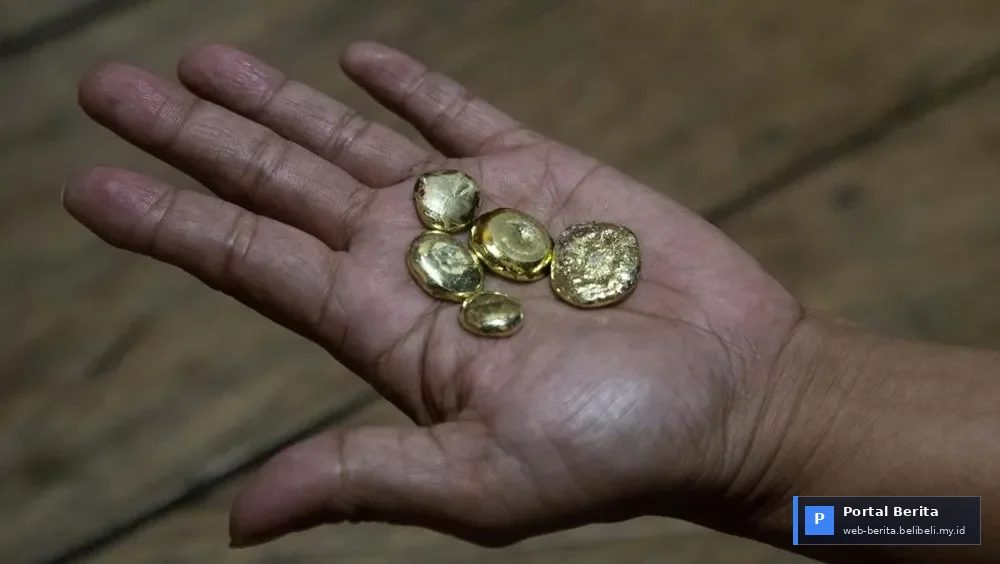
JAKARTA, February 14, 2026 – Indonesia, a nation rich in mineral resources, is solidifying its position in the global gold market through an innovative strategic approach in 2026. Central to this strategy is the mainstreaming of 'people's mining' or small-scale artisanal mining (PSKT) as a significant contributor to national gold production. This move is not merely about increasing volume but also about local economic empowerment, formalizing the informal sector, and implementing more responsible mining practices.
Why People's Mining is a Priority
The gold potential in areas managed by people's mining has often been under-recorded and suboptimal in its contribution to the formal economy. However, with the right policies, this sector can become a driving force. The Ministry of Energy and Mineral Resources (ESDM) at the beginning of 2026 reaffirmed its commitment to integrate people's mining into a legal and transparent gold supply chain.
“We view people's mining not just as traditional mining actors but as vital national assets. Through formalization programs, we aim to increase their contribution up to 20% of the total national gold production in 2026,” stated Dr. Ir. Budi Santoso, Director-General of Minerals and Coal at the Ministry of ESDM, during a press conference in Jakarta. “This is a crucial step towards achieving Indonesia's ambitious gold production targets.”
Government Initiatives and Support
Various government initiatives have been launched in 2026 to support this transition. One such initiative is an intensive training program for small-scale miners on efficient, safe, and environmentally friendly mining techniques. A key focus is the elimination of mercury, a hazardous substance often used in gold purification. Alternative technologies such as gravity methods and closed cyanidation are now being promoted through partnerships with universities and major mining companies.
Furthermore, the government is facilitating access to capital through micro-credit schemes and partnerships with regional banks. This aims to enable miners to invest in more modern and efficient equipment and to meet established operational standards.
“The formalization of people's mining will provide legal certainty for miners, while also simplifying the oversight of responsible mining practices. It also opens opportunities for them to connect directly with broader markets and secure fair prices,” explained Prof. Dr. Siti Aminah, an economist from Gadjah Mada University specializing in rural economies.
Economic and Environmental Impact
The increased role of people's mining is expected to bring multifaceted positive impacts. Economically, the program is projected to create thousands of new jobs in rural areas, increase household incomes, and stimulate local economic growth through greater money circulation.
On the environmental front, the transition towards mercury-free practices is a breath of fresh air. The National Environmental Organization (OLHN) has welcomed this initiative, although it emphasizes the importance of continuous oversight. “It is vital to ensure that alternative technologies are consistently implemented and that the environmental impact of mining remains minimized. Education and law enforcement must go hand in hand,” said Rina Suryani, OLHN Campaign Coordinator.
Looking Ahead: Challenges and Opportunities
Despite high optimism, the path to formalization and optimization of people's mining is not without challenges. Inter-agency coordination, effective public outreach, and the availability of supporting infrastructure in remote areas remain ongoing tasks. However, with strong momentum in 2026, Indonesia is on track to make people's mining a cornerstone of its gold industry, while simultaneously achieving more sustainable and inclusive mining practices.
Frequently Asked Questions (FAQ)
1. What is 'people's mining' or PSKT?
People's mining (Penambangan Skala Kecil Terbatas - Limited Small-Scale Mining) refers to mineral extraction activities, including gold, conducted by individuals or small groups on a limited scale, often using rudimentary equipment.
2. Why is the government boosting people's mining in 2026?
The government aims to increase national gold production, empower local economies, create jobs, and formalize the informal mining sector to make it more regulated, safer, and environmentally friendly.
3. How is the government addressing mercury issues in people's mining?
The government provides training on mercury-free mining techniques such as gravity methods and closed cyanidation, and facilitates access to technology and capital for the adoption of safer and more efficient methods.