🔑 Key Takeaways
- PT Freeport Indonesia (PTFI) projects a state contribution of US$2.6 billion, equivalent to approximately IDR 46.8 trillion, for the 2026 fiscal year, underscoring its commitment to the national economy.
- This significant contribution encompasses royalties, taxes, dividends, and various other fees and dues, directly supporting infrastructure development and social programs across Indonesia.
- The target is driven by optimized operations at the Grasberg mine, supply chain efficiencies, and stable global commodity prices, signaling a positive outlook for the mining industry.
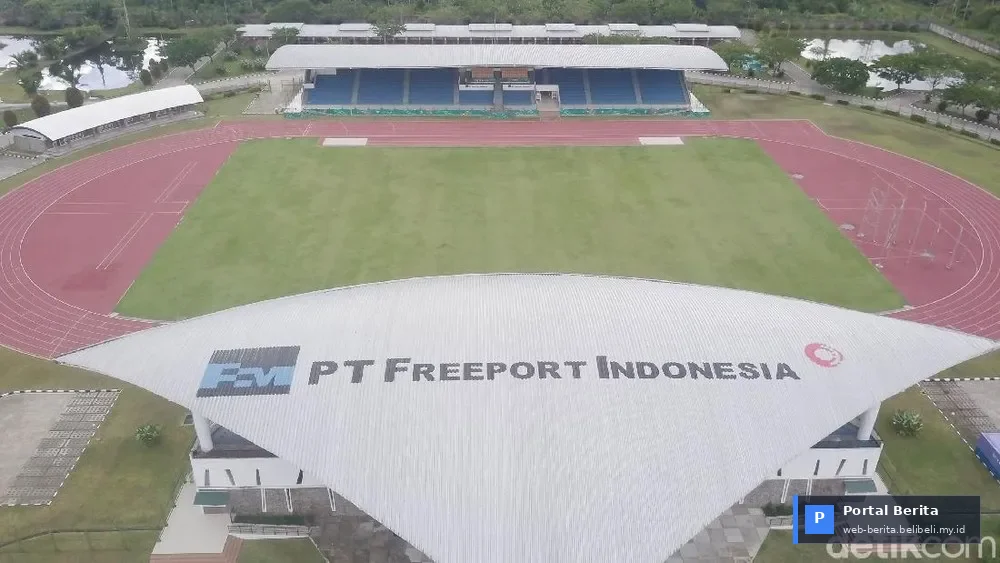
JAKARTA, April 15, 2026 – PT Freeport Indonesia (PTFI) has once again affirmed its position as one of Indonesia's largest contributors to state revenue. Today, Tony Wenas, President Director of PTFI, announced that the company projects its contribution to the state from its operations for the 2026 fiscal year to reach US$2.6 billion, or approximately IDR 46.8 trillion (assuming an exchange rate of IDR 18,000 per US dollar).
This remarkable figure not only reflects the immense scale of Freeport's operations at the iconic Grasberg mine but also the company's unwavering commitment to supporting Indonesia's economic growth and national development. The state contribution comprises various vital components such as income tax, royalties, dividends from government share ownership, export duties, and various other levies.
Sustained Contribution to National Development
“The US$2.6 billion target for 2026 is a testament to our continuous optimization across all operational fronts, from mining to processing,” stated Tony Wenas during a press conference in Jakarta. “We are proud to continue to be a crucial pillar for the Indonesian economy, with contributions that directly support government programs, ranging from infrastructure development to social welfare.”
According to Prof. Dr. Indah Permata Sari, a prominent resource economist from Gadjah Mada University, Freeport's contribution has a ripple effect. “A contribution of IDR 46.8 trillion from a single entity is a truly significant amount. These funds are vital for national budget stability and provide the government with fiscal space for strategic investments,” explained Prof. Indah. “It’s not just about the monetary sum, but also about creating a broader economic ecosystem through local job creation and the development of derivative industries.”
Strategy Behind the Stellar Performance
Achieving this ambitious contribution target is largely attributable to robust operational strategies. PTFI continues to invest in advanced underground mining technologies, enhance extraction process efficiency, and optimize its supply chain. Furthermore, stable global commodity prices, particularly for copper and gold, have also underpinned the company's revenue projections.
Commitment to sustainable mining practices also remains a top priority. PTFI continuously strives to reduce its carbon footprint, manage waste responsibly, and empower indigenous communities in and around its operational areas. These efforts are an integral part of a long-term business strategy that focuses not only on profit but also on positive environmental and social impacts.
Prospects and Long-Term Economic Impact
With this projection, PTFI demonstrates optimism regarding business prospects amid global economic dynamics. Success in achieving this contribution target will serve as a strong indicator for other investors regarding Indonesia's conducive investment climate, particularly in the mining sector. Moving forward, PTFI plans to further enhance production capacity and product diversification, ensuring sustained contributions to the nation for decades to come.
Frequently Asked Questions About Freeport Indonesia's Contribution
Q: What components are included in PT Freeport Indonesia's state contribution?
A: State contributions encompass various elements, including corporate and employee income taxes, royalties on production (copper, gold, silver), dividends from government share ownership, export duties, and various other regional and central levies.
Q: How does this contribution impact Indonesia's economy as a whole?
A: PTFI's financial contribution is crucial for the national budget (APBN), supporting the funding of national infrastructure projects, healthcare programs, education, and social welfare. Additionally, PTFI's operations create thousands of jobs and stimulate local economic growth in Papua.
Q: What are the main challenges PT Freeport Indonesia faces in achieving this contribution target?
A: Challenges include fluctuations in global commodity prices, the complexity of underground mining operations, and the need to continuously adapt to stringent environmental and social regulations. However, PTFI continues to innovate to overcome these challenges.