🔑 Key Takeaways
- Eight factions of the Indonesian House of Representatives (DPR) have unanimously agreed to proceed with the discussion of the 2027 State Budget Bill.
- The budget's primary focus areas include strengthening sustainable economic growth, enhancing public income and welfare, and ensuring fiscal transparency and accountability.
- The government aims for economic resilience amidst projected global challenges in 2027, prioritizing domestic investment and industrial downstreaming.
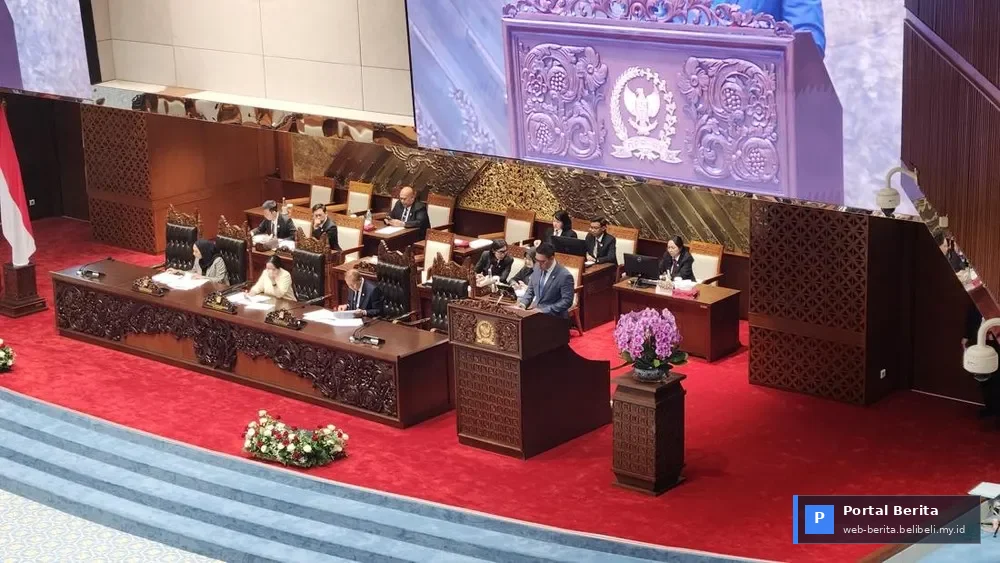
JAKARTA, October 22, 2026 — Indonesia's Parliament reached a significant consensus today, as eight factions of the House of Representatives (DPR) unanimously agreed to move forward with discussions on the State Budget Bill (RUU APBN) for the 2027 fiscal year. This decision marks the beginning of a crucial phase in formulating the nation’s fiscal policy, which will underpin development and economic stability in the coming year.
The deliberation of the 2027 State Budget Bill will center on three main pillars: fostering robust and inclusive economic growth, increasing public income and welfare, and ensuring budget transparency and accountability. These priorities reflect the government's and legislature's commitment to navigate dynamic global economic challenges while strengthening domestic economic foundations.
Driving Sustainable Economic Growth
The government targets economic growth in the range of 5.3% to 5.7% for 2027, with an emphasis on both domestic and foreign investment, as well as industrial downstreaming. “The 2027 State Budget must be a key instrument for driving investment, especially in strategic sectors like manufacturing, renewable energy, and the digital economy,” stated Dr. Indah Permata, a senior economist from the Center for Economic Policy Studies. “Adequate infrastructure and a conducive investment climate will be crucial to achieving these growth targets, creating new jobs, and enhancing global competitiveness.”
Support programs for Micro, Small, and Medium Enterprises (MSMEs) will also be strengthened, including easier access to capital, digital literacy training, and market expansion. These measures are expected to catalyze innovation and private sector expansion, making it a vital engine of economic growth.
Boosting Public Income and Welfare
The aspect of increasing public income is a central focus in the 2027 State Budget discussions. The Bill emphasizes programs that directly address improving purchasing power and the quality of life for citizens. This includes the continuity and refinement of social assistance programs, strengthening vocational education to prepare a skilled workforce, and incentives for labor-intensive industries to create more job opportunities.
“We are committed that the State Budget is not just about macroeconomic figures, but also about tangible impacts for every Indonesian family,” said Mr. Budi Santoso, a member of the DPR's Commission XI. “Improved wages, better access to healthcare, and adaptable social safety nets are non-negotiable priorities. We will ensure that every rupiah of the budget benefits the people.” The government will also work to control inflation to maintain public purchasing power.
Commitment to Budget Transparency and Accountability
Budget transparency emerged as a crucial issue raised by all DPR factions. The government is urged to ensure that all processes of budget allocation and utilization are accessible and monitorable by the public. This will involve using more sophisticated digital platforms for financial reporting, independent external audits, and strengthening the oversight role of the DPR and civil society.
“Public trust is the primary capital for development,” explained Ms. Dewi Lestari, a governance expert. “With a transparent and accountable budget, the risk of misuse can be minimized, and the effectiveness of government programs can be enhanced. This is a fundamental step towards clean and effective governance.” Initiatives like 'Open Budget' are expected to become standard operating procedure across all ministries and agencies.
The DPR's decision to approve the continuation of the 2027 State Budget Bill discussions is expected to result in fiscal policies that are adaptive and responsive to global dynamics and domestic needs. The next steps will involve a series of public hearings, detailed sectoral discussions, and negotiations between the government and the DPR until the final draft is ready for ratification.
Frequently Asked Questions (FAQ)
-
When is the 2027 State Budget Bill expected to be ratified?
The 2027 State Budget Bill is anticipated to be ratified into law by the end of 2026, following a series of in-depth discussions and plenary sessions of the DPR. -
What are the primary economic growth targets for 2027?
The government targets Indonesia's economic growth to be in the range of 5.3% to 5.7% for 2027, driven by investment, industrial downstreaming, and domestic consumption. -
How does the government plan to enhance budget transparency?
The government plans to enhance budget transparency through digital reporting platforms, independent external audits, and strengthened oversight by the DPR and active participation from civil society.