🔑 Key Takeaways
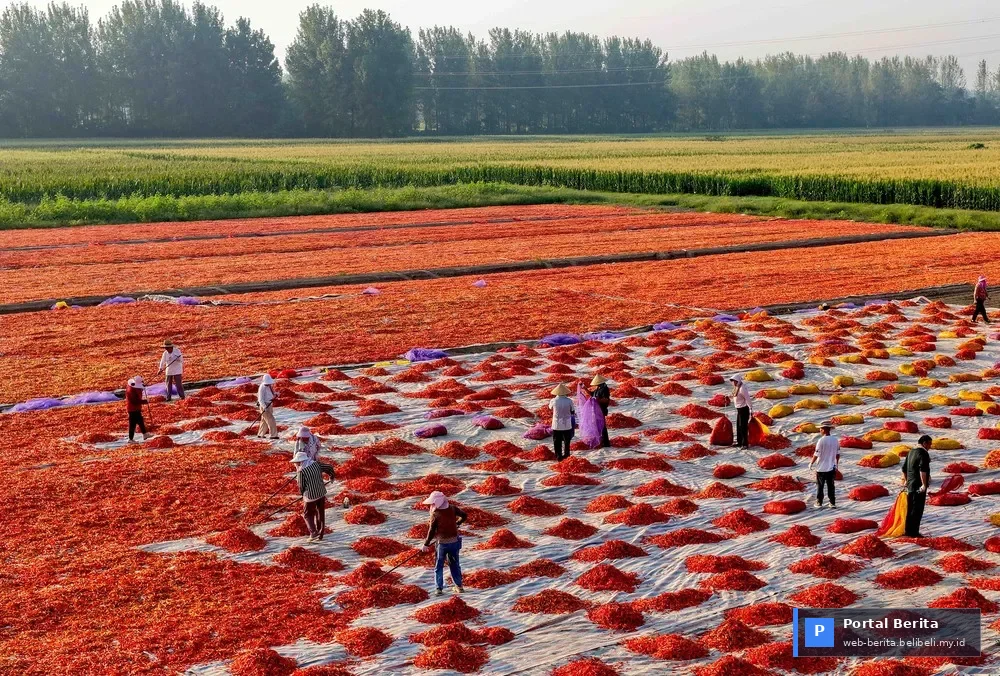
- Farmers in Bozhou, China, are efficiently capitalizing on optimal clear weather in summer 2026 for their chili harvest.
- The integration of technology, such as solar panels for drying and advanced e-commerce platforms, enhances the quality and market reach of Bozhou's chili products.
- Bozhou's chili industry continues to thrive, supporting local economies and meeting increasing global demand, with a growing focus on sustainable farming practices.
BOZHOU, CHINA – The summer of 2026 has brought a bounty of blessings to farmers in Bozhou, Anhui province, China, as they deftly seize a perfect stretch of clear, sunny days. The vast chili fields are now a hive of activity, with thousands of workers harvesting their crops, a vital component for the global food and spice industries. This meticulous utilization of ideal weather conditions is not just about the harvest; it is a well-orchestrated strategy to ensure quality and efficiency before Bozhou's chili products are distributed to both domestic and international markets.
Optimal Harvest Season and Supporting Technologies
With the stable temperatures and low humidity characteristic of the 2026 summer in the region, Bozhou farmers are in full swing harvesting, sun-drying, and packaging chili peppers. “This year’s weather has been exceptionally favorable. Ample sunshine allows us to dry the chilies naturally, which is crucial for preserving their aroma and vibrant color,” says Li Wei, a third-generation chili farmer in Bozhou, met amidst piles of bright red chilies. Traditional sun-drying remains the backbone, yet an increasing number of farmers are also adopting modern technologies like solar-powered greenhouses and hybrid drying facilities to accelerate the process and shield against unpredictable weather shifts.
Technology integration extends beyond drying. In a concerted effort to boost efficiency and market reach, many farmers' cooperatives in Bozhou have invested in automated sorting systems and sophisticated e-commerce platforms. “In 2026, selling chilies isn't just about a good harvest; it's also about connectivity,” explains Mei Ling, an agricultural expert from Anhui Agricultural University. “Farmers can now monitor market prices in real-time and ship their produce directly to global buyers via digital platforms, cutting out middlemen and enhancing their profits.”
Economic Contribution and Global Challenges
Bozhou has long been recognized as one of China's leading chili production hubs, with its products exported to various countries across Asia, Europe, and North America. This successful 2026 harvest is projected to provide a significant boost to the local economy, supporting thousands of farming families and seasonal workers. Global demand for chilies, whether fresh, dried, powdered, or processed, continues to climb, driven by international culinary trends and the growth of the processed food industry.
Nevertheless, the agricultural sector in Bozhou is not immune to global challenges. Unpredictable climate change, fluctuations in global commodity prices, and the imperative for more sustainable farming practices remain key focuses. Local governments, in collaboration with research institutions, are continuously promoting initiatives for the development of disease-resistant chili varieties, water-efficient irrigation, and improved agricultural waste management. “The future of Bozhou's agriculture lies in the balance between tradition, innovation, and sustainability,” Mei Ling adds.
The 2026 chili harvest in Bozhou stands as a testament to the resilience and adaptability of Chinese farmers. By maximizing clear weather and embracing technological advancements, they are not only securing their livelihoods but also continuing to solidify Bozhou's position as a key player in the global chili market.
FAQ: Frequently Asked Questions
1. Why is clear weather so important for the chili harvest in Bozhou?
Clear weather with abundant sunshine and low humidity is crucial for the natural sun-drying process of chilies. This helps preserve the chilies' color, aroma, and quality, and prevents mold growth.
2. What technologies are Bozhou farmers using to enhance chili harvest efficiency?
Beyond traditional methods, Bozhou farmers in 2026 are increasingly adopting technologies like solar-powered greenhouses for drying, automated sorting systems, and e-commerce platforms to monitor market prices and directly reach global buyers.
3. What is Bozhou's role in the global chili market?
Bozhou is one of China's leading chili production centers. Its chili products are exported to various countries worldwide, making it a key supplier for the global food, spice, and processing industries.