🔑 Key Takeaways
- President Prabowo Subianto faces a crucial decision regarding the future leadership of Bank Indonesia for the next term or a strategic transition, with intense discussions ongoing in 2026.
- Coordinating Minister for Economic Affairs Airlangga Hartarto confirmed that the selection of the BI Governor candidate rests solely with the President, reflecting the synergy between monetary and fiscal policies.
- The new BI Governor is expected to navigate global and domestic economic challenges in 2026, including inflation, rupiah stability, and the promotion of a green economy.
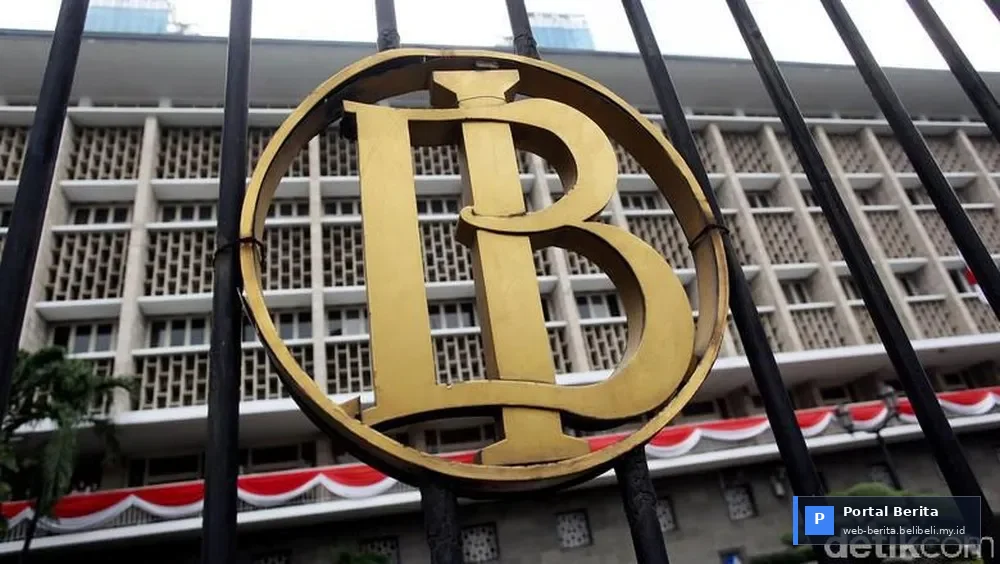
JAKARTA – The year 2026 marks a pivotal period for Indonesia's economic architecture, particularly with the intensifying discussions surrounding who will lead Bank Indonesia (BI) next. With the current Bank Indonesia Governor's tenure nearing its halfway point under President Prabowo Subianto's new administration, speculation is mounting regarding candidates to lead the central bank post-this period, or potentially through a strategic transition. This critical decision, which will significantly influence monetary stability and the direction of national economic policy, now rests entirely with President Prabowo Subianto.
Coordinating Minister for Economic Affairs Airlangga Hartarto, on one occasion, emphasized that the determination of the BI Governor candidate is the President's prerogative. “The process is with the President; whoever is proposed to the DPR (House of Representatives) is the President's prerogative,” stated Airlangga, highlighting the importance of political support and an aligned vision between the central bank and the government in addressing economic challenges during the Prabowo-Gibran era.
The President's Central Role in Monetary Policy Determination
The appointment of the BI Governor is not merely a formality but a strategic decision involving careful consideration of a candidate's competence, integrity, and vision. The law grants the President the authority to propose candidates to the House of Representatives (DPR) for approval. In the 2026 context, under President Prabowo's leadership, this decision will reflect the government's economic priorities, including how the synergy between fiscal and monetary policies can be optimized to achieve sustainable growth and macroeconomic stability.
“The candidate chosen by President Prabowo must not only possess a strong technocratic track record but also grasp the government's grand vision for Indonesia's future economy,” commented Dr. Sari Dewi, a senior economist from the Centre for Public Policy Studies at the University of Indonesia. “This isn't just about managing inflation or exchange rate stability; it’s also about how BI can support developmental agendas, such as the green energy transition and economic digitalization, which are key focuses in 2026.”
2026 Economic Challenges: Expectations for New BI Leadership
Indonesia faces a dynamic global economic landscape in 2026, characterized by geopolitical uncertainties, fluctuating commodity prices, and persistent inflationary pressures. Domestically, ambitious economic growth targets and the need to strengthen economic resilience post-pandemic demand visionary and responsive BI leadership. The new BI Governor is expected to formulate adaptive monetary policies, maintain Rupiah exchange rate stability amidst global market volatility, and mitigate risks to the financial system.
Furthermore, BI's role in promoting digital financial inclusion and supporting sustainable economic development is increasingly vital. With the accelerating adoption of financial technology and the urgency of the climate change agenda, the next BI Governor must be able to drive innovation while maintaining prudence in regulation.
Criteria and Candidate Speculation: Between Technocrats and Strategic Vision
While specific names have not been officially announced, criteria central to discussions among observers include extensive experience in monetary and banking affairs, a deep understanding of macroeconomics, leadership capacity, and, of course, the ability to uphold the central bank's independence. Some speculation points towards figures with strong backgrounds as economists, former BI officials, or internationally recognized financial experts.
President Prabowo's decision will be closely watched by financial markets and the broader public. The right choice is expected to send positive signals to investors, reinforce confidence in Indonesia's economic management, and ensure that Bank Indonesia remains an anchor of stability amid waves of global change. Ultimately, whoever is chosen will bear the significant mandate of safeguarding Indonesia's economic stability and growth towards a more robust future.
❓ Frequently Asked Questions (FAQ)
1. When will the decision regarding the new BI Governor be announced?
Intense discussions are ongoing in 2026. While no official timetable has been set, announcements typically follow a thorough consultation process between the President and the DPR, often nearing the end of the incumbent Governor's term or when a strategic transition is deemed necessary.
2. What is the DPR's role in the appointment of the BI Governor?
The DPR plays a crucial role in approving the BI Governor candidate proposed by the President. This process involves a fit and proper test to ensure the candidate possesses adequate qualifications.
3. Why is Bank Indonesia's independence so important?
Bank Indonesia's independence is vital to ensure that monetary policy decisions are based purely on economic considerations, free from short-term political pressures. This is crucial for maintaining market confidence, price stability, and currency exchange rates, which in turn support sustainable economic growth.