🔑 Key Takeaways
- South Korea's Kospi index plunged sharply by over 10% on Tuesday, July 28, 2026, sparking a bearish sentiment across Asian stock markets.
- The decline was triggered by a confluence of persistent global inflation concerns, hawkish monetary policies from major central banks, and disappointing tech sector earnings reports.
- Analysts urge caution and careful risk management, but also see potential strategic opportunities for discerning long-term investors.
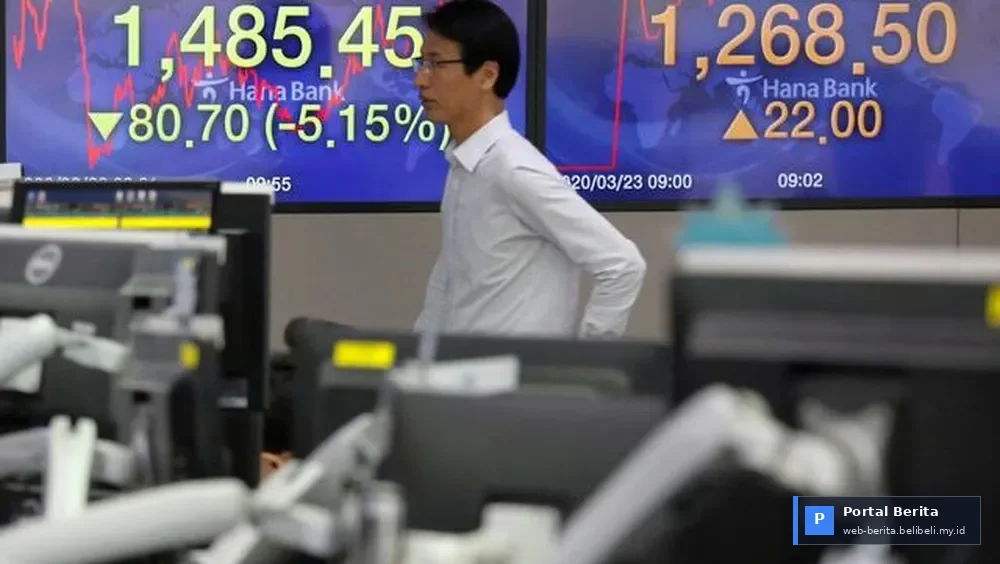
Seoul, South Korea – Tuesday, July 28, 2026 – Asian stock markets were rattled by a massive sell-off today, with South Korea's benchmark Kospi index recording a brutal plunge of over 10% in a single trading session. This dramatic drop triggered panic among investors and dragged other regional indices deep into the red, underscoring the fragile global market sentiment amidst ongoing uncertainties.
Kospi's Decline Triggers: Inflation, Interest Rates, and Tech Pressure
The sharp fall in the Kospi, which has high exposure to the global technology and semiconductor sectors, occurred amidst a confluence of macroeconomic factors and deteriorating market sentiment. Persistent global inflation concerns appear to remain a major haunting specter in 2026, fueling speculation about further monetary tightening measures by the world's leading central banks.
“A more than 10% decline in the Kospi is a significant market reaction, but not entirely surprising given the sustained pressure from high inflation expectations and hawkish signals from several central banks,” stated Dr. Anya Sharma, Chief Economist at Global Financial Analytics, in an exclusive interview. “The technology sector, which forms the backbone of the Kospi, is particularly sensitive to higher capital costs and a slowdown in global economic growth.”
Adding to the pressure, recent quarterly earnings reports from several South Korean tech giants, which fell short of projections, further exacerbated the sell-off. Sluggish sales forecasts and squeezed profit margins due to rising production costs were key catalysts for this mass exodus from stocks.
Regional Impact and Future Outlook
The Kospi's plummet did not stop at Korea's borders. Stock indices in Japan, China, Hong Kong, and other Southeast Asian markets also recorded substantial losses. While not as severe as South Korea's, the negative sentiment spread rapidly, demonstrating the interconnectedness of regional financial markets.
“Investors are now facing a challenging environment. Volatility is likely to remain elevated,” noted Kim Min-joon, Senior Market Strategist at Seoul Investment Bank. “However, for disciplined, long-term investors, sharp corrections like this often create attractive entry points for high-quality companies whose fundamentals remain robust.”
The South Korean government and market regulators have stated they are closely monitoring the situation and are prepared to take necessary actions to maintain market stability. Focus will now turn to upcoming global economic data releases and statements from the Federal Reserve and the European Central Bank, which are expected to provide further clues on the direction of global monetary policy for the remainder of 2026.
❓ Frequently Asked Questions
Q: What were the primary drivers behind the Kospi's sharp decline of over 10% in July 2026?
A: The significant downturn was primarily triggered by a combination of persistent global inflation concerns, potential further monetary tightening by major central banks, and disappointing earnings reports from South Korea's dominant technology sector.
Q: How did the Kospi's decline impact other Asian stock markets?
A: The Kospi's plunge created a ripple effect, dragging down major stock indices across Asia, including Japan, China, and Southeast Asian markets, as investor sentiment deteriorated regionally.
Q: Does this market correction signal an impending global economic crisis?
A: While the sharp decline is concerning, analysts generally view it as a significant market correction amidst uncertainties, rather than an immediate signal of a widespread global economic crisis, though vigilance is certainly warranted.