🔑 Key Takeaways
- Crawling races, such as the 'Tiny Crawler Fest 2026' by Milna, serve as a fun and educational platform to support babies' gross motor skill development.
- Crawling is a crucial stage that builds muscle strength, coordination, and balance, preparing babies for the walking phase.
- Beyond physical benefits, crawling also stimulates cognitive development, spatial perception, and vital hand-eye coordination for future learning.
In the midst of rapidly evolving technology and an increasingly digital lifestyle, the essence of natural baby developmental stages remains irreplaceable. One of the most endearing and significant milestones is when little ones begin to crawl. This year, 2026, events like the 'Tiny Crawler Fest 2026', initiated by Milna, are once again in the spotlight—not merely as entertainment, but as a platform to educate parents about the profound significance of the crawling phase.
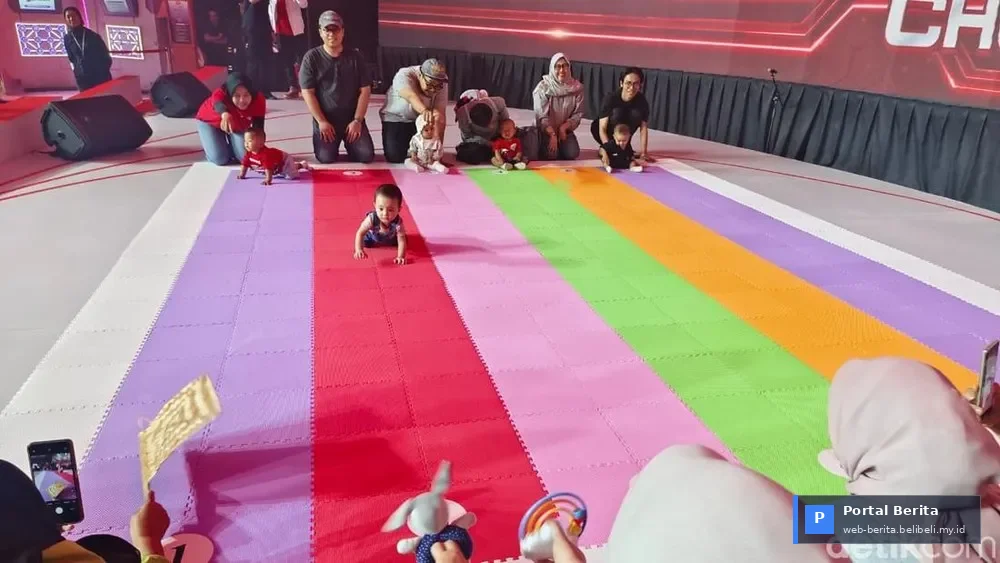
Tiny babies, brimming with enthusiasm and accompanied by cheers and full support from their parents, race towards the finish line. The sight of nimble hands and knees moving across colorful mats is more than just an entertaining spectacle. Behind every crawling motion, a complex process is unfolding, forming crucial foundations for their future physical and mental development.
A Vital Developmental Foundation: More Than Just a Race
Crawling is often perceived merely as a transitional stage before walking. However, child development experts emphasize that crawling plays a far more fundamental role. This activity intensely trains various muscle groups, from core muscles, shoulders, and arms, to legs. The strength of these muscles is essential for maintaining good posture and stability, which are absolute prerequisites before babies can stand and walk independently.
“Crawling is a truly crucial 'bridge' between sitting and walking,” explains Dr. Amelia Wijaya, a Pediatrician and Child Development Specialist practicing in Jakarta. “When babies crawl, they're not only building physical strength but also developing bilateral coordination, where both sides of the body work synergistically. This is a vital skill that will impact their abilities in writing, reading, and even sports later in life.”
Lesser-Known Benefits of Crawling: From Brain to Eyesight
In addition to the obvious gross motor benefits, crawling also provides incredible stimulation for cognitive and sensory development. As babies crawl, they actively explore their surroundings, enhancing spatial perception or their awareness of their body's position in space. They learn how to navigate obstacles, gauge distances, and understand cause-and-effect—all fundamental problem-solving skills.
“The cross-lateral coordination that occurs during crawling—where the left hand moves simultaneously with the right foot, and vice versa—forces both hemispheres of the brain to communicate efficiently,” adds Dr. Wijaya. “This is fantastic brain exercise for sensory and motor integration. Furthermore, crawling aids in the development of binocular vision and depth perception, as babies' eyes must constantly adjust focus between their nearby hands and distant objects.”
Tips for Encouraging Your Little One to Crawl at Home
Given the multitude of benefits, it's important for parents to create an environment that supports babies in crawling. Some tips that can be applied at home in 2026 include:
- Consistent Tummy Time: Start early to build neck and back strength.
- Safe Area: Provide a clean, spacious, and hazard-free floor area, ideally with a comfortable playmat.
- Enticing Toys: Place favorite toys just out of reach to motivate the baby to move towards them.
- Support and Praise: Offer verbal encouragement and smiles every time the baby attempts or successfully crawls.
- Avoid Excessive Use of Walkers: Over-reliance on baby walkers can hinder the natural muscle development needed for crawling and walking.
Crawling races, like those organized by Milna, are a beautiful celebration of one of a baby's most important developmental milestones. They serve as a reminder to all of us that behind every tiny step our little ones take, there is a vast world of learning and growth. With the right support, every baby can reach their full potential, starting from the floor, with their tiny hands and knees.
Frequently Asked Questions About Crawling
- When do babies typically start crawling?
Babies generally begin crawling between 6 and 10 months of age. However, this is just a guideline; some babies may start earlier or later, and variations in development are perfectly normal. - What should I do if my baby skips crawling and goes straight to walking?
While not all babies crawl traditionally (some might “scoot” on their bottom or pull directly to stand), it's important to consult your pediatrician. They can ensure there are no underlying developmental issues and provide appropriate guidance. - Is 'tummy time' really important for crawling?
Yes, 'tummy time' is exceptionally crucial. It helps babies build essential neck, shoulder, back, and core strength needed for lifting their head, rolling over, and ultimately, effective crawling. Without adequate 'tummy time,' the strength required for crawling may not develop optimally.