🔑 Key Takeaways
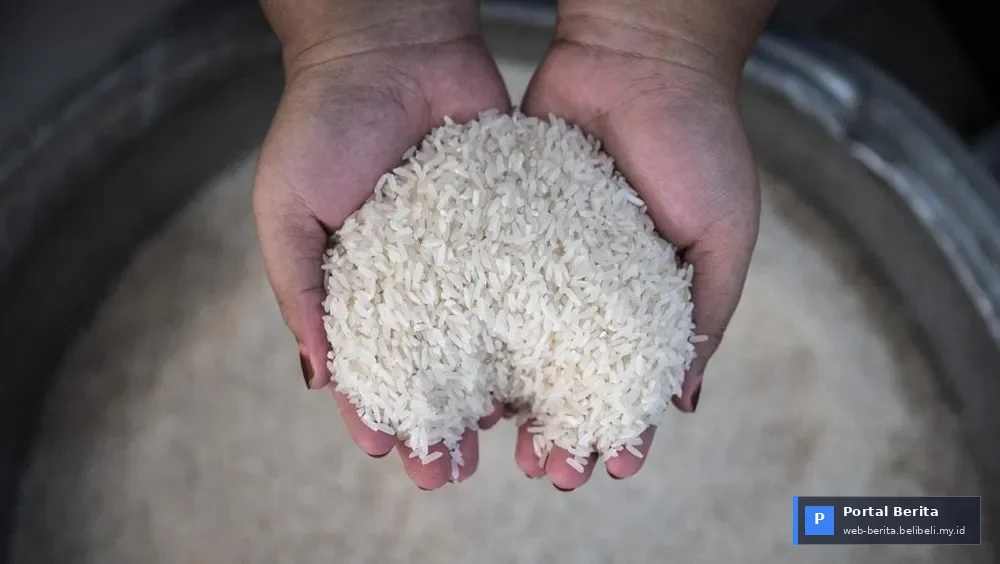
- Indonesia's National Food Agency (Bapanas) confirms ample premium rice stock in modern retail outlets as of early 2026, refuting scarcity rumors.
- Despite stable supply, consumers face significant price hikes for premium rice, raising concerns about purchasing power.
- Price increases are driven by a combination of factors including rising production and logistics costs, climate change impacts on harvests, and global market dynamics, rather than physical shortages.
JAKARTA – The National Food Agency (Bapanas) has once again affirmed the stability of premium rice supply across Indonesia's modern retail networks in early 2026. This statement comes as an effort to quell public concerns following sporadic reports of soaring prices amidst questioned availability. Head of Bapanas, Dr. Arif Prasetyo Adi, in a virtual press conference on Wednesday (Jan 15, 2026), firmly denied any physical scarcity of premium rice.
“We are closely monitoring the availability of premium rice in modern retailers across all major cities. Our data indicates that stock levels are safe and sufficient to meet public demand for the next few months. Claims of scarcity are unfounded,” stated Dr. Arif.
The Burden of Rising Prices on Consumers
Despite Bapanas’s assurance of stable supply, the reality on the ground shows that premium rice prices have experienced substantial increases. In some regions, prices per kilogram have reached unprecedented levels, far exceeding the government's stipulated Reference Purchase Price (HAP).
“Yes, there is stock, it’s not empty. But the prices, oh, they’ve gone up by more than 15% since the end of last year. We homemakers are completely stressed,” complained Mrs. Tini, a housewife in South Jakarta, when interviewed at a modern supermarket.
Factors Behind Price Hikes: More Than Just Scarcity
These price increases, according to economic analysts, are the result of a combination of complex factors in 2026. Dr. Mira Setyawati, a Food Economist from Gadjah Mada University, explained, “Increased production costs at the farmer level, from fertilizer prices, seeds, to labor wages, have driven up the base price of unhusked rice. Additionally, logistics and distribution costs, which continue to rise, especially with fluctuating global energy prices, contribute significantly to the retail price for consumers.”
Furthermore, the impact of global climate change cannot be ignored. Increasingly frequent extreme weather patterns have affected planting and harvesting schedules, which in turn impacts national production volumes. “While not a total scarcity, harvest disruptions in some production centers can create temporary supply pressure in the market, which can be exploited by speculators,” added Dr. Mira.
Bapanas's and Government’s Strategic Steps
Responding to this phenomenon, Bapanas, along with the Ministry of Trade and Perum Bulog, stated that they have been and will continue to implement various stabilization measures. These include optimizing government rice reserves (CBP) through targeted market operations, accelerating distribution from production centers to consumption areas, and intensive coordination with millers and retail businesses.
“We are not just focusing on availability, but also affordability. Various subsidy and incentive schemes are being reviewed to ease the burden on farmers and consumers,” Dr. Arif explained. The government is also strengthening village food barn programs and agricultural modernization to ensure long-term food self-sufficiency in the 2026 era.
Experts advise consumers to remain vigilant and report any indications of hoarding practices or sales above fair prices. With collaboration between the government, businesses, and the community, it is hoped that premium rice price stability can soon be achieved, and public purchasing power maintained amidst the global economic challenges of 2026.
FAQ
- Why are premium rice prices rising if stock is stable?
Price increases are driven by factors beyond physical scarcity, such as higher production costs, logistics expenses, climate change impacts on harvests, and potential market speculation. - What is the government doing to control price increases?
The government is conducting market operations, accelerating distribution, optimizing government rice reserves (CBP), and reviewing subsidy and incentive schemes for farmers and consumers. - Is premium rice likely to become scarce in the future of 2026?
Bapanas assures current stock is stable. However, long-term stability depends on the success of government food security programs, agricultural modernization, and climate change mitigation efforts.