🔑 Key Takeaways
- Indonesian women lead the majority of MSMEs, making significant contributions to the national GDP in 2026.
- Bank Indonesia is strengthening financial inclusion through digitalization programs and specialized capital access for women entrepreneurs.
- The economic empowerment of women-led MSMEs is expected to drive sustainable economic growth and reduce social inequality.
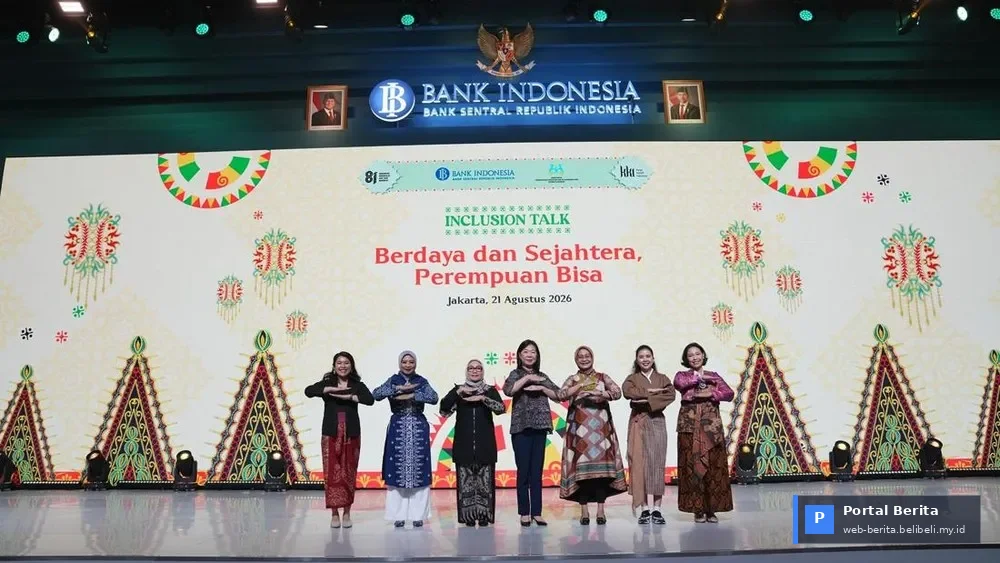
JAKARTA – The year 2026 marks a new era for Indonesia's economy, where the role of women in the Micro, Small, and Medium Enterprises (MSME) ecosystem is increasingly undeniable. With continuously growing contributions and a dominant presence among business owners, women-led MSMEs are now fundamentally supporting national economic growth and stability. Bank Indonesia (BI) is at the forefront, strategically expanding inclusive economic and financial access to strengthen this crucial pillar.
Women's Dominance in the 2026 MSME Ecosystem
In 2026, data indicates that nearly 70% of all MSMEs in Indonesia are led by women. This figure is more than just a statistic; it reflects the driving force behind job creation, increased household income, and community economic resilience. The contribution of women-led MSMEs to the national Gross Domestic Product (GDP) is increasingly significant, estimated to account for 65-70% of the total MSME sector output. This positions Indonesia as one of the countries with the highest female economic participation rates in this sector.
'Women entrepreneurs are not just participants; they are the primary drivers of grassroots innovation and economic stability in Indonesia,' states Dr. Aisha Rahman, a senior economist from the Center for Development Economic Studies. 'With their adaptability and innovation, especially amidst global challenges, they prove to be resilient engines of growth.'
Bank Indonesia's Strategy to Bolster Digital Financial Inclusion
Recognizing this colossal potential, Bank Indonesia continues to expand the reach of its inclusive economic and financial programs specifically designed for women. In 2026, the main focus is on digitalization and facilitating easier and faster access to capital.
One of BI's flagship initiatives is 'Program AKSEL 2.0' (Action for Inclusive Finance for Women), which focuses on improving digital literacy, access to micro-financing through financial technology (fintech) platforms, and integrating women-led MSMEs into both national and global e-commerce ecosystems. This program involves comprehensive training on digital financial management, online marketing, and the utilization of contactless payment systems.
'Our focus in 2026 is to ensure every woman entrepreneur, regardless of location, has equitable access to capital and digital tools,' explains Ms. Sri Mulyani, Head of Bank Indonesia's MSME Development Department (fictional). 'We are collaborating with various financial institutions, technology providers, and community organizations to create a supportive ecosystem.'
Fostering Sustainable Growth and Economic Resilience
The empowerment of women-led MSMEs brings ripple effects that extend beyond economic figures. It contributes to poverty reduction, enhanced gender equality, and the development of local innovation. However, challenges persist, such as the digital skills gap in remote areas and access to larger-scale capital.
Bank Indonesia, alongside the government and the private sector, continues to address these obstacles. Initiatives like the 'Women's Digital Incubation Hubs' which provide mentorship and market access, and the 'Export Ready Women MSMEs' program facilitating local products into international markets, are testaments to this ongoing commitment.
'With the right support from institutions like Bank Indonesia, we can not only survive but thrive and inspire the next generation,' says Ms. Indah Permata, an owner of a handicraft MSME who successfully entered export markets with the help of BI's programs.
Through the synergy between the extraordinary potential of women MSME actors and strategic support from Bank Indonesia, Indonesia is set to solidify its position as a robust, inclusive, and sustainable economy in 2026 and beyond.
Frequently Asked Questions (FAQ)
1. What percentage of MSMEs in Indonesia are led by women in 2026?
It is estimated to reach nearly 70% of the total national MSMEs, highlighting their central role in the economy.
2. What is Bank Indonesia's role in supporting women-led MSMEs?
Bank Indonesia expands financial and economic inclusion through digital literacy programs, fintech-based capital access, and e-commerce integration specifically for women-led MSMEs, such as 'Program AKSEL 2.0'.
3. How does empowering women-led MSMEs contribute to the national economy?
This empowerment significantly boosts job creation, reduces poverty, fosters innovation, and supports sustainable GDP growth in Indonesia.